
Table of Contents
- Why Homeowners Are Ditching Long-Term Pest Control Contracts
- Benefits of No-Contract Pest Control Services
- One-Time Pest Control Service Cost: What You Actually Pay
- How to Cancel Pest Control Contract: Your Rights and Options
- What to Expect During Your First Pest Inspection
- Comparing Professional Service vs. DIY Pest Control
- Guarantees and Re-Treatment Policies That Actually Protect You
- Conclusion
Last Updated: August 6, 2026
Why Homeowners Are Ditching Long-Term Pest Control Contracts
Traditional pest control contracts lock you in for 12 months or longer with early termination fees reaching hundreds of dollars. If service fails or technicians miss appointments, you’re stuck paying anyway. At Zoifia Pest Control, we’ve seen homeowners across the Metro Boston area reject this model. Those dealing with urgent infestations, roaches in a Somerville apartment, rodents in a basement, bed bugs after a hotel stay, want the problem solved now with flexibility to switch providers if results don’t materialize.
The real tension isn’t about price. It’s about control. Long-term contracts shift risk entirely to you; the pest control company gets paid regardless of results. No-contract services flip that dynamic: the company must deliver or lose your repeat business.
No-contract pest control eliminates early termination fees and gives you power to switch providers if service quality drops. You pay only for what you use, when you use it.
An infestation is urgent and specific. You don’t know if you’ll need quarterly maintenance or just one-time treatment until the problem is solved, making no-contract flexibility essential.
Benefits of No-Contract Pest Control Services
No-contract pest control eliminates financial lock-in and keeps companies accountable because they know you can leave anytime.
First, there’s transparency. When a company knows you can cancel without penalty, they’re motivated to deliver visible results on your first call. They can’t hide behind "give it 30 days" or claim guarantees cover only re-treatments.
Second, you avoid hidden fees. Many long-term contracts bury charges in fine print: setup fees, seasonal surcharges, re-treatment charges not covered by guarantees, or cancellation penalties. No-contract service is straightforward, you see the quote, approve it, pay for what was done.
Third, flexibility matters for pest problems. Rodent pressure peaks in fall and winter. Mosquitoes are a summer problem. Bed bugs can appear anytime. No-contract service lets you add treatment when needed and scale back when you don’t, avoiding quarterly maintenance payments for solved problems.
Request a detailed inspection report after your first service call. The best no-contract providers give you a written breakdown of what they found, what they treated, and what to monitor, providing concrete evidence of whether service is working.
Fourth, you maintain decision-making power. If a technician misses an appointment or treatment fails, you can switch providers without legal or financial consequences. This keeps pest control companies honest about scheduling and results.
Finally, no-contract service works best for renters who can’t sign long-term agreements without landlord approval, property managers overseeing multiple units needing seasonal flexibility, construction crews requiring project-based solutions, and homeowners in older buildings with serious infestations who need fast treatment without betting a year of payments on results.
One-Time Pest Control Service Cost: What You Actually Pay
A standard one-time service includes inspection, treatment, and initial follow-up advice. Understanding cost drivers helps you evaluate whether a quote is fair.
Service call pricing breakdown
A licensed technician inspects your property, identifies the pest type, locates entry points and harborage areas, and assesses infestation severity, typically 30-60 minutes depending on property size.
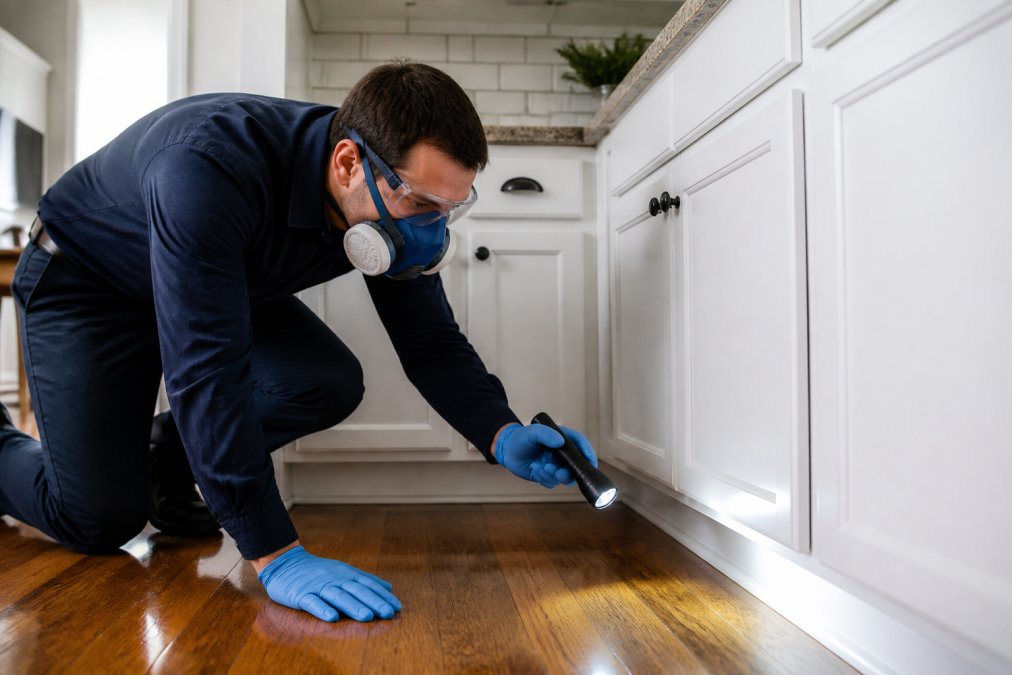
Treatment follows. For roaches, this includes baiting in cabinets and under appliances, perimeter treatment, and crack-and-crevice applications. For rodents, it involves setting traps or bait stations and sealing entry points. For bed bugs, treatment is more intensive, usually requiring multiple visits because bed bug lifecycles mean a single treatment won’t eliminate the entire population.
The technician provides a written report detailing findings, treatments applied, and your responsibilities, removing clutter, sealing gaps, or cleaning food sources. This guidance is critical because pest control is a partnership.
Most one-time service calls in the Metro Boston area depend on property size, pest type, and severity. A small apartment with localized roaches may cost less than a 4-bedroom house with basement rodent infestation.
Factors that affect your final bill
Property size is the biggest variable. Treating a 1,000-square-foot apartment costs less than a 5,000-square-foot house.
Pest type matters significantly. General pest control for ants or common roaches is straightforward and cheaper. Bed bug treatment is expensive because it requires multiple visits over 2-3 weeks to break the reproductive cycle.
Severity changes everything. A light infestation caught early costs less than a heavy infestation spread throughout the property.
Treatment method affects cost. Eco-friendly or pet-safe treatments often cost more than conventional pesticides. Integrated pest management combining exclusion, sanitation, and targeted treatment costs more upfront but often prevents future infestations.
Emergency service costs extra. Same-day or next-day treatment for bed bugs or severe infestations commands a premium. Standard scheduling is cheaper.
Ask what’s included in the quoted price before approving. Some companies quote a base price but charge extra for re-treatments, follow-up inspections, or additional applications. Get it in writing.
How to Cancel Pest Control Contract: Your Rights and Options
If locked into a long-term contract, understand your actual rights before paying an early termination fee.
First, review your contract’s termination clause, which specifies the early termination fee and any penalty-free cancellation conditions. Some contracts allow penalty-free cancellation after 90 days if service hasn’t been satisfactory.
Next, document service failures. If the company missed appointments, didn’t show up on scheduled days, or failed to eliminate the infestation within the guaranteed timeframe, you have grounds to dispute the contract. Take photos of remaining pests, keep appointment records, and save all communication.
Contact the company in writing via email or certified mail, stating your complaint clearly with specific dates and evidence. Request cancellation without penalty based on their failure to deliver promised service. Many companies waive termination fees rather than deal with disputes or negative reviews.
If they refuse, escalate to your state’s consumer protection office. Massachusetts residents can file complaints with the Massachusetts Attorney General’s Consumer Advocacy and Response Division.
Some contracts include a "satisfaction guarantee" allowing penalty-free cancellation if unsatisfied within a specific timeframe, often 30 days. Check whether yours does and invoke it immediately if unhappy.
Consider whether the termination fee is worth paying to escape. If six months remain on a 12-month contract with a $200 termination fee, paying to cancel might be cheaper than six more months of unwanted service.
Going forward, avoid long-term contracts entirely. No-contract providers like Zoifia Pest Control eliminate this problem. You pay for service you use and can stop whenever you want.
What to Expect During Your First Pest Inspection
A professional pest inspection is methodical and thorough. Understanding the process helps you prepare and evaluate whether the technician is doing the job right.
The technician starts with a systematic walkthrough, beginning in kitchens and bathrooms where moisture and food sources attract pests. They open cabinets, check under sinks, examine appliance backs, and look for droppings, dead insects, or infestation signs.
They check basements or crawl spaces for entry points, water damage, stored items creating hiding spots, and rodent activity signs. They examine foundation cracks, gaps around pipes, and utility entry spaces. Rodents need only a quarter-inch gap to squeeze through.
Outside, they inspect the building perimeter for foundation cracks, gaps around doors and windows, damaged screens, and vegetation touching the house. They check for standing water attracting mosquitoes and assess whether landscaping creates pest pathways.
The technician takes notes and photos throughout. A good inspection generates a written report documenting what was found, where, and severity. This report is your evidence baseline for measuring treatment effectiveness.
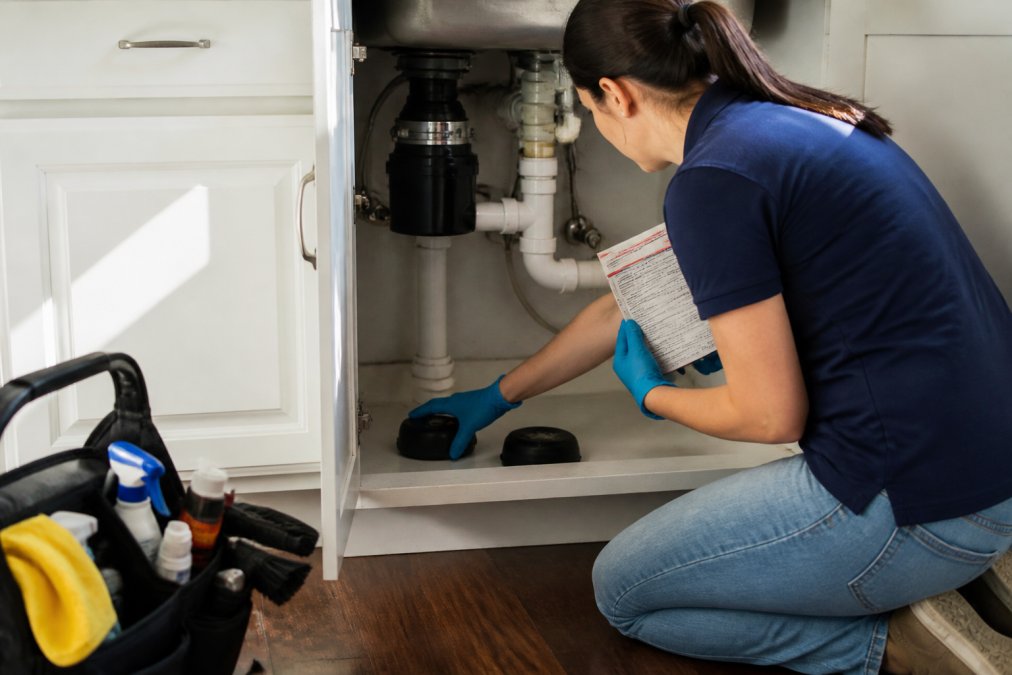
The inspection typically takes 30-60 minutes depending on property size and infestation complexity. At the end, the technician should explain findings, root causes, and treatment options. They should discuss the pest’s lifecycle and what you need to do to prevent recurrence.
Quality inspection reveals not just the pest problem but conditions that created it. A roach infestation suggests moisture, food debris, or clutter. A rodent problem indicates entry points and harborage areas. Understanding root causes is essential because treatment alone won’t work if underlying conditions remain.
Comparing Professional Service vs. DIY Pest Control
DIY pest control is tempting because it’s cheap upfront. Over-the-counter sprays, baits, and traps cost $10 to $50, far less than a professional call. But the comparison is more complex than price alone.
DIY works for prevention and minor problems. A single ant trail or one cockroach might be eliminated with a bait station or spray before the problem grows. Preventive measures, sealing cracks, removing clutter, fixing moisture, are always your responsibility.
DIY fails for established infestations. Once pests colonize your property, they’re usually widespread even if visible in one area. Roaches hide in walls, under appliances, and electrical outlets where consumer spray won’t reach. Rodents nest in walls and attics where trap placement is ineffective. Bed bugs hide in mattress seams and furniture where DIY treatments are ineffective and dangerous if misapplied.
The cost math changes with failure. Many homeowners spend $100-$200 on DIY products over weeks while infestations worsen because they’re not targeting actual harborage areas. Then they call a professional anyway, paying standard rates plus dealing with a worsening problem.
Safety is another consideration. Many DIY pesticides are toxic if misapplied. Professional technicians are trained in safe application, proper dosing, and placement protecting your family.
Professional service provides accountability. If infestation persists, you have recourse. Most professionals offer 30, 60, or 90-day guarantees including free re-treatment if pests reappear. DIY products come with no guarantee.
The real advantage is expertise. A technician identifies the pest correctly, locates all harborage areas, understands the pest’s lifecycle, and applies treatment where it works. They know a single roach spray won’t eliminate a colony hiding in walls. They know rodent baiting requires multiple stations along travel routes. This knowledge is worth paying for.
For renters, those in older Boston-area buildings, or anyone with serious infestation, professional service is the only realistic option.
| Approach | Cost | Effectiveness | Timeline | Best For |
|---|---|---|---|---|
| DIY Baits/Sprays | $15-50 | Low for established infestations | 2-4 weeks | Prevention, single sightings |
| Professional One-Time | Pricing depends on quantity, dates, and delivery | High for most pest types | Same day to 1 week | Active infestations, urgent problems |
| Professional Recurring | Pricing depends on quantity, dates, and delivery | Very high, prevents recurrence | Ongoing | High-risk properties, peace of mind |
Guarantees and Re-Treatment Policies That Actually Protect You
A guarantee is only valuable if you understand what it covers. Many pest control guarantees sound good until fine print reveals they don’t cover what you thought.
A legitimate guarantee promises that if the pest problem isn’t eliminated within the guaranteed timeframe, the company will re-treat at no additional cost. Timeframes vary, 30, 60, or 90 days are common. Zoifia Pest Control offers a 90-day guarantee, meaning if you see pests within 90 days of treatment, you get free re-treatment.
Some guarantees require specific conditions: removing clutter, sealing entry points, or maintaining sanitation. These are reasonable because pest control is a partnership. The company treats the infestation, but you eliminate conditions that created it.
Other guarantees exclude certain situations. Some don’t cover re-infestations from outside sources, a new rodent entry after treatment is technically a new infestation, not original treatment failure. A good provider explains this upfront.
Ask about the re-treatment process before signing. Does the company return for free, or do you pay and they credit it toward the original service? How quickly can they schedule re-treatment? A 30-day guarantee is meaningless if they’re booked three weeks out.
Check whether the guarantee covers your specific pest type. Some apply to general pests like roaches and ants but exclude bed bugs or rodents requiring different protocols and multiple visits. A 90-day bed bug guarantee usually means 90 days from the final treatment visit, not the first, because bed bug lifecycles require multiple treatments.
Get the guarantee in writing. Don’t rely on verbal promises. The contract should specify the guarantee period, what’s covered, what conditions you must meet, and how re-treatment is scheduled and paid for. If it’s not in writing, it doesn’t exist.
The best guarantees are simple: if you see the pest within the guarantee period and you’ve followed the company’s recommendations, you get free re-treatment. Zoifia Pest Control’s 90-day guarantee is straightforward because the company stands behind its work. If treatment doesn’t eliminate the infestation, they fix it without charging you again.
Avoid companies offering guarantees only if you sign up for ongoing service. That’s a sales tactic, not a guarantee. A real guarantee applies to the service you purchased, whether one-time or recurring.
Pest infestations create urgent pressure to accept whatever terms offered. But you have options. No-contract pest control services solve the problem without long-term financial commitment. Zoifia Pest Control provides licensed, insured service backed by a 90-day guarantee, ensuring your property stays pest-free without contract lock-in. You get results, not promises, and freedom to move on once the problem is solved. Get a quote from Zoifia Pest Control to see transparent pricing for your specific pest problem.
Frequently Asked Questions
How do I know if a pest control company is actually licensed and insured?
Request proof of licensing from your state's pesticide board or relevant regulatory body before hiring. Ask for a certificate of insurance naming your property as an additional insured. Verify credentials directly with your state's Department of Agricultural Resources or equivalent agency. Licensed technicians should carry identification and provide documentation without hesitation. This protects you if damage occurs during treatment.
What does a 90-day pest control guarantee actually cover?
A 90-day guarantee typically means the pest control company will return and retreat your property at no charge if pests return within 90 days of the initial service. However, coverage terms vary, confirm whether it applies to the specific pest treated, if re-infestation from outside sources is covered, and whether you must maintain certain conditions (like sealing entry points). Always request the guarantee in writing and ask about exclusions before signing.
Is one-time pest control service actually effective, or will the bugs come back?
One-time service can be highly effective for isolated infestations when performed by licensed professionals using integrated pest management techniques. However, effectiveness depends on the pest type, infestation severity, and whether entry points are sealed. Rodents and roaches in older Boston-area buildings may require follow-up visits. Ask your technician for a prevention plan and timeline expectations. A service guarantee protects you if pests return within the covered period.
Are there hidden fees in no-contract pest control services?
Reputable no-contract services provide transparent pricing upfront, including all treatment costs and any applicable service call fees. Hidden charges typically arise from vague quotes or undisclosed travel fees. Always request an itemized estimate before service begins. Ask specifically about costs for additional treatments, follow-up visits, and emergency service fees. Compare quotes from multiple providers and confirm that the quoted price matches your final invoice.
This article was written using GrandRanker
