Table of Contents
- How Long Does Rodent Exclusion Take: Understanding the Timeline
- Factors Influencing Rodent Exclusion Time
- The Rodent Exclusion Process Steps: What Happens When
- How Long Do Mice Stay After Sealing Holes: The Reality
- Signs Rodents Are Gone After Exclusion: How to Verify Success
- Professional vs. DIY Rodent Exclusion: Timeline Comparison
- Cost of Rodent Exclusion and What Affects Pricing
- Long-Term Prevention: Extending Your Exclusion Results
Last Updated: July 12, 2026
How Long Does Rodent Exclusion Take: Understanding the Timeline
Most residential properties require 8 to 12 weeks from initial inspection to confirmed rodent-free status. This timeline reflects the reality of mechanical rodent proofing combined with population reduction, two distinct processes that must work together for lasting results.
Many homeowners conflate exclusion with extermination, expecting rodents to vanish once gaps are sealed. Sealing entry points stops NEW rodents from entering, but existing populations inside your walls need time to be eliminated through trapping. Understanding this separation is critical to managing expectations.
What Is Rodent Exclusion?
Rodent exclusion is sealing all entry points and gaps that allow rodents to access a building’s interior. It combines structural repairs, material installation, and ongoing monitoring to create a rodent-proof barrier.
Exclusion differs fundamentally from extermination. Extermination kills rodents already inside; exclusion prevents new ones from entering. Most professional programs use both simultaneously, sealing entry points while running trapping programs to eliminate the existing population.
The materials used are durable: hardware cloth, steel wool, caulk, and one-way door devices resist gnawing and degradation. A properly executed exclusion job protects your property for 10 to 15 years with minimal maintenance.
Exclusion vs. Extermination: Why the Distinction Matters
Extermination targets rodents already present. Traps and monitoring reduce the existing population in 2 to 4 weeks, though complete elimination may take longer depending on severity.
Exclusion prevents rodents from entering. Sealing gaps and installing hardware cloth takes only a few days, but the exclusion process isn’t complete until you’ve confirmed no rodents remain inside.
Sealing holes while rodents are still nesting inside is only half the solution. Those trapped rodents will continue to damage property until they’re gone. Professional pest control recommends running both processes in parallel.
Exclusion prevents future infestations; extermination eliminates current ones. Both must be completed for lasting results.
Factors Influencing Rodent Exclusion Time
Infestation Severity and Property Size
A small apartment with light mouse activity may resolve in 6 to 8 weeks, while a large house with heavy rat activity could take 12 to 16 weeks. Infestation severity is assessed during inspection by looking for droppings, gnaw marks, nesting materials, and grease trails. Larger homes have more entry points to seal and more interior space where rodents hide, extending both the sealing and trapping phases.
Seasonal Impact on Exclusion Success
Fall and winter see higher rodent activity as animals seek shelter, which can accelerate the trapping phase. Spring and summer offer ideal conditions for mechanical work, though lower rodent activity extends the trapping phase. Many professionals recommend starting in late summer or early fall to take advantage of seasonal rodent behavior.
Structural Conditions and Entry Points
A property with 5 to 10 obvious gaps might be sealed in 2 to 3 days. A property with 20+ entry points could require 5 to 7 days. Older homes tend to have more entry points due to settling and deferred maintenance. If your foundation has cracks or siding is damaged, sealing requires additional repair work beyond standard exclusion materials.
The Rodent Exclusion Process Steps: What Happens When
Step 1: Initial Property Inspection (Timeline: 1-2 Hours)
A pest control professional walks the interior and exterior, documenting every sign of rodent activity and potential entry point. They photograph entry points and create a detailed map. You’ll receive a report outlining infestation severity, entry points, recommended sealing work, and estimated timeline.
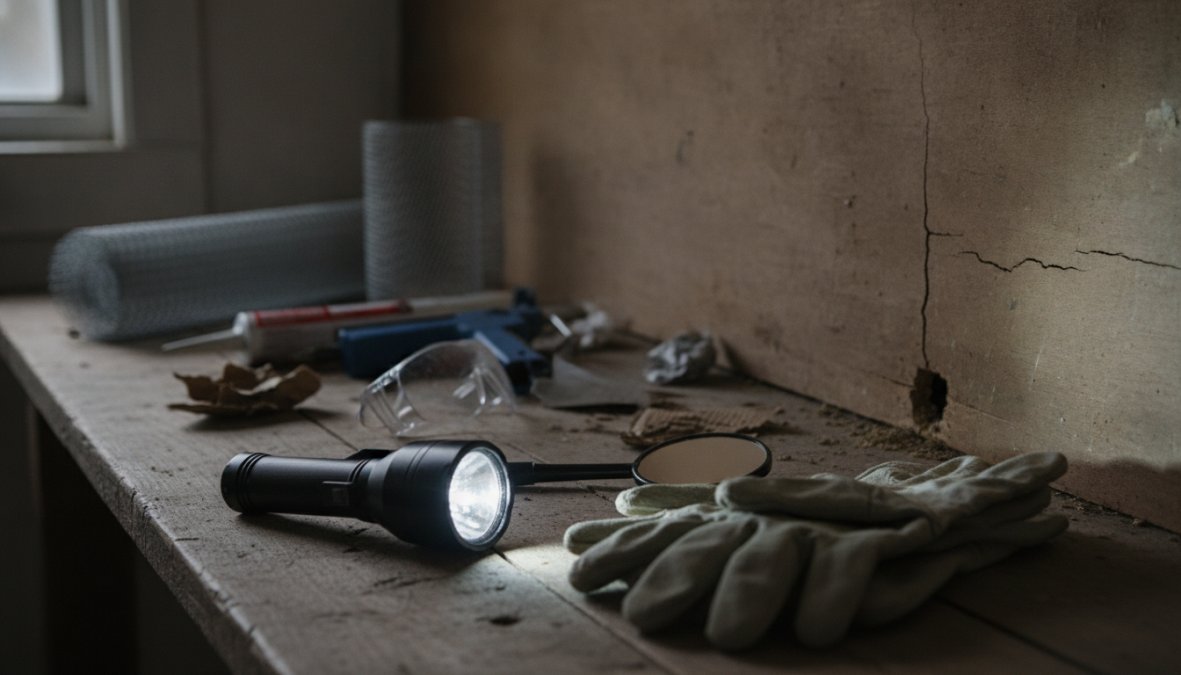
Step 2: Sealing Entry Points and Mechanical Rodent Proofing (Timeline: 2-5 Days)
Technicians use hardware cloth, steel wool, caulk, and other durable materials to close every identified entry point. One-way door devices are often installed at active entry points, allowing rodents inside to exit but preventing re-entry. This accelerates population reduction during the trapping phase.
Step 3: Trapping Program and Population Reduction (Timeline: 2-4 Weeks)
Snap traps, electronic traps, and bait stations are placed in high-activity areas: along walls, near food sources, in attics, and basements. Technicians visit weekly to check traps, remove dead rodents, and adjust placement. As the population declines, trap success rates drop. Expect steady decline over weeks, not immediate elimination.
Step 4: Monitoring and Follow-Up Visits (Timeline: 4-8 Weeks)
Technicians continue regular visits every 2 to 4 weeks to confirm rodent activity has ceased completely. They inspect traps, look for fresh droppings or gnaw marks, and verify no new entry points have developed. Most properties show no activity after 4 weeks of monitoring.
How Long Do Mice Stay After Sealing Holes: The Reality
Sealing entry points traps rodents inside your property. They can’t escape through the gaps they originally used. This forces them to rely on traps for removal rather than allowing them to flee.
Rodents sealed inside will continue to look for food and water, nesting in walls, attics, and basements. They won’t disappear because the exterior is sealed. They must be actively removed through trapping or will eventually die from starvation, a process taking weeks.
Rodents build nests in hidden spaces: inside wall cavities, above ceiling tiles, in insulation, and attic corners. These nesting sites are difficult to access and bait effectively. Professional pest control uses multiple strategies, snap traps along runways, electronic traps in high-activity areas, and one-way doors at entry points, to ensure most rodents encounter a trap regardless of location.
The remaining population gradually declines through natural attrition. Starvation, disease, and predation remove these individuals over time, extending the monitoring phase several weeks beyond active trapping.
Sealing holes without running a simultaneous trapping program leaves rodents trapped inside your home. They’ll continue to damage property for weeks. Always combine sealing with active trapping.
Signs Rodents Are Gone After Exclusion: How to Verify Success
Pest Activity Drop and Monitoring Indicators
The most reliable indicator is sustained drop in trap captures. During the first 2 to 3 weeks, you should see regular captures. As the population declines, captures drop to one or two per week, then to zero over consecutive weeks.
After 3 to 4 consecutive weeks with zero trap captures and no fresh droppings or gnaw marks, your property is likely rodent-free. Fresh droppings are dark, pellet-shaped, and typically found along walls. Old gnaw marks are weathered and discolored; fresh gnaw marks indicate current activity.
Checklist for Homeowners During the Waiting Period
- Remove food sources: Store pantry items in airtight containers. Don’t leave pet food out overnight.
- Eliminate water sources: Fix leaky pipes and standing water.
- Declutter storage areas: Remove cardboard boxes and fabric scraps from attics and basements.
- Document activity: Keep a log of sightings, sounds, or droppings.
- Avoid handling traps: Let your technician manage all traps.
- Report new entry points: If you notice new gaps, report them immediately.
- Maintain access: Keep attic hatches and basement doors accessible for monitoring.
Professional vs. DIY Rodent Exclusion: Timeline Comparison
Why Professional Exclusion Services Are Faster
Professional inspections identify nearly all entry points in 1 to 2 hours. DIY inspections typically miss 30% to 50%, especially hidden gaps. Professional sealing uses durable materials installed correctly; DIY sealing often uses cheaper materials that rodents chew through within weeks.
Professional trapping uses strategic placement informed by experience. DIY trapping relies on random placement, capturing fewer rodents and extending the population reduction phase. Professional monitoring is systematic; DIY monitoring is inconsistent.
Professional exclusion typically takes 8 to 12 weeks. DIY exclusion often takes 4 to 6 months or longer and frequently fails entirely, requiring professional intervention later.
Common Mistakes That Extend DIY Timelines
Incomplete sealing: Homeowners seal obvious holes but miss entry points in crawl spaces or behind landscaping. Professional inspections identify 95%+ of entry points; DIY inspections find 50% to 70%.
Poor material choices: Foam, caulk, and plastic fail within weeks. Hardware cloth and steel wool last years.
Inadequate trapping: Too few traps placed in low-activity areas capture fewer rodents and extend the population reduction phase.
Inconsistent monitoring: Sporadic checking allows populations to rebound. Professional monitoring is systematic and weekly.
Giving up too early: Some DIY efforts are abandoned after 4 to 6 weeks. Professional services continue through the full timeline.
Cost of Rodent Exclusion and What Affects Pricing
Rodent exclusion pricing varies based on property size, infestation severity, and sealing scope. Several factors influence cost:
- Property size: Larger properties have more entry points and interior space to monitor.
- Infestation severity: Heavy infestations require more traps and extended treatment.
- Number of entry points: Properties with 20+ entry points cost more than those with 5 to 10.
- Structural complexity: Foundation cracks or rotted wood require additional repair work.
- Geographic location: Labor costs and material availability vary by region.
Material Durability and Exclusion Lifespan
High-quality exclusion using hardware cloth and proper installation protects your property for 10 to 15 years. Budget materials fail within 2 to 5 years, requiring re-sealing and negating upfront savings. Professional exclusion uses durable materials installed to last, making it more cost-effective over time.
Long-Term Prevention: Extending Your Exclusion Results
Sanitation and Pest Behavior Management
Store pantry items in airtight containers and secure trash in sealed bins. Don’t leave pet food out overnight. Fix leaky pipes and remove standing water. Trim vegetation away from your home’s exterior and remove debris piles. Rodents are most active at dusk and dawn and prefer to travel along walls. Understanding these behaviors helps identify where rodents are most likely to enter.
Annual Inspections and Maintenance
Even well-executed exclusion can develop gaps over time. Annual inspections catch developing problems before rodents exploit them. A technician checks for new gaps, cracks, or damage and verifies that previous sealing remains intact. This preventive approach costs far less than dealing with a new infestation.
Rodent infestations develop gradually and persist stubbornly once established. Waiting for the problem to resolve typically results in worsening damage and escalating costs. Zoifia Pest Control offers fast, reliable rodent exclusion backed by a 90-day guarantee. Our licensed and insured team combines thorough inspections, durable mechanical rodent proofing, and systematic trapping to eliminate rodents completely.
| Phase | Duration | Key Activities | Success Indicator |
|---|---|---|---|
| Initial Inspection | 1-2 hours | Document entry points, assess infestation severity | Detailed property report |
| Sealing & Proofing | 2-5 days | Install hardware cloth, seal gaps, install one-way doors | All entry points sealed |
| Trapping Program | 2-4 weeks | Place traps, monitor captures, adjust placement | Declining trap captures weekly |
| Monitoring & Verification | 4-8 weeks | Weekly/bi-weekly visits, confirm zero activity | 3-4 consecutive weeks with zero captures |
| Total Timeline | 8-12 weeks | All phases combined | Rodent-free property confirmed |
Frequently Asked Questions
How long does rodent exclusion take from start to finish?
The complete rodent exclusion process typically takes 6-12 weeks from initial inspection to final verification. The initial property inspection takes 1-2 hours, sealing entry points requires 2-5 days, the trapping program runs 2-4 weeks, and monitoring continues for 4-8 weeks. Timeline varies based on infestation severity, property size, and structural conditions. Professional pest control services can expedite this process compared to DIY approaches.
What's the difference between rodent exclusion and extermination?
Rodent exclusion focuses on sealing entry points and preventing future access to your property through mechanical rodent proofing, hardware cloth, and structural repairs. Extermination uses traps and bait to eliminate existing rodent populations. Exclusion is a long-term prevention strategy, while extermination addresses current infestation. Most effective pest management combines both: eliminating current rodents while implementing exclusion to prevent reinfestation.
How long do mice stay after sealing holes in my home?
Rodents trapped inside after sealing typically survive 3-7 days without food or water. However, they may persist longer if nesting sites with food sources remain accessible. This is why the trapping program runs alongside sealing, to eliminate the existing population while exclusion materials prevent new entry. Follow-up visits monitor for remaining rodent activity and ensure all nesting sites have been addressed through sanitation and structural repairs.
What signs indicate rodent exclusion was successful?
Successful exclusion shows a significant pest activity drop: no new droppings, reduced scratching sounds, absence of gnaw marks, and no sightings over 2-4 weeks. Professional monitoring during follow-up visits confirms zero rodent activity. A checklist for homeowners includes inspecting for fresh droppings, checking traps for new captures, and monitoring for entry point damage. Most pest control professionals provide a 90-day guarantee, meaning continued monitoring ensures long-term success of your exclusion services.
This article was written using GrandRanker
