Table of Contents
- Can Bed Bugs Survive in Clothes After Washing? The Short Answer
- Understanding the Bed Bug Life Cycle and Heat Vulnerability
- Does Dryer Kill Bed Bugs? Heat Treatment Explained
- Bed Bug Laundry Temperature: Washing Machine Settings That Work
- Treating Dry Clean Only Clothes for Bed Bugs
- How to Store Clothes After Bed Bug Treatment
- Step-by-Step Laundry Protocol to Eliminate Bed Bugs From Clothing
- Common Mistakes When Washing Bed Bug-Infested Clothing
Last Updated: June 22, 2026
The question of whether bed bugs survive in clothes after washing is one we hear constantly at Zoifia Pest Control, and the short answer will surprise most people: washing alone is not enough. Bed bugs are remarkably resilient insects, and a standard laundry cycle without the right temperature settings can leave live bugs, nymphs, and eggs intact. Below, we’ll walk through exactly what kills bed bugs in laundry, which settings actually work, and how to prevent re-infestation once your clothes are clean.
Can Bed Bugs Survive in Clothes After Washing? The Short Answer
Bed bugs can survive in clothes after washing if the water temperature is too low or the dryer cycle is skipped. Washing machines agitate and remove many bugs, but they do not reliably kill all life stages, particularly eggs, which cling tightly to fabric fibers. The critical factor is sustained heat, not water or detergent.
Why washing alone isn’t enough
A standard warm or cold wash cycle will dislodge and drown some adult bed bugs, but it rarely reaches the thermal death point needed to kill eggs and nymphs. Bed bug eggs are sticky and resistant to mechanical action. They can survive a full wash cycle and hatch later, restarting the infestation cycle from scratch.
The dryer is where the real work happens. Heat treatment at the right temperature and duration is the proven method for killing all life stages. Washing is a useful first step for removing debris and reducing bug load, but it should never be the final step when dealing with a confirmed infestation.
Never skip the dryer cycle when treating infested clothing. Washing without drying on high heat leaves viable eggs on fabric, and those eggs will hatch within 6-10 days under normal household conditions.
Understanding the Bed Bug Life Cycle and Heat Vulnerability
Bed bugs pass through several life stages: egg, five nymph instars, and adult. Each stage has different heat tolerances, but all are vulnerable to sustained high temperatures.
Bed bug eggs, nymphs, and adult bed bugs: thermal death points
According to EPA guidance on bed bug control methods, bed bugs at all life stages are killed by exposure to temperatures above 120°F (49°C) when sustained for a sufficient duration. Adult bed bugs die relatively quickly at high heat. Nymphs are similarly vulnerable but can hide in thicker fabric layers. Bed bug eggs are the most resistant stage and require higher sustained temperatures or longer exposure times to achieve full kill.
This is why the dryer cycle duration matters as much as the temperature setting. A brief blast of heat may not penetrate dense fabrics like denim or layered bedding thoroughly enough to kill eggs buried deep in the material. A single surviving egg can hatch into a nymph that feeds on a human host, molts through five stages, and begins laying new eggs within weeks.
Does Dryer Kill Bed Bugs? Heat Treatment Explained
The dryer is the single most effective household tool for killing bed bugs in clothing and linens. A properly run dryer cycle reaches temperatures that exceed the thermal death point for all bed bug life stages.
Dryer cycle temperature settings and duration
Most residential dryers on a high heat setting reach internal temperatures between 120°F and 135°F (49-57°C). For effective bed bug extermination, clothing should tumble dry on the highest heat setting the fabric can tolerate for a minimum of 30 minutes. Thicker items like jeans, sweaters, or bundled linens should run for 45-60 minutes to ensure heat penetrates to the core of the load.
Do not overload the dryer. An overcrowded drum prevents hot air from circulating evenly, leaving cold spots where bugs and eggs can survive.
The Dryer-First method: why it works
The Dryer-First method flips the conventional laundry order: you run infested items through a full high-heat dryer cycle before washing them. This kills all live bugs and eggs at the outset, eliminating the risk of live bugs escaping during transport or surviving the wash cycle. For heavily infested items, the Dryer-First method is the more reliable sequence.
For items coming directly from a bed bug-infested room, place them in a sealed plastic bag before carrying them to the laundry area. Open the bag directly into the dryer drum to avoid dropping bugs along the way.
Bed Bug Laundry Temperature: Washing Machine Settings That Work
Bed bug laundry temperature in the washing machine plays a secondary role to the dryer. The wash cycle’s primary function is to remove dead bugs, eggs, and debris after the dryer has already done the killing work.
Hot water versus cold water effectiveness
Hot water washing at 120°F or above can kill bed bugs that survive initial dryer exposure, but most residential washing machines do not consistently reach or maintain that temperature throughout the full cycle. Cold water washing kills essentially no bed bugs on its own and should only be used when the dryer has already completed a high-heat cycle first.
Temperature thresholds for different fabric types
| Fabric Type | Max Safe Dryer Temp | Recommended Dryer Setting | Wash Temp | Notes |
|---|---|---|---|---|
| Cotton (towels, sheets) | 135°F (57°C) | High heat, 45-60 min | Hot | Most effective combination |
| Denim / heavy cotton | 130°F (54°C) | High heat, 45-60 min | Hot | Use smaller loads |
| Synthetic (polyester) | 120°F (49°C) | Medium heat, 30-40 min | Warm | Check care label first |
| Wool / knits | 100°F (38°C) | Low heat, 30 min | Cold | Risk of shrinkage at high heat |
| Silk / delicates | Not recommended | Air dry only | Cold | Use heat alternatives (see below) |
For synthetic fabrics, medium heat for 30-40 minutes still reaches the thermal death point, provided the load is not overcrowded.
Treating Dry Clean Only Clothes for Bed Bugs
Treating dry clean only clothes for bed bugs is challenging since you cannot run silk blouses or structured wool blazers through a high-heat dryer without destroying them.
Heat treatment alternatives for delicate fabrics
Several effective alternatives exist:
- Professional dry cleaning with heat: Notify the dry cleaner about the infestation. Many professional cleaners use steam or high-temperature pressing that reaches lethal temperatures for bed bugs. Transport items in sealed plastic bags.
- Portable heat chambers: Commercially available bed bug heat treatment bags allow you to expose delicate items to controlled temperatures of 120°F+ without mechanical tumbling.
- Freezing: According to University of Minnesota Extension bed bug cold treatment guidance, sustained freezing at 0°F (-18°C) for at least four days can kill bed bugs. This works for delicate items that cannot tolerate heat.
- Steam treatment: A handheld garment steamer used at close range can deliver surface temperatures above 120°F, killing bugs and eggs on contact.
The key with dry clean only items is to never simply set them aside. Untreated delicates become a reservoir that reintroduces bed bugs to your living space.
How to Store Clothes After Bed Bug Treatment
Post-treatment storage is the step most people skip, and it is exactly how re-infestation happens. Treated clothing placed back into an infested dresser or closet picks up new bugs within hours.
Sealable containers and plastic bags for cross-contamination prevention
Once items exit the dryer or heat chamber, they should go directly into a sealed bag or airtight container before being moved anywhere else. Do not fold treated clothes on an infested bed or place them on an infested floor. The transfer of even a single pregnant female bed bug from a surface to a treated garment restarts the problem immediately.
Use large zip-lock bags or purpose-built storage bins with locking lids. Keep treated clothing in sealed storage until a professional inspection confirms the infestation has been fully resolved.
Treated clothing stored in sealed plastic bags or airtight containers is the only reliable way to prevent re-infestation between laundry treatment and full pest control resolution.
Step-by-Step Laundry Protocol to Eliminate Bed Bugs From Clothing
The complete protocol for eliminating bed bugs from clothing requires careful attention at every stage, from transport to storage.
Total Time: 90-120 minutes per load
What You’ll Need: Heavy-duty plastic bags, high-heat dryer, laundry detergent, sealable storage containers
Transporting infested clothes safely
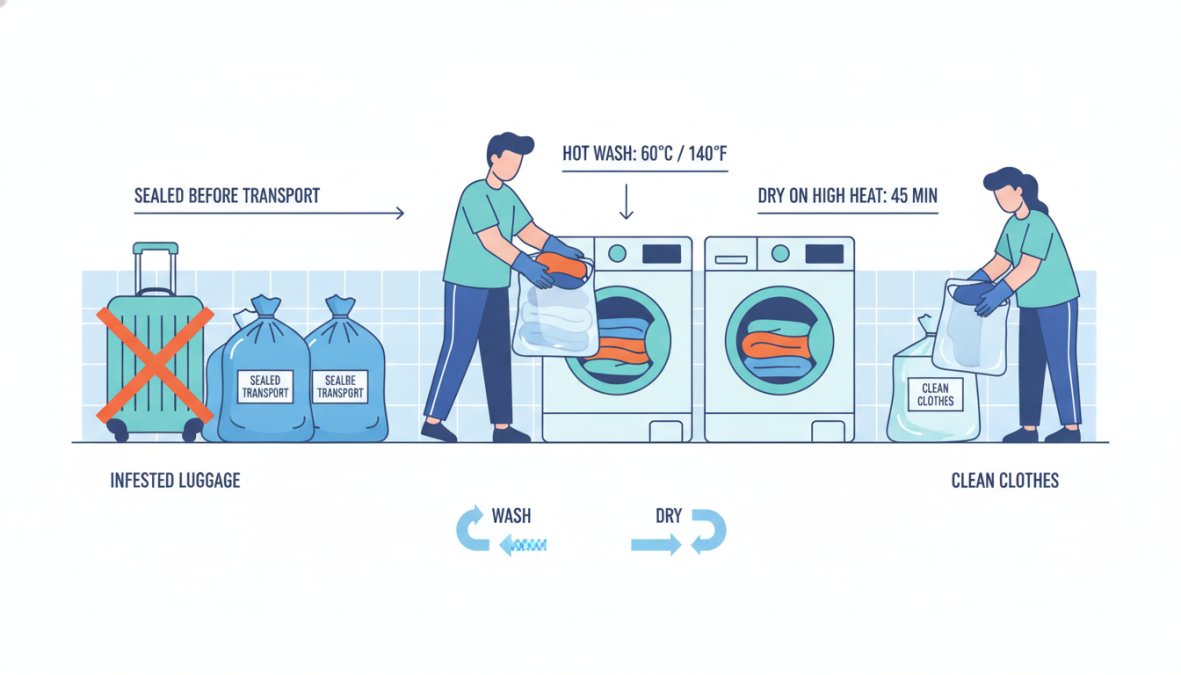
- Bag items at the source. Place infested clothing directly into heavy-duty plastic bags in the infested room. Seal the bags before carrying them anywhere.
- Transport bags without opening. Carry sealed bags directly to the laundry area without setting them down on furniture or floors in unaffected rooms.
- Open bags directly into the dryer drum. This prevents bugs from dropping onto laundry room surfaces during transfer.
- Run a high-heat dryer cycle first. Use the highest heat setting safe for the fabric. Run for at least 30 minutes (45-60 minutes for thick fabrics).
- Transfer to the washing machine. Wash on the hottest water setting safe for the fabric with your standard laundry detergent.
- Run a second dryer cycle if needed. For heavily infested items or thick fabrics, a second dryer cycle adds an extra margin of safety.
- Move directly to sealed storage. Do not leave treated items exposed in the laundry area.
Public laundromat risks and precautions
If you must use a public laundromat, transport items in sealed bags, open them directly into the machine, and remove items promptly when the cycle finishes. Avoid peak hours when multiple machines are in use simultaneously, as the risk of cross-contamination on shared folding tables is genuine.
Chemical additives and sanitization
Standard laundry detergent does not kill bed bugs. It cleans fabric and removes debris, but it has no insecticidal properties. The heat from the dryer is your active treatment. Detergent is hygiene maintenance. Do not rely on any chemical additive as a substitute for proper dryer temperature and duration.
Common Mistakes When Washing Bed Bug-Infested Clothing
Most laundry treatment failures come down to a small set of predictable errors.
Mistake 1: Skipping the dryer or using low heat. Many people wash on hot and air dry, which leaves viable eggs on the fabric. Always use the dryer on high heat.
Mistake 2: Overloading the dryer. A packed drum does not heat evenly. Bugs and eggs in the center of a large load may never reach lethal temperature.
Mistake 3: Treating clothing but not the source. Laundry treatment is one component of infestation control. If the mattress, bed frame, baseboards, and furniture are not treated simultaneously, re-infestation is nearly certain. As noted by CDC resources on bed bug prevention and control, bed bugs spread easily through furniture, luggage, and suitcases.
Mistake 4: Handling treated and untreated items together. Placing clean, treated items next to untreated ones transfers bugs. Keep them physically separated throughout the process.
Mistake 5: Assuming one treatment is sufficient. Bed bug eggs hatch over a period of days. A single laundry treatment may not catch eggs that were laid after the previous cycle.
Mistake 6: Ignoring luggage and accessories. Suitcases, bags, shoes, and belts are common hosts for bed bugs and eggs and need heat treatment too.
A bed bug infestation that has reached your clothing is a sign the problem has likely spread beyond what laundry treatment alone can resolve. Zoifia Pest Control provides licensed and insured bed bug extermination for residential and commercial properties throughout the Metro Boston area, backed by a 90-day guarantee and no long-term contracts required. If you’ve followed the laundry protocol and are still finding signs of activity, a professional inspection is the logical next step. Get a quote from Zoifia Pest Control and eliminate the infestation completely.
Frequently Asked Questions
Can bed bugs survive a washing machine cycle?
Bed bugs and bed bug eggs can survive washing machines when water temperature is below 118°F (48°C). While water can drown some insects, bed bugs are surprisingly resilient in water. The washing machine alone is insufficient for eliminating an infestation. This is why the dryer cycle, not the washer, is the critical step in your laundry cycle for killing bed bugs, nymphs, and eggs.
What temperature kills bed bugs in the dryer?
Bed bugs reach their thermal death point at approximately 118°F (48°C), but a dryer cycle should reach 130°F (54°C) or higher to reliably eliminate all life stages, including bed bug eggs. Most standard dryer cycles on high heat achieve this temperature. Run your dryer on high heat for at least 30 minutes to ensure complete extermination of adult bed bugs, nymphs, and eggs in your clothing.
How should I store clothes after bed bug treatment?
Store treated clothing in sealable containers or sealed plastic bags to prevent re-infestation from other areas of your home. Keep sealed storage away from your bedroom and living spaces. Only remove items from storage once your entire property has undergone professional pest control treatment and a follow-up inspection confirms elimination. This post-wash storage protocol is essential for preventing cross-contamination and re-infestation during the treatment process.
Can I treat dry clean only clothes for bed bugs at home?
Dry clean only fabrics cannot tolerate high-heat dryer cycles. Instead, seal these items in plastic bags for 7-10 days (bed bugs can survive without a host but will eventually die), use a low-temperature dryer setting if the fabric allows, or consult a professional dry cleaner about heat treatment options. For delicate fabrics, professional pest control services may offer alternative heat treatment methods that don't damage your clothing.
This article was written using GrandRanker
