Table of Contents
- Physical Signs of Bed Bugs in Your Apartment
- Where Bed Bugs Hide in Apartments
- How to Check for Bed Bugs in Your Mattress and Furniture
- Bed Bug Bites vs Flea Bites: Why Bites Are an Unreliable Indicator
- Apartment-Specific Transmission Risks and How Bed Bugs Spread
- How to Prevent Bed Bugs in Apartments: A Move-In Checklist
- Landlord Responsibility for Bed Bugs and Your Tenant Rights
- Signs of Bed Bugs in Apartment: When to Call a Professional
Last Updated: June 17, 2026
Bed bugs are one of the most stressful pest problems a renter can face, and knowing the signs of bed bugs in apartment settings is the first line of defense. At Zoifia Pest Control, we work with Metro Boston tenants regularly, and the same pattern comes up: most people discover an infestation weeks or months after it started because they didn’t know what to look for. Below, we’ll walk you through how to identify, locate, and respond to bed bugs in an apartment, including the physical evidence most renters overlook, the hiding spots that get missed, and what your lease actually obligates your landlord to do.
Here’s what most guides get wrong: they lead with bites. Bites are one of the least reliable indicators of a bed bug infestation. About 30% of people show no visible reaction at all, according to EPA bed bug identification guidance. The physical evidence, stains, shed skins, eggs, is what actually tells the story.
Physical Signs of Bed Bugs in Your Apartment
Physical evidence is the most reliable way to confirm a bed bug infestation. The signs of bed bugs in apartment environments fall into four categories: stains, fecal matter, shed exoskeletons, and live or dead insects. Learning to distinguish these from ordinary dirt is the skill that separates early detection from a full-blown infestation.
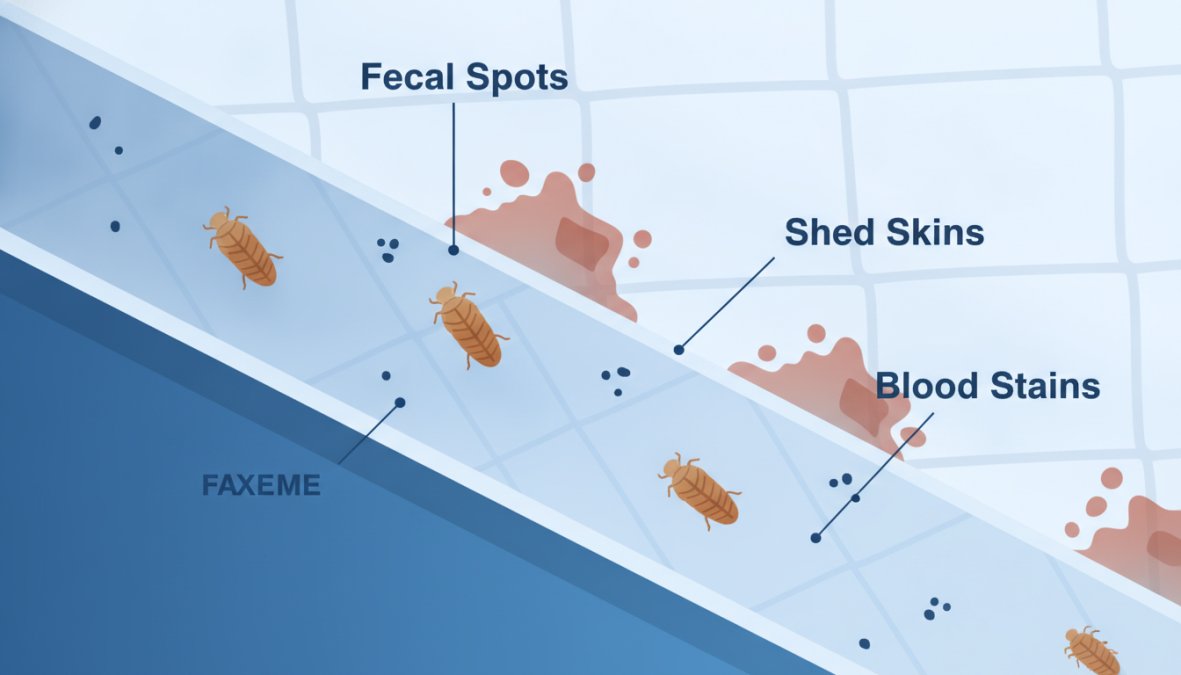
Rusty Stains, Fecal Spots, and Shed Skins
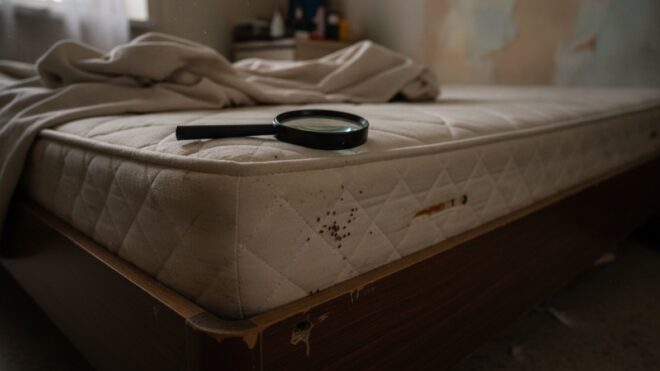
Rusty or reddish stains on mattress fabric or linens are caused by bed bugs being crushed during sleep. These bloodstains are roughly the size of a poppy seed and may smear when fresh. Fecal spots are darker, tiny black or dark brown dots resembling felt-tip marker bleed-through, and cluster near hiding areas like mattress seams, box spring undersides, and baseboards. Unlike bloodstains, fecal spots absorb into fabric and don’t smear easily.
Shed skins are perhaps the most overlooked sign. Bed bugs shed their exoskeleton at each of five nymph stages, leaving translucent, paper-thin shells behind. Finding multiple shed skins in the same area strongly indicates an established colony, not a recent arrival.
Eggs, Eggshells, and Live Bugs
Bed bug eggs are white, about 1mm long, and shaped like a tiny grain of rice. They’re sticky when freshly laid, adhering to fabric, wood grain, and carpet fibers. Hatched eggshells remain in place as hollow, slightly flattened versions of the eggs.
Live adult bed bugs are flat, oval-shaped, and reddish-brown, roughly the size of an apple seed. Nymphs are smaller and paler. A daytime sighting is significant: bed bugs are nocturnal, so seeing one during the day usually means the population has grown large enough to force individuals out of hiding during off-hours.
Finding only one or two shed skins doesn’t rule out an infestation. Bed bug colonies grow exponentially. A single fertilized female can produce hundreds of eggs over her lifetime. Early detection at the shed-skin stage is the best possible outcome.
Where Bed Bugs Hide in Apartments
Bed bugs don’t live on their hosts the way fleas do. They live in the environment and come out to feed. This distinction shapes where you look for them.
Mattress Seams, Baseboards, and Electrical Socket Plates
The mattress seam is the single most common hiding spot. The stitched edge provides a tight, dark channel that offers both shelter and proximity to a sleeping host. Check every seam, including the underside and where the mattress meets the box spring.
Baseboards are the second most common location in apartment settings, bed bugs travel along walls and settle into the gap between the baseboard and the floor, especially when spreading from an adjacent unit. Electrical socket plates are frequently missed: bed bugs move through wall voids between apartments, and outlet covers provide easy entry and exit points. Unscrewing a socket plate and checking behind it with a flashlight is a step most tenants never take.
Apartment-Specific Hiding Spots Tenants Often Miss
Multi-unit housing creates transmission pathways that single-family homes don’t have. Beyond the mattress and baseboards, bed bugs in apartments commonly hide in:
- The underside and drawer tracks of nightstands and dressers
- Behind picture frames and wall-mounted headboards
- Inside the hollow legs of bed frames
- Along carpet edges near the wall
- Inside electronics left near the bed (alarm clocks, phone chargers)
- Behind loose wallpaper or peeling paint near the headboard wall
The crevice tool attachment on a vacuum is useful for checking these areas without disturbing potential evidence before a professional inspection.
Bed bugs follow the heat and carbon dioxide of a sleeping person. The further a piece of furniture is from the bed, the less likely it is to harbor bugs. Focus your initial inspection within a 10-foot radius of where you sleep.
How to Check for Bed Bugs in Your Mattress and Furniture
A methodical inspection catches infestations that casual observation misses. You need only a flashlight, a magnifying glass, and a credit card or thin crevice tool to probe seams and gaps.
Follow these steps in order:
- Strip all bedding and examine it under direct light for bloodstains and fecal spots
- Remove the mattress from the box spring and stand it upright
- Inspect every mattress seam using the flashlight at a low angle to catch shadows
- Examine the box spring, paying particular attention to the stapled fabric on the underside
- Check the bed frame, including all joints, screw holes, and any hollow tubing
- Move to the nightstand, pulling out drawers and checking the tracks and corners
- Inspect upholstered furniture using the crevice tool along every seam and tufted area
- Examine baseboards and electrical socket plates within 10 feet of the bed
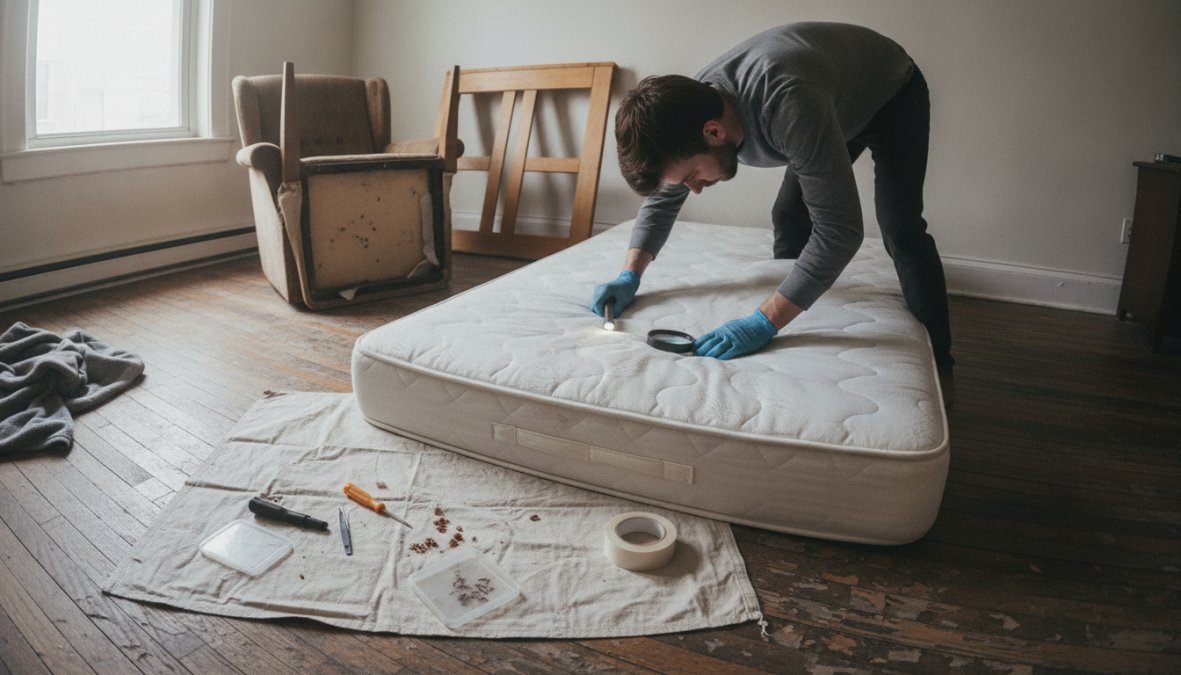
A thorough inspection takes 20 to 30 minutes. If you find evidence but no live bugs, the infestation may be small or well-hidden, not gone.
Use a white sheet placed beneath the bed frame during inspection. Any debris that falls during probing, shed skins, fecal matter, or eggs, will be visible against the white background and easier to photograph for documentation.
Bed Bug Bites vs Flea Bites: Why Bites Are an Unreliable Indicator
Bites are the symptom most people associate with bed bugs, but they’re among the least useful diagnostic tools. Reactions are highly individual: some people develop intensely itchy welts, others show nothing at all, and the same person’s reaction can change with repeated exposure.
Flea bites tend to appear around the ankles and lower legs, since fleas live in carpet and jump upward. Bed bug bites more often appear on exposed skin during sleep, arms, shoulders, neck, and face, sometimes in a line or cluster, though that pattern is too inconsistent to use as a definitive identifier. Carpet beetles are another common source of confusion: their larvae cause skin irritation that mimics bite reactions, but carpet beetles leave no bloodstains, fecal spots, or shed exoskeletons.
The bottom line on bites: treat them as a prompt to inspect, not as confirmation. As documented in CDC guidance on bed bug health effects, physical evidence from the environment is the only reliable method of confirming a bed bug infestation.
Apartment-Specific Transmission Risks and How Bed Bugs Spread
Bed bugs don’t jump or fly. They spread through direct contact and hitchhiking on objects. In apartment buildings, this creates transmission risks that don’t exist in standalone homes.
The most common transmission routes in multi-unit housing include:
- Wall voids and shared plumbing chases: Bed bugs travel between units through gaps around pipes and electrical conduits. A neighbor’s infestation can become yours without any shared belongings.
- Shared laundry facilities: Bed bugs can transfer from infested clothing or bedding left in a shared dryer or on a shared folding surface.
- Used furniture: Upholstered furniture left in hallways or picked up secondhand is one of the most common entry points.
- Travel luggage: Suitcases stored near the bed after travel are a frequent source, bed bugs can survive months without feeding.
- Shared moving equipment: Dollies, blankets, and boxes used in building moves can transfer bugs between units.
Cross-contamination between units is common enough that New York City Department of Health bed bug resources recommends landlords inspect adjacent units whenever a bed bug infestation is confirmed in any apartment in a building.
How to Prevent Bed Bugs in Apartments: A Move-In Checklist
Prevention is significantly easier than treatment. The move-in period is the highest-risk window, and a structured inspection before you bring in furniture dramatically reduces that risk.
Post-Inspection Checklist for Move-In Day
Use this checklist before moving any belongings into a new apartment:
- Inspect all mattress seams, baseboards, and electrical outlets in every room
- Check inside closets, including floor corners and any built-in shelving
- Look behind any appliances left by the previous tenant
- Examine window frames and curtain rods
- Request written documentation from the landlord confirming the unit was treated or inspected before your tenancy
- Photograph any evidence you find before moving in
- Encase your mattress and box spring in certified bed bug-proof encasements immediately
- Avoid placing luggage on the floor or bed; use a luggage rack or bathtub during the first week
- Wash all clothing and linens on high heat before placing in drawers or closets
- Inspect any used or secondhand furniture before bringing it inside
Apartment lease agreements often specify tenant responsibilities around pest reporting. Read your lease before move-in and note any clauses about reporting pests within a specific timeframe, delayed reporting can affect who bears treatment costs.
Landlord Responsibility for Bed Bugs and Your Tenant Rights
Landlord responsibility for bed bugs is one of the most misunderstood areas of tenant rights, and it’s where many renters lose money they didn’t have to.
Most states require landlords to provide habitable housing, and a bed bug infestation typically qualifies as a habitability violation. In Massachusetts, where Zoifia Pest Control operates, landlords are generally responsible for pest extermination in rental properties unless the infestation was demonstrably caused by the tenant. The Massachusetts Attorney General tenant rights guide outlines the specific obligations landlords carry under the state sanitary code.
Practical steps when dealing with a landlord over bed bugs:
- Document everything in writing. Send notice of the infestation via email or certified mail, and keep copies.
- Photograph all physical evidence before any cleaning or treatment.
- Request a written response and treatment timeline from your landlord.
- If the landlord fails to act within a reasonable period (typically 14 days in most jurisdictions), contact your local housing authority or board of health.
- Do not withhold rent without legal guidance, improper rent withholding can expose you to eviction proceedings even when the landlord is at fault.
Tenants are generally not responsible for costs when an infestation originates from building infrastructure or an adjacent unit. However, if you brought in infested used furniture or delayed reporting, the liability calculation changes. Get clarity on your specific situation before agreeing to any cost-sharing arrangement.
Signs of Bed Bugs in Apartment: When to Call a Professional
Recognizing the signs of bed bugs in apartment settings is one thing. Knowing when DIY approaches stop being realistic is another.
Call a pest control professional when:
- You find live bugs, multiple shed skins, or widespread fecal spotting across more than one room
- A DIY treatment hasn’t reduced evidence within two weeks
- The infestation appears to be coming from a wall void or adjacent unit
- You’re preparing for a legal dispute with a landlord and need documented professional confirmation
DIY vs. Professional Treatment: What It Really Costs
DIY treatment is appealing because the upfront cost is lower. The honest assessment: it works for very early-stage, isolated infestations where the source is known and contained. It rarely works once an infestation has spread to multiple pieces of furniture or rooms.
| Approach | Typical Scope | Limitations |
|---|---|---|
| DIY mattress encasements | Prevents spread from mattress | Doesn’t address bugs in walls or furniture |
| OTC contact sprays | Kills exposed bugs on contact | No residual effect; misses hidden populations |
| Heat treatment (DIY) | Good for bedding and small items | Can’t treat wall voids or structural areas |
| Professional extermination | Full unit treatment, including voids | Higher upfront cost; most effective for established infestations |
| Integrated pest management | Combines methods for long-term control | Requires professional coordination |
Professional extermination using integrated pest management protocols addresses the full scope of an infestation: visible surfaces, wall voids, furniture interiors, and adjacent risk areas. For established infestations, the cost difference between DIY and professional treatment narrows quickly when you account for repeated DIY attempts, replacement furniture, and the time cost of an infestation that drags on for months.
Frequently Asked Questions
What are the first signs of bed bugs in an apartment?
The earliest signs of bed bugs in an apartment are usually small rusty or reddish blood stains on your sheets, tiny dark fecal spots along mattress seams or baseboards, and shed exoskeleton skins near hiding spots. You may also notice a faint musty odor in heavily infested areas. Early detection is critical, catching an infestation before it spreads to adjacent units in multi-unit housing is much easier and less costly to treat.
Can bed bugs travel between apartments in the same building?
Yes. Bed bugs are skilled at hitchhiking through shared walls, plumbing voids, electrical conduits, and hallway carpeting in multi-unit housing. A single infested unit can spread to neighboring apartments within weeks. If you notice signs of bed bugs in your apartment, notify your landlord immediately so adjacent units can be inspected. Prompt action prevents cross-contamination and limits your potential liability under your apartment lease.
How do I tell bed bug bites apart from flea bites?
Bed bug bites and flea bites both cause red welts and itching, making them easy to confuse. Flea bites typically appear around ankles and lower legs, often with a red halo around the center. Bed bug bites tend to appear in clusters or lines on exposed skin like arms, neck, and shoulders. However, bite reactions vary so widely between individuals that bites alone are an unreliable indicator, always look for physical evidence like fecal spots or shed skins to confirm a bed bug infestation.
Who is responsible for bed bug treatment, the tenant or the landlord?
In most states, including Massachusetts, landlords are legally required to maintain habitable conditions, which includes addressing bed bug infestations. If you report signs of bed bugs in your apartment in writing and your landlord fails to arrange professional extermination within a reasonable timeframe, you may have grounds to pursue remedies under tenant rights law. Document everything in writing, keep copies, and contact your local housing authority if the landlord is unresponsive.
Is DIY bed bug treatment effective, or do I need a professional?
DIY treatments like over-the-counter sprays and mattress encasements can reduce bed bug populations but rarely eliminate a full infestation. Bed bugs hide deep in crevices, behind electrical socket plates, and inside furniture where sprays cannot reach. Professional extermination using integrated pest management methods, including heat treatment or targeted chemical application, is far more reliable. The cost difference between repeated failed DIY attempts and a single professional treatment often makes hiring a pest control professional the more affordable long-term choice.
What should I do if I find bed bug signs in my apartment?
Stop moving items between rooms immediately to avoid spreading the infestation. Document all evidence, photograph fecal spots, shed skins, and any live bugs. Notify your landlord in writing the same day. Avoid throwing out furniture before a pest control professional inspects, as this can spread bed bugs through hallways and common areas. Contact a licensed exterminator to assess the scope and recommend an integrated pest management plan tailored to your apartment.
Dealing with a suspected bed bug infestation is stressful, and acting fast makes a significant difference in how manageable the situation becomes. Zoifia Pest Control provides licensed and insured bed bug treatment for residential properties across the Metro Boston area, backed by a 90-day guarantee and no long-term contracts required. Get a quote from Zoifia Pest Control and get a clear treatment plan before the problem spreads further.
This article was written using GrandRanker
