Table of Contents
- 1. Foraging Trails and Worker Ants in Plain Sight
- 2. How to Find an Ant Nest in the House
- 3. Wood Shavings, Frass, and Structural Damage in the Kitchen
- 4. Signs of Carpenter Ants vs Sugar Ants
- 5. Food Contamination, Odors, and Sanitation Risks
- 6. When to Call Pest Control for Ants
- 7. Seasonal Infestation Patterns and Prevention
- Frequently Asked Questions
Last Updated: September 14, 2026
1. Foraging Trails and Worker Ants in Plain Sight
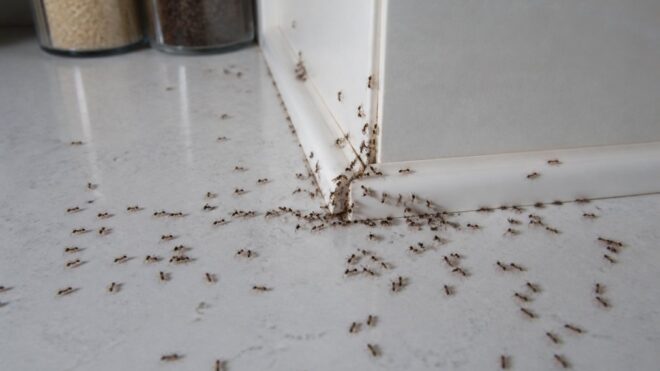
The clearest sign of a severe kitchen ant infestation is a visible, continuous trail of worker ants moving along counters, floors, or walls during daylight hours. Occasional ants mean scouts; steady two-way traffic means a colony has already established a route to a food source inside your home.
Worker ants follow pheromone trails laid down by scout ants, which is why the line keeps reappearing even after you wipe it away. According to Clemson University’s household ant management guidance, the trail itself is the colony’s highway, and killing the visible ants rarely disturbs the nest.
Watch for these escalation signals:
- Trails that persist after cleaning
- Ants appearing in multiple rooms at once
- Worker ants of noticeably different sizes in the same line
- Activity that continues after dark
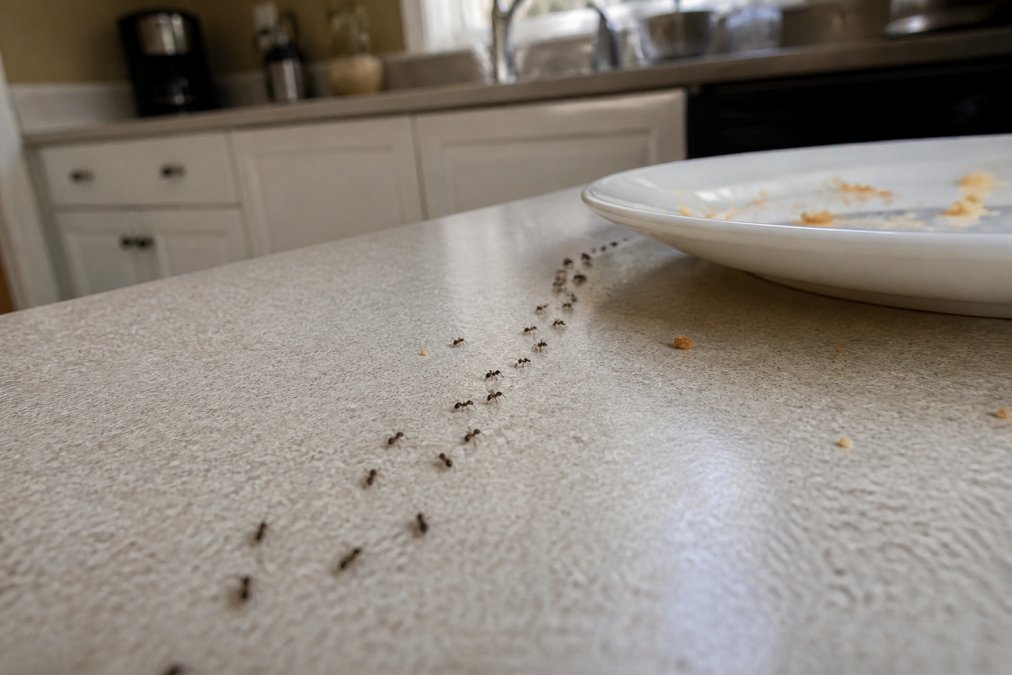
A common mistake is spraying the trail and assuming the problem is solved. You’ve killed foragers, not the colony, and the survivors simply reroute.
2. How to Find an Ant Nest in the House
Finding an ant nest indoors means following the trail backward to its source, then confirming the site by watching where ants disappear. Most indoor nests sit in wall voids, under baseboards, behind appliances, or inside cabinet gaps near moisture.
Here’s the practical sequence:
- Wait until activity peaks, usually evening for many species.
- Place a small dab of bait or jelly where the trail ends.
- Follow the ants as they carry it; they’ll lead you to the entry point.
- Mark the spot, then check the exterior for a matching entry nearby.
- Tap along the wall and listen for a hollow or papery sound, a sign of a void nest.
What most guides miss is that the visible nest is often outside, with the indoor trail running through a crack in the foundation or a gap around plumbing. Sealing cracks before locating the nest just pushes ants to a new entry point.
3. Wood Shavings, Frass, and Structural Damage in the Kitchen
Piles of fine wood shavings or frass near baseboards, window sills, or cabinet frames point to carpenter ants rather than sugar ants. Frass is the sawdust-like debris mixed with insect fragments that carpenter ants push out of their galleries.
Unlike termites, carpenter ants don’t eat wood; they excavate it to build nests. That distinction matters because the damage pattern looks different: clean, smooth galleries rather than mud-lined tunnels. According to University of Minnesota Extension’s carpenter ant guide, structural damage from carpenter ants typically concentrates around moisture-damaged wood, so a leaky dishwasher line or dripping sink trap is often the real culprit.
Check these areas:
- Baseboards near sinks and dishwashers
- Window sills with prior water damage
- Cabinet frames under the sink
- Floor joists in damp basements
If you find frass and hollow sounds together, treat it as a serious infestation rather than a nuisance.
4. Signs of Carpenter Ants vs Sugar Ants
Telling carpenter ants from sugar ants comes down to size, color, and where they nest. Carpenter ants are larger, typically black or reddish-black, and nest in wood. Sugar ants are small, range from light brown to black, and nest in soil, wall voids, or cabinet gaps near food.
| Feature | Carpenter Ants | Sugar Ants |
|---|---|---|
| Size | Large, uniform | Small, varied |
| Nest site | Damp or hollow wood | Soil, voids, cabinets |
| Debris | Wood shavings and frass | Little to none |
| Activity | Often nocturnal | Mostly daytime |
| Damage risk | Structural | Contamination |
This is where species-specific signs matter most. A homeowner treating sugar ants with the wrong bait wastes weeks while a carpenter ant colony keeps chewing through framing. If you’re unsure which species you have, capture a few ants in a sealed container and have them identified before treating.
5. Food Contamination, Odors, and Sanitation Risks
A severe kitchen ant infestation creates real sanitation problems, not just an annoyance. Ants travel through drains, trash, and outdoor soil before walking across your countertops, and they leave pheromone trails and waste behind.
Watch for these health and hygiene red flags:
- Ants inside sealed food packaging, cereal boxes, or sugar jars
- A stale, musty, or slightly sweet odor near cabinets
- Sticky residues on shelves from crushed foragers
- Ants gathering around pet food bowls
What most people don’t realize is that some ant species can carry bacteria on their bodies after feeding on waste. The CDC’s guidance on pest-related sanitation notes that pest infestations in food areas warrant prompt cleanup and exclusion, not just surface spraying.
Any food that ants have reached should be discarded. Wipe down shelves with soap and water, then store dry goods in sealed containers.
6. When to Call Pest Control for Ants
Call pest control for ants when the infestation involves structural damage, multiple rooms, or a nest you can’t locate after a week of baiting. DIY works for small, single-trail problems; it fails against established colonies with satellite nests.
Use this decision framework:
- One trail, one room, bait working within 5 days: continue DIY.
- Trails in three or more rooms: call a professional.
- Frass, hollow sounds, or visible wood damage: call immediately.
- Infestation returns within two weeks of treatment: call.
At Zoifia Pest Control, our licensed and insured technicians handle ant infestations across the Metro Boston area with a 90-day guarantee and no long-term contract required, so a single treatment doesn’t lock you into monthly billing. If you’re a renter or landlord who needs one-time service, that’s exactly the kind of job we take.
Ignoring carpenter ant damage for a full season can mean replacing framing, not just treating pests. Structural repair costs far more than early intervention.
7. Seasonal Infestation Patterns and Prevention
Ant activity indoors follows a seasonal rhythm. In spring and early summer, colonies wake and send foragers inside looking for food and moisture. Late summer brings swarming, when winged reproductive ants emerge to start new colonies. Fall and winter activity usually means a nest is already established inside the structure.
Prevention steps that actually work:
- Seal cracks around pipes, foundations, and window frames
- Fix leaking faucets and drain lines
- Store food in airtight containers and wipe counters nightly
- Trim vegetation away from the foundation
- Keep trash bins sealed and emptied regularly
Baiting works best in spring and early summer when foragers are actively feeding. Residual spray applied along entry points helps during peak season, but it won’t reach a nest inside a wall void.
Place bait stations along the trail, not on top of it. Ants avoid disturbed paths, and baiting the exact line often sends them searching for a new route instead of taking the bait.
Seasonal prevention only holds if you address moisture sources. Ants nest where wood stays damp, so fixing leaks does more long-term good than any spray.
Frequently Asked Questions
Why do I have a sudden ant infestation in my kitchen?
A sudden kitchen ant infestation usually means scout ants found a reliable food or moisture source and laid pheromone trails back to the colony. Crumbs, sticky substances, pet food, and leaky pipes under the sink all attract foragers. Once a trail is established, worker ants follow it in large numbers. Sealing entry points and removing the food source helps, but a severe kitchen ant infestation often requires baiting or professional treatment to reach the nest.
How do I tell the difference between carpenter ants and sugar ants in my kitchen?
Carpenter ants are larger, usually 6 to 12 millimeters, and often appear black or reddish-black. Sugar ants are much smaller, around 2 to 3 millimeters, and range from light brown to black. Carpenter ants leave wood shavings and frass near nesting sites and may produce hollow sounds when tapping baseboards. Sugar ants trail toward sugary foods and sticky substances. Correct identification determines whether you need simple baiting or a professional inspection for structural damage.
When should I stop treating ants myself and call a pest control professional?
Call a professional when you see worker ants returning days after treatment, find multiple nesting sites, or notice structural damage like hollow-sounding baseboards or window sills. If ants have reached food storage areas or you have a carpenter ant infestation, DIY baiting often misses the main colony. A licensed technician can locate hidden nests, apply residual spray or baiting programs, and confirm the infestation is fully cleared.
Can a severe ant infestation cause structural damage to my home?
Carpenter ants can compromise structural integrity by tunneling through wood to build nesting sites. Over time, this weakens baseboards, window sills, and framing. You may notice frass, wood shavings, or hollow sounds when tapping suspect areas. Sugar ants and pavement ants rarely cause structural damage but can contaminate food and spread bacteria. Any severe kitchen ant infestation warrants a professional inspection to rule out wood-destroying species.
A severe kitchen ant infestation rarely resolves on its own, and the longer a colony establishes satellite nests, the harder it becomes to eliminate. If you’re seeing persistent trails, frass, or damage around baseboards and window sills, Zoifia Pest Control can help. Our team offers fast response, licensed and insured service, a 90-day guarantee, and flexible one-time or recurring treatment with no contract required. Get a quote from Zoifia Pest Control and get your kitchen back to pest-free.
