Last Updated: October 25, 2026
Quick Summary
The best natural bed bug treatment for a Boston apartment combines heat, monitoring, and a realistic plan rather than one product. High-heat drying kills eggs and adults on bedding, while steam reaches mattress seams and furniture joints. Plan on four to six weeks of consistent work, and loop in your landlord early in multi-unit buildings.
- Wash bedding and clothing on hot water, then dry on high heat for at least 30 minutes.
- Place pitfall traps under bed and couch legs to monitor activity, not to eradicate bugs.
- Plant-derived sprays kill only on contact and leave little to no residual effect.
- Bed bug treatment in an apartment typically takes two to six weeks to confirmed clearance.
- Report suspected bed bugs to your landlord in writing the same day you notice them.
Table of Contents
- Quick Comparison: Natural Bed Bug Treatment Options for Apartments
- How to Get Rid of Bed Bugs in an Apartment: A Step-by-Step Plan
- Natural Bed Bug Spray for Apartments: What Works and What Doesn’t
- Bed Bug Treatment Preparation Checklist Before Any Treatment
- Heat, Freezing, and Laundry: Non-Chemical Methods That Kill Bed Bugs
- Bed Bug Treatment: How Long Does It Take in a Boston Apartment?
- Renter and Landlord Coordination in Multi-Family Buildings
- When Natural Methods Aren’t Enough: Getting a Professional Quote
- Frequently Asked Questions
Quick Comparison: Natural Bed Bug Treatment Options for Apartments
Bed bugs are one of the hardest household pests to eliminate, and apartment living makes it worse: bugs move through shared walls, and one untreated unit can reinfect an entire building. At Zoifia Pest Control, we field calls from renters and landlords across the Metro Boston area.
Below is how the main non-chemical and low-toxicity options stack up.
| Treatment | Kills Bed Bugs? | Best For | Main Limitation |
|---|---|---|---|
| High-heat dryer | Yes, on dryer-safe items | Bedding, clothing | Only works on washable items |
| Pitfall traps | No, detects and reduces bites | Monitoring beds and couches | Not an eradication method |
| Plant-derived sprays | Contact kill only | Spot treatment | Little residual effect |
| Steam and heat treatment | Yes, all life stages | Mattresses, furniture seams | Needs professional equipment |
| Freezing | Yes, if cold enough, long enough | Small items | Slow and unreliable at home |
The pattern is clear: no single natural product finishes the job. A plan does.
How to Get Rid of Bed Bugs in an Apartment: A Step-by-Step Plan
Getting rid of bed bugs in an apartment takes four to six weeks of consistent work, not one afternoon of spraying. Here is the sequence we recommend to renters:
- Confirm the infestation before you treat anything. Look for rust-colored spots on sheets, shed skins along mattress seams, and live bugs in couch folds.
- Wash and dry every piece of bedding and clothing you can on the hottest dryer setting the fabric allows.
- Seal clean items in plastic bags so bugs cannot reinfest them.
- Place pitfall traps under bed and couch legs to monitor activity.
- Vacuum mattress seams, baseboards, and furniture daily, then bag and discard the vacuum contents outside.
- Treat remaining harborages with steam or a targeted spray.
- Recheck traps weekly for at least a month before you call it done.
Renters in multi-unit buildings should also loop in the landlord early, since treating one unit without the neighbors rarely holds.
For buildings where the infestation has spread beyond a single unit, effective bed bug treatment for rental units covers what a coordinated response looks like.
Natural Bed Bug Spray for Apartments: What Works and What Doesn’t
Most natural bed bug sprays kill on contact and do nothing after they dry. That is the single most important thing to understand before you buy one.
| Option | Realistic effectiveness | Mechanism | Best use | Key limitation |
|---|---|---|---|---|
| High-heat dryer | High on dryer-safe items | Kills eggs and adults above roughly 120°F | Bedding, clothing, curtains | Only works on items that fit and tolerate heat |
| Steam (professional or rental unit) | High when applied slowly to seams | Penetrating heat kills all life stages | Mattress seams, box springs, furniture joints | Slow; misses deep wall voids |
| Diatomaceous earth (thin dust) | Moderate over weeks | Abrades the waxy outer shell, causing dehydration | Cracks, baseboards, behind outlets | Fails if applied thick; ineffective when damp |
| Encasements | High as a barrier, not a killer | Traps existing bugs and blocks new ones | Mattress and box spring | Does not treat the rest of the room |
| Plant-derived contact sprays | Low to moderate | Direct contact only | Visible bugs, spot treatment | Little to no residual; reapplication needed |
| Essential oil diffusers or sachets | Low | Repellent at best | None for eradication | May push bugs into adjacent rooms |
| Foggers | Low and counterproductive | Disperses rather than targets | Not recommended | Drives bugs into walls and neighboring units |
The pattern is consistent: the options that work are the ones that deliver heat, a physical barrier, or a desiccant into harborage, not the ones that smell strong.
Safety and realistic expectations. Natural and plant-derived do not automatically mean harmless or effective.
Fogging an apartment is one of the most common renter mistakes. It drives bed bugs into adjacent rooms and wall voids, turning a contained problem into a building-wide one, and it does not kill eggs.
If you are weighing spray options for an upcoming move, the best non-toxic bed bug sprays for moving breaks down which formulations hold up and which are mostly marketing.
Bed Bug Treatment Preparation Checklist Before Any Treatment
Preparation decides whether a treatment works, and skipping it is the most common reason a natural bed bug treatment fails. Use this checklist before any spray, steam, or professional visit:
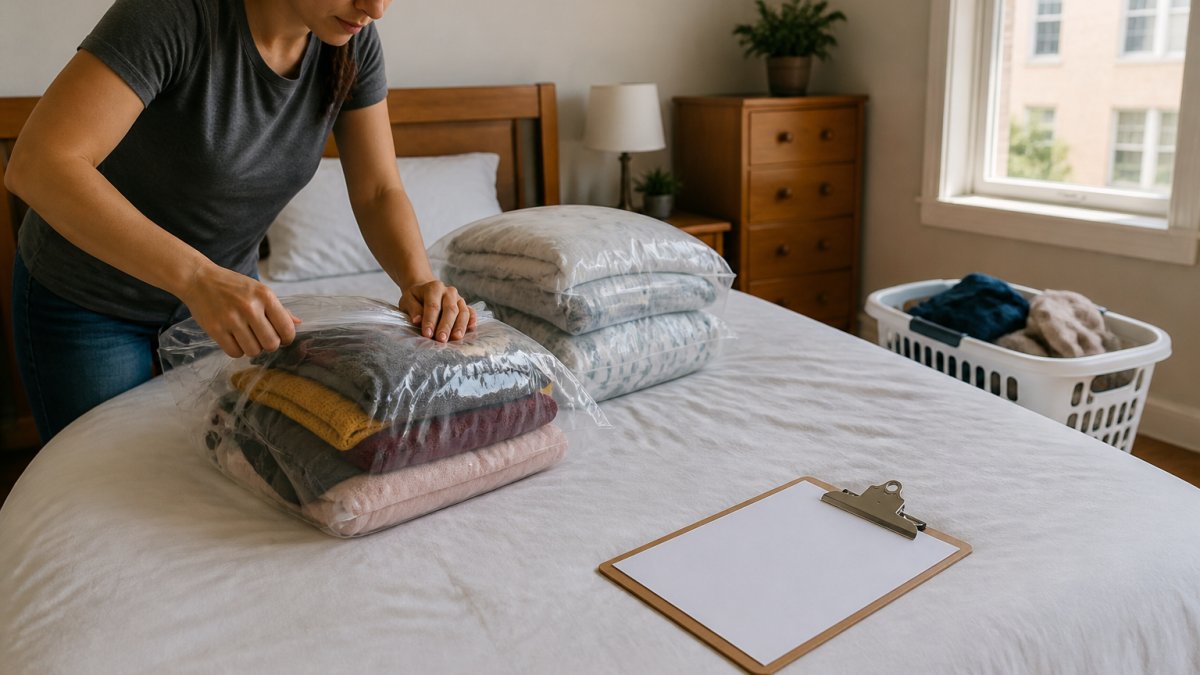
- Wash all bedding, curtains, and clothing on hot water, then dry on high heat for at least 30 minutes
- Bag clean items in sealed plastic bags and keep them sealed until treatment ends
- Vacuum mattress seams, box springs, baseboards, and furniture, then discard the bag outside
Heat, Freezing, and Laundry: Non-Chemical Methods That Kill Bed Bugs
Heat is the most reliable non-chemical method, and laundry is the version renters can start today. The EPA’s do-it-yourself bed bug control guidance lists high-heat clothes-dryer treatment as a valid DIY method, and it is the simplest way to kill eggs and adults on bedding without applying any pesticide.
Freezing is less dependable at home. Bed bugs die when held below freezing for an extended period, but a household freezer cycles on and off, and a short stint in a freezer bag often leaves survivors.
Professional heat treatment raises an entire room to a lethal temperature and holds it there. Whether that is worth the cost depends on how far the infestation has spread, and whether bed bug heat treatments are worth the cost walks through that trade-off honestly.
Bed Bug Treatment: How Long Does It Take in a Boston Apartment?
Bed bug treatment in an apartment typically takes two to six weeks from first treatment to confirmed clearance, depending on severity and how many units are involved. A single light infestation in one unit may resolve in two to three weeks with good preparation and follow-up. A building with spread across multiple units takes longer, because every connected unit has to be treated and monitored.
The timeline breaks down roughly like this:
- Week 1: inspection, preparation, first treatment
- Weeks 2 to 3: monitoring traps, spot re-treatment of active areas
- Weeks 4 to 6: follow-up inspection and clearance check
Older Boston-area buildings add time. Knob-and-tube era construction, plaster walls, and shared radiator runs give bed bugs plenty of travel routes between units, so follow-up matters more than the first visit.
Renter and Landlord Coordination in Multi-Family Buildings
Bed bugs in a multi-family building are a shared problem, and the law treats them that way. Massachusetts requires landlords to maintain habitable units free of infestation, and renters have a duty to report suspected bed bugs promptly and allow access for treatment.
What coordination looks like in practice, unit by unit:
- Report the suspected infestation in writing, with dates, photos, and the rooms affected. Keep a copy.
- Ask which units will be inspected and treated, and when. In connected buildings, treating one unit without inspecting the units above, below, and beside it rarely holds.
- Confirm who pays for treatment. Responsibility varies by lease and situation, and in many multi-unit buildings the landlord arranges and pays for treatment while the tenant prepares the unit and provides access.
When the infestation may have spread. If you see bugs in more than one room, hear reports from neighbors, or notice activity along shared walls, baseboards, or radiator runs, treat it as a building issue rather than a unit issue.
Cost and time trade-off. DIY natural methods cost little in supplies but take four to six weeks of consistent work and often fail when the infestation has crossed into walls or neighboring units. A coordinated professional response costs more up front but compresses the timeline and covers connected units, which is usually the cheaper path once more than one unit is involved. Get the scope in writing: which units, how many visits, what follow-up is included, and what guarantee applies.
If the landlord does not act. Put the request in writing, keep records of dates and responses, and contact your local board of health or housing inspection department for guidance on habitability and enforcement. Renters who want to know exactly what their landlord is required to disclose should read up on bed bug disclosure requirements for landlords before the conversation.
Report in writing the same day you suspect bed bugs. A dated paper trail protects you in a dispute and gives the landlord a clear start date for the response.
When Natural Methods Aren’t Enough: Getting a Professional Quote
Natural methods have a real ceiling. They work well for small, caught-early infestations and for protecting clean items during treatment. They fail when bed bugs have spread into wall voids, adjacent units, or heavy furniture, and they fail when eggs survive in places a spray cannot reach.
Signs it is time to call a professional:
- You still see live bugs after four weeks of consistent treatment
- Bites continue in more than one room
- Neighboring units report bed bugs
At Zoifia Pest Control, we handle bed bug work as a licensed and insured team with a 90-day guarantee and no long-term contract required, which suits renters who need a one-time treatment. If you are still deciding between doing it yourself and hiring out, pest control versus DIY extermination methods lays out the comparison plainly.
Frequently Asked Questions
Do natural bed bug sprays kill eggs as well as adult bed bugs?
Most plant-derived sprays sold as natural bed bug treatments target adults and nymphs, and their effect on eggs is limited. That’s why a spray alone rarely ends an infestation. Pair any spray with high-heat laundry for bedding and clothing, and repeat applications on the schedule the label gives. If eggs survive, new nymphs appear within roughly a week to ten days, so plan a follow-up inspection. A professional can confirm whether eggs remain and treat harborage areas you can’t reach.
How common are bed bugs in Boston apartments?
Bed bugs are a recurring issue in dense multi-family housing, and older buildings with shared walls and radiators give them plenty of places to hide. The risk rises when units share laundry rooms, hallways, and furniture. Inspect mattress seams, box springs, bed frames, and baseboards after travel or a used-furniture purchase. If you rent, report signs to your landlord promptly, since delaying treatment in one unit can spread the infestation to neighboring apartments.
Can heat treatment kill bed bugs in an apartment?
Heat kills bed bugs at every life stage, including eggs, when the entire treated space reaches the target temperature for the required time. In an apartment, that means the pest control professional must account for closets, wall voids, and adjacent units. Whole-room heat treatment is faster than repeated spray cycles but requires preparation and coordination with your landlord. A clothes dryer on high heat is a practical at-home option for dryer-safe items, as the EPA notes in its DIY guidance.
How can I treat bed bugs without spreading them to other apartments?
Bag infested clothing and bedding in sealed plastic bags before carrying them through hallways, and don’t move furniture or mattresses out of your unit. Vacuum thoroughly, then seal and discard the vacuum bag. Avoid foggers, which can push bed bugs into neighboring units and leave residual effects on surfaces. Tell your landlord so adjacent units can be inspected. If the infestation crosses walls, a licensed professional should treat connected units together to stop the spread.
When should I call a pest control professional for bed bugs?
Call a professional if you see live bed bugs after two weeks of DIY treatment, find bites continuing, or notice signs in multiple rooms. Also call if you live in a multi-family building where neighboring units may be affected, since coordinated treatment works better than isolated efforts. A licensed company can inspect, confirm the infestation, and recommend a plan. Ask about guarantees and follow-up visits so you know what happens if bed bugs return.
Bed bugs do not resolve on their own, and every week of delay gives them another room to colonize. If natural methods have hit their limit in your apartment, Zoifia Pest Control can inspect, treat, and follow up with a licensed team, a fast response, and a 90-day guarantee, all without a long-term contract. Get started with Zoifia Pest Control and get a clear answer on what is living in your apartment and how to remove it.

