Table of Contents
- Emergency Rodent Removal Services in Somerville, MA: What to Expect
- Signs of Rodent Infestation You Should Never Ignore
- How to Get Rid of Rats Fast: DIY vs. Professional Rodent Removal
- Rodent Proofing Services in Somerville: Sealing Entry Points for Good
- Emergency Pest Control Cost: What You’ll Likely Pay in Somerville
- Residential and Commercial Pest Control Services We Cover
- Why Somerville Residents Choose Zoifia Pest Control
- Conclusion: Act Fast Against Rodents in Somerville, MA
Last Updated: May 25, 2026
Rodents don’t wait for a convenient time to invade your home or business. If you need emergency rodent removal services somerville ma, the situation demands fast action: rats and mice can cause structural damage, contaminate food supplies, and spread disease within days of establishing a nesting site. At Zoifia Pest Control, we’ve responded to hundreds of rodent calls across Somerville and the Greater Boston area, and the pattern is always the same: the longer you wait, the worse the infestation gets. Below, we’ll walk you through exactly what to expect from professional rodent removal, why DIY approaches usually fall short, and how to protect your home or business for good.
Emergency Rodent Removal Services in Somerville, MA: What to Expect
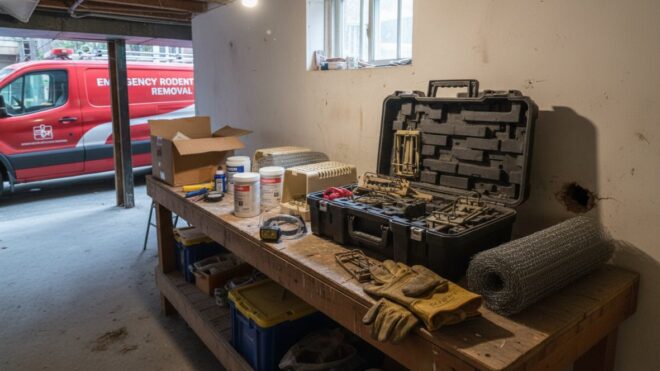
Emergency rodent removal is a same-day or next-day response service that addresses active rat or mouse infestations before they cause further structural damage or health risks. A licensed exterminator arrives, conducts a rapid inspection, identifies entry points and nesting sites, and deploys targeted trapping or baiting strategies immediately.
Most people don’t realize how fast a rodent problem escalates. A single pair of mice can produce dozens of offspring in a matter of months. By the time you see one rodent, there are almost certainly more hidden in your walls, crawlspace, or behind appliances.
Same-Day and Emergency Availability
Genuine emergency pest services mean a technician can reach your Somerville property within hours, not days. This matters most when you spot live rodents during business hours, discover rodent droppings in a commercial kitchen, or hear scratching inside walls at night.
The best local exterminators offer flexible scheduling that includes weekend and evening appointments. When evaluating providers, ask directly: "Can someone come today?" If the answer is a vague "we’ll try to fit you in," keep calling. A true emergency response should be a concrete commitment, not a maybe.
Free Inspections and Transparent Estimates
A reputable pest control company will offer a free inspection before quoting any treatment. During this visit, a technician examines the perimeter of your property, checks for rub marks along baseboards, looks for rodent droppings and nesting material, and identifies every plausible entry point.
Avoid any company that quotes a price without seeing your property first. Rodent infestations vary enormously in scope. A single mouse caught near a gap in your kitchen baseboard is a very different job from a full-scale rat activity problem in a multi-family building’s basement. Transparent estimates protect you from surprise charges later.
Signs of Rodent Infestation You Should Never Ignore
Catching a mouse infestation early is the single most effective way to limit damage and cost. Rodents are nocturnal and secretive by nature, so visible signs during daylight hours usually indicate a well-established population.
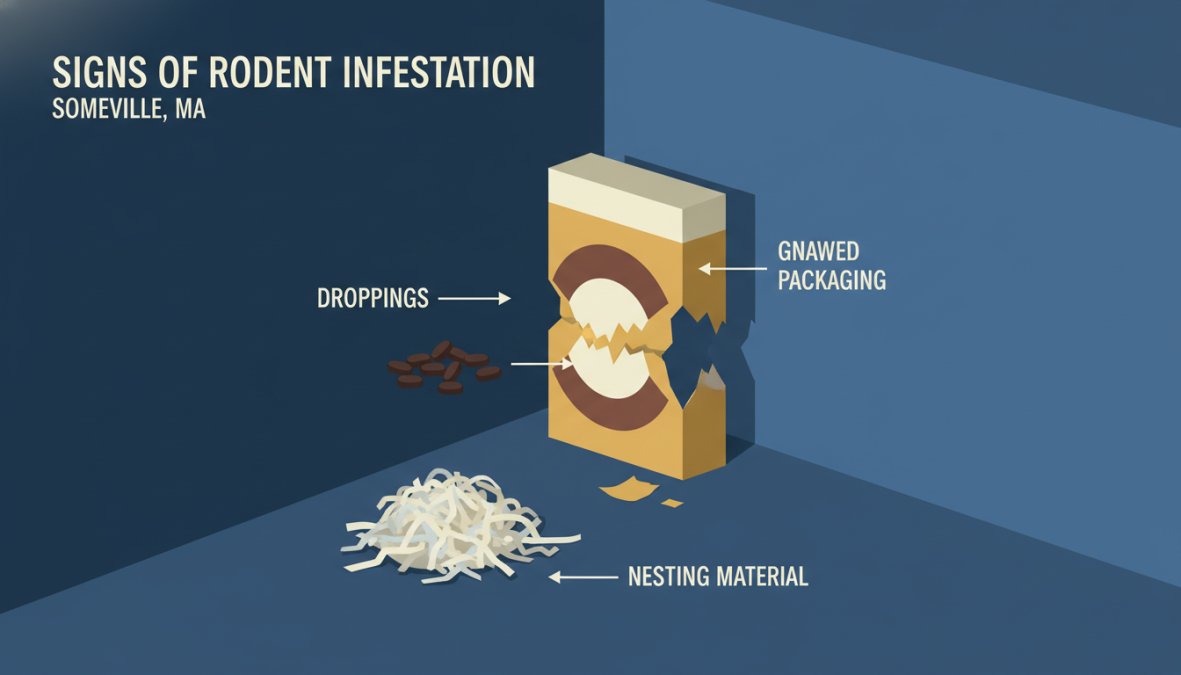
Watch for these specific indicators:
- Rodent droppings: Small, dark pellets near food storage, under sinks, or along walls
- Gnaw marks: Fresh gnawing on wood, plastic pipes, or electrical wiring (a serious fire risk)
- Nesting sites: Shredded paper, fabric, or insulation gathered in hidden corners
- Grease rub marks: Dark smears along baseboards where rats travel repeatedly
- Scratching or scurrying sounds: Particularly at night inside walls or above ceilings
- Unusual pet behavior: Dogs and cats often detect rodents before humans do
Any one of these signs warrants a professional inspection. Two or more signs together indicate an active infestation that needs immediate attention.
Somerville-Specific Rodent Hotspots
Somerville’s urban density, aging housing stock, and proximity to active restaurant corridors create conditions that are unusually favorable for rat activity. Certain neighborhoods and property types see disproportionately high infestation rates.
The areas around Davis Square, Union Square, and Magoun Square are particularly prone to rat problems because of their concentration of restaurants, dense multi-family housing, and older sewer infrastructure. Alleys behind commercial blocks are common rat highways. Properties adjacent to the MBTA rail corridors also see elevated rodent pressure, since construction disturbance and food waste near transit areas drive rats into surrounding homes.
Older Victorian and triple-decker homes throughout Somerville present another challenge: their fieldstone foundations and aging wooden sill plates are riddled with gaps that rats and mice exploit easily. According to Massachusetts Department of Public Health guidance on rodent control, urban rodent populations are closely tied to sanitation conditions and structural vulnerabilities in older building stock. If your home was built before 1960, entry point sealing is not optional. It is the only permanent solution.
How to Get Rid of Rats Fast: DIY vs. Professional Rodent Removal
The most common question we hear from Somerville homeowners is whether they can handle a rodent problem themselves. The honest answer depends on the scale of the infestation, but for anything beyond a single isolated mouse, professional rodent removal consistently outperforms DIY methods.
Why DIY Rodent Control Often Falls Short
Snap traps and store-bought bait stations are not ineffective. They simply address symptoms without solving the underlying problem. A trap catches a mouse. It does not seal the gap in your foundation that allowed the mouse inside in the first place.
A common mistake with DIY rodent control is placing traps in obvious locations rather than along active travel routes. Rats are neophobic, meaning they avoid new objects in their environment for days or even weeks. Improper trap placement produces zero results and gives homeowners false confidence that the problem has resolved.
Rodenticide products sold at hardware stores carry real risks in households with pets and children. Many contain anticoagulants that can harm non-target animals. Without knowing where rodents are nesting and traveling, bait placement becomes guesswork.
Never place rodenticide bait in open areas accessible to pets or children. Secondary poisoning is a documented risk when pets consume rodents that have ingested anticoagulant bait. A licensed exterminator uses tamper-resistant bait stations and places them only in locations inaccessible to non-target animals.
What a Licensed Exterminator Does Differently
A licensed exterminator brings three things a homeowner cannot replicate: professional pest identification, knowledge of rodent behavior, and access to commercial-grade treatment methods.
The professional process for rodent removal typically follows this sequence:
- Full perimeter and interior inspection to map entry points and nesting sites
- Identification of rodent species (rats vs. mice require different treatment strategies)
- Interior trap placement along confirmed travel routes, not guessed locations
- Exterior baiting using tamper-resistant stations around the property perimeter
- Entry point sealing to prevent re-entry during and after treatment
- Follow-up visit to assess trap results and adjust placement
The difference between a professional and a DIY attempt is not just equipment. It is the systematic approach. Exterminators treat the whole system, not just the visible problem.
Rodent Proofing Services in Somerville: Sealing Entry Points for Good
Rodent proofing is the process of permanently sealing every gap, crack, and opening in a structure that could allow rodents to enter. It is the only component of pest management that prevents future infestations rather than just responding to current ones.
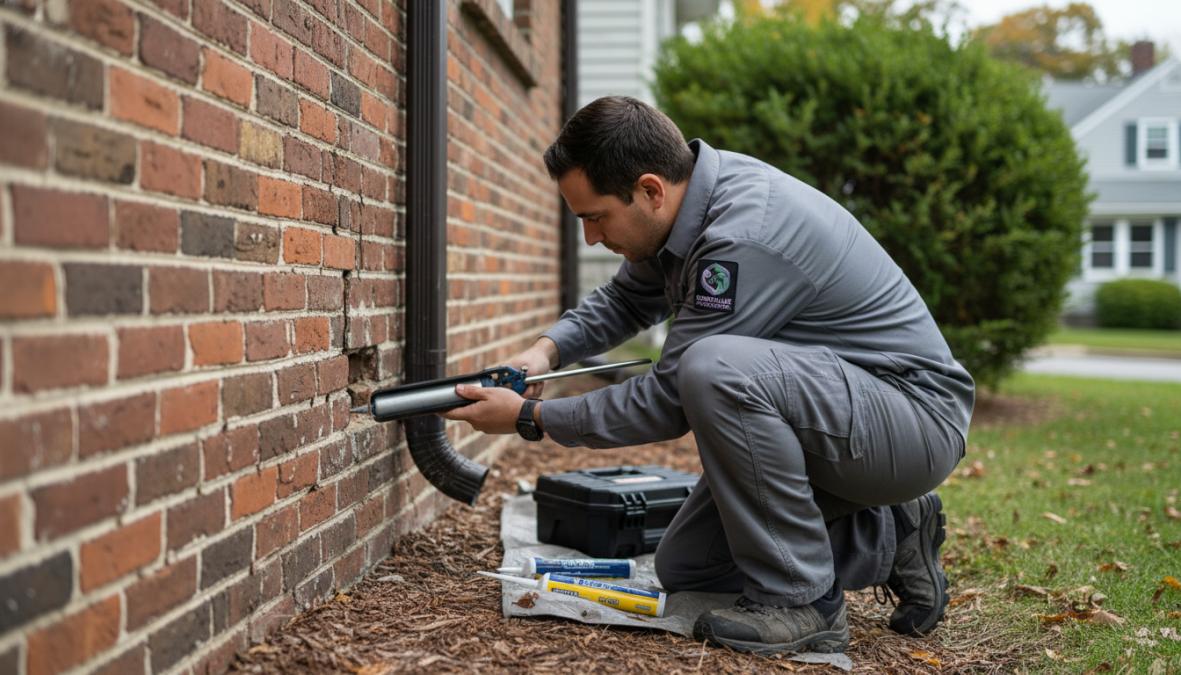
Mice can squeeze through a gap the diameter of a pencil. Rats need only a quarter-sized opening. In Somerville’s older housing stock, these gaps are everywhere: around utility pipes, at foundation cracks, under garage doors, and where siding meets the roofline.
Effective rodent exclusion involves:
- Sealing gaps with steel wool, hardware cloth, or caulk rated for exterior use
- Installing door sweeps on exterior doors with visible light gaps underneath
- Screening vents and chimney openings with mesh that rodents cannot chew through
- Addressing structural damage that creates new entry points over time
According to CDC guidance on rodent-proofing homes, exclusion combined with sanitation is the most effective long-term strategy for keeping properties vermin-free. Trapping alone, without sealing entry points, is a temporary fix that requires repeated intervention.
Safety Protocols for Pets and Children During Treatment
This is the part most pest control guides skip entirely, and it matters enormously for Somerville families.
Professional exterminators use different treatment protocols depending on whether pets and children are present. Before any treatment begins, confirm the following with your exterminator:
- What products are being used, and are they safe for re-entry within a specific timeframe?
- Are bait stations placed in locations physically inaccessible to pets and small children?
- Is the technician using humane removal methods where applicable?
- What is the recommended stay-out period after interior treatment?
Reputable companies will answer every one of these questions directly. If an exterminator dismisses your safety concerns or cannot name the products being applied, that is a serious red flag.
Ask your exterminator for the product Safety Data Sheets (SDS) before treatment begins. Licensed professionals are required to carry these and share them on request. This gives you specific re-entry times, first aid information, and storage details.
Emergency Pest Control Cost: What You’ll Likely Pay in Somerville
Most pest control websites in Greater Boston hide their pricing entirely, forcing you to call before you can evaluate whether a service fits your budget. That opacity is frustrating when you’re dealing with an active rodent problem at 10 p.m. on a Saturday. Below is an honest breakdown of what Somerville homeowners and property managers typically encounter when pricing emergency and routine rodent removal in 2026.
Pricing ranges below reflect what licensed pest control companies in the Metro Boston market commonly charge. Your actual quote will depend on property size, infestation severity, and whether exclusion work is included. Always get a written estimate after a physical inspection, phone quotes without a site visit are estimates only.
Typical Price Ranges for Rodent Removal in Somerville
| Service Type | What’s Included | Typical Range |
|---|---|---|
| Initial inspection only | Full property walkthrough, pest ID, written report | Free-$75 (many companies waive with treatment) |
| Basic mouse treatment | Interior snap trap setup, 1 follow-up visit | $150-$300 for a standard single-family home |
| Full rat treatment (no exclusion) | Interior and exterior baiting, tamper-resistant stations, 2-3 visits | $300-$600 depending on property size |
| Rodent exclusion (sealing only) | Identifying and sealing all confirmed entry points with steel wool, hardware cloth, caulk | $400-$900+ depending on number of penetrations and access difficulty |
| Combined treatment + exclusion | Trapping, baiting, and full entry-point sealing in one service package | $600-$1,500 for a typical Somerville triple-decker |
| Emergency same-day call | Priority dispatch within hours, after-hours or weekend response | Expect a $75-$150 premium over standard scheduling |
| Commercial extermination | Multi-unit buildings, restaurants, food-service facilities | Custom quote; regulatory documentation typically included |
Why Somerville Properties Often Cost More Than Suburban Jobs
Somerville’s housing stock skews heavily toward triple-deckers, Victorian-era row houses, and converted multi-family buildings, all of which have significantly more entry points than a modern single-family home. A fieldstone or rubble foundation from the early 1900s may have dozens of gaps that need sealing. A triple-decker with three separate units, shared basement access, and aging utility penetrations is a fundamentally more complex job than a 1990s ranch house in a suburb.
This means the mid-range estimates above can shift upward for older Somerville properties. If your building was constructed before 1960, budget toward the higher end of any range and ask your exterminator specifically how many linear feet of foundation they plan to address and what materials they’ll use.
The Real Cost of Waiting
The most expensive rodent problem is the one you delay treating. A mouse infestation caught at two or three individuals, common when homeowners call at the first sign of droppings, is a fundamentally different job than an established colony that has been nesting in wall cavities for three or four months.
Beyond pest control fees, delayed treatment introduces secondary costs that most homeowners don’t anticipate:
- Electrical damage: Rats and mice gnaw through wire insulation. Rewiring a section of wall after rodent damage can cost several times more than the original extermination would have.
- Insulation replacement: Rodents nest in and contaminate blown-in and batt insulation. Attic insulation replacement in a Somerville triple-decker runs into the thousands.
- Health code violations: For commercial properties and rental units, a documented rodent infestation can trigger Somerville’s Inspectional Services Division to issue a violation notice, which carries its own remediation costs and timelines.
How to Control Costs Without Cutting Corners
- Get at least two written quotes after in-person inspections. Pricing varies meaningfully between providers in this market.
- Ask what’s included in follow-up visits. Some companies include two or three follow-up checks in their base price; others charge per visit. This changes the total cost significantly.
- Bundle treatment and exclusion. Companies that offer both services together often price the combined package lower than two separate contracts.
- Ask about guarantees. A 30-90 day re-treatment guarantee at no additional charge is standard among reputable local providers. If a company doesn’t offer one, factor the potential cost of a second treatment into your comparison.
- Act on the first sign. The inspection-and-basic-treatment tier is the most cost-effective entry point. Every week of delay moves you toward the next tier up.
Residential and Commercial Pest Control Services We Cover
Rodent removal in Somerville is not a one-size-fits-all service. The treatment protocol for a mouse problem in a Davis Square condo is structurally different from a Norway rat infestation in the basement of a Union Square restaurant, and both are different again from managing rodent pressure across a portfolio of triple-decker rental properties. Understanding those differences helps you ask the right questions and evaluate whether a pest control provider actually knows your property type.
Residential Rodent Removal: Single-Family and Multi-Family Homes
Somerville’s residential housing stock is dominated by triple-deckers, two-family homes, and converted Victorian row houses, property types that create specific rodent challenges that a generic residential pest control protocol doesn’t fully address.
Triple-deckers are the most common call we receive. These buildings share basement utility spaces, have multiple exterior entry points at each floor level, and often have decades of deferred maintenance around pipe penetrations and foundation sill plates. A rodent problem in one unit almost always involves the shared basement and frequently affects adjacent units. Effective treatment requires access to all units and common areas, which means coordinating with multiple tenants, not just one homeowner.
Victorian and pre-war row houses present a different challenge: their rubble or fieldstone foundations were not built to modern rodent-exclusion standards. Gaps between foundation stones, deteriorating mortar, and aging wooden sill plates create dozens of entry points that are difficult to locate without a systematic inspection. For these properties, exclusion work is not optional, it is the only component of treatment that produces a durable result.
Condos and newer multi-family buildings typically have fewer structural vulnerabilities but are not immune. Shared trash areas, ground-floor restaurant tenants, and proximity to MBTA infrastructure all elevate rodent pressure regardless of building age.
For all residential properties, treatment typically involves:
- Full interior and exterior inspection with entry-point mapping
- Interior snap trap placement along confirmed travel routes (not guessed locations)
- Tamper-resistant exterior bait stations positioned along the foundation perimeter
- Entry-point sealing with steel wool, hardware cloth, or exterior-grade caulk
- One or more follow-up visits to assess results and adjust placement
- Written documentation of all treatment locations and products used
Commercial Extermination: Restaurants, Retail, and Multi-Unit Properties
Commercial rodent control in Somerville carries regulatory requirements that residential treatment does not. Restaurants and food-service businesses are subject to inspection by the Somerville Inspectional Services Division and the Massachusetts Department of Public Health. A documented rodent infestation, or evidence of one during a routine health inspection, can result in a violation notice, a mandatory closure, or both.
A licensed commercial exterminator operating in this environment must do more than eliminate the immediate infestation. They must:
- Document every treatment in a format that satisfies health department inspection requirements, including product names, application locations, and dates
- Use tamper-resistant bait stations that meet commercial food-safety standards and are positioned in compliance with label directions
- Provide a service log that can be presented to an inspector on request
- Coordinate treatment timing to avoid active food-preparation periods and comply with re-entry requirements
For property managers overseeing multiple rental units, commercial-tier documentation also matters. Somerville’s Inspectional Services Division can issue housing code violations for rodent infestations in rental properties, and landlords are legally responsible for maintaining pest-free conditions in common areas. A pest control provider who documents treatment properly gives you a defensible record if a violation notice is contested.
Common Rodent Species Treated in Somerville
Knowing which species you’re dealing with changes the treatment approach. Rats and mice behave differently, travel differently, and respond to different baiting and trapping strategies.
- Norway rats (Rattus norvegicus): The dominant rat species in Greater Boston and the most common rodent call in Somerville. Norway rats burrow along foundations, in basement crawlspaces, and under concrete slabs. They are cautious around new objects (neophobic), which is why trap placement along confirmed travel routes matters so much.
- House mice (Mus musculus): Far more exploratory than rats and capable of squeezing through a gap the diameter of a pencil eraser. House mice are the most common residential call and the most frequently underestimated, a single pair can produce a significant population within a few months under favorable conditions.
- Roof rats (Rattus rattus): Less common in Somerville than Norway rats but present near waterways and in older buildings with accessible attic spaces. Roof rats travel along overhead routes, utility lines, tree branches, rooflines, rather than along the ground, which means their entry points are higher up on the structure.
- Squirrels and nuisance wildlife: Gray squirrels frequently enter attic spaces through deteriorating fascia boards and soffit gaps, particularly in older Somerville homes with mature tree canopy. While not rodents in the pest control sense, they cause similar structural damage and require exclusion-based removal rather than baiting.
National Pest Management Association resources on integrated pest management
Integrated pest management, the framework that combines inspection, targeted treatment, exclusion, and ongoing monitoring, consistently outperforms single-treatment extermination for both residential and commercial properties. It is the standard approach among licensed professionals and the framework that produces results that hold beyond the initial treatment visit.
Why Somerville Residents Choose Zoifia Pest Control
Zoifia Pest Control has built its reputation in the Metro Boston area on three things that matter most to homeowners and property managers: fast response, honest service, and results that hold.
The company is licensed and insured, which protects both the technician and the property owner during any treatment. Every service is backed by a 90-day guarantee, meaning if rodents return within 90 days of treatment, Zoifia comes back at no additional charge. There are no long-term contracts required, which is a meaningful distinction from national chains that lock customers into annual service agreements regardless of results.
For Somerville residents dealing with emergency rodent removal services somerville ma situations, the combination of fast response and a satisfaction guarantee removes the two biggest risks: getting stuck waiting days for a technician, and paying for a treatment that doesn’t work.
Service Areas Across Greater Boston
Zoifia Pest Control serves Somerville and the surrounding communities throughout the Metro Boston area. If you’re outside Somerville but dealing with a rodent problem nearby, coverage typically extends across Cambridge, Medford, Malden, Arlington, Everett, and other communities within the Greater Boston region.
This broad service area matters for multi-property owners and property managers who need consistent pest management across multiple locations. A single provider who knows the local rodent landscape across these interconnected urban neighborhoods is more effective than switching companies for each property.
Frequently Asked Questions
How quickly can I get emergency rodent removal in Somerville, MA?
Many pest control companies serving Somerville, including Zoifia Pest Control, offer same-day emergency rodent removal services. Response times vary by provider and availability, but reputable local exterminators prioritize urgent calls. When you contact a company, ask specifically about same-day or next-day slots. Having your address and a brief description of the rodent activity ready helps dispatchers schedule you faster. Acting quickly limits structural damage and health risks associated with a mouse or rat infestation.
What are the most common signs of a rodent infestation in a Somerville home?
Key signs of rodent infestation include finding dark, pellet-shaped rodent droppings near food storage areas, cabinets, or along baseboards. You may also notice gnaw marks on wood or wiring, greasy rub marks along walls, shredded nesting material in hidden corners, and scratching sounds inside walls at night. In Somerville, older multi-family homes and properties near restaurant corridors are especially prone to rat activity. Spotting even one sign warrants a professional pest inspection right away.
How much does emergency pest control cost for rodents in Somerville, MA?
Emergency rodent removal costs in the Somerville and Greater Boston area typically vary based on the severity of the infestation, property size, and services required. A basic inspection and initial treatment may start in the range of $150-$300, while comprehensive rodent exclusion and multi-visit treatment plans can run higher. Some companies charge a premium for same-day or after-hours emergency service. Zoifia Pest Control offers free inspections and transparent estimates so you know the cost before any work begins.
Are rodent infestations considered a health emergency?
Yes, rodent infestations can pose serious health risks and should be treated urgently. Rats and mice can carry diseases, contaminate food surfaces through their droppings and urine, and trigger asthma or allergy symptoms. Rodents also cause structural damage by gnawing on electrical wiring, which creates fire hazards. If you discover signs of rat or mouse activity in your Somerville home or business, contacting a licensed exterminator for emergency pest services is strongly recommended rather than waiting.
Do Somerville pest control companies offer rodent proofing alongside removal?
Yes, most professional pest control companies in Somerville offer rodent proofing services as part of a complete treatment plan. This involves identifying and sealing entry points such as gaps around pipes, foundation cracks, and vents to prevent re-entry after removal. Zoifia Pest Control combines trapping and baiting with entry point sealing and preventative maintenance recommendations, giving you a vermin-free property backed by a 90-day guarantee, without requiring a long-term contract.
Rodent infestations don’t resolve on their own, and waiting even a few days allows an established colony to grow and cause additional structural damage. Zoifia Pest Control offers the fast response, licensed expertise, and 90-day guarantee that Somerville residents need when a rodent problem can’t wait. Contact Zoifia Pest Control today for a free inspection and get a quote that reflects the actual scope of your situation.
This article was written using GrandRanker
