Table of Contents
- Do Bed Bug Traps Actually Work for Infestations?
- Best Bed Bug Traps for Home Use
- How to Use Bed Bug Interceptors Effectively
- Do DIY Bed Bug Traps Work Without Professional Help?
- How to Get Rid of Bed Bugs Permanently: Traps as Part of IPM
- Apartment and Multi-Unit Infestation Timelines
- Tracking Progress: Visual Monitoring and Mental Health Support
- Cost-Benefit Analysis: DIY Traps vs. Professional Extermination
Last Updated: June 26, 2026
Do Bed Bug Traps Actually Work for Infestations?
Bed bug traps serve a specific purpose in pest management, but they’re rarely a standalone solution. Traps excel at detection and monitoring, yet they fall short as the primary treatment method for active infestations. Understanding this distinction is critical before investing in trap-based strategies.
Bed bug traps come in two main categories: passive interceptor cups that catch bugs climbing furniture legs, and active traps using heat, CO2, or pheromones to lure bugs into sticky surfaces. The real value of traps lies in their ability to confirm an infestation, track treatment progress, and catch stragglers after professional treatment.
What Traps Can and Cannot Do
Bed bug traps cannot eliminate an active infestation on their own. A trap catches bugs that crawl into it, but it doesn’t address the hundreds or thousands hiding in mattress seams, baseboards, wall voids, and furniture crevices where traps can’t reach them.
What traps accomplish is measurable and valuable. They provide physical evidence of bed bugs, confirm suspected infestations, and serve as early warning systems after travel or used furniture purchases. Once professional treatment begins, traps become essential monitoring devices showing whether treatment is working. Catching fewer bugs week-to-week indicates declining infestation levels. For people dealing with the mental health challenges of bed bug infestations, visible progress tracking can be the difference between staying motivated and giving up.
Best Bed Bug Traps for Home Use
Interceptor Cups and Their Effectiveness
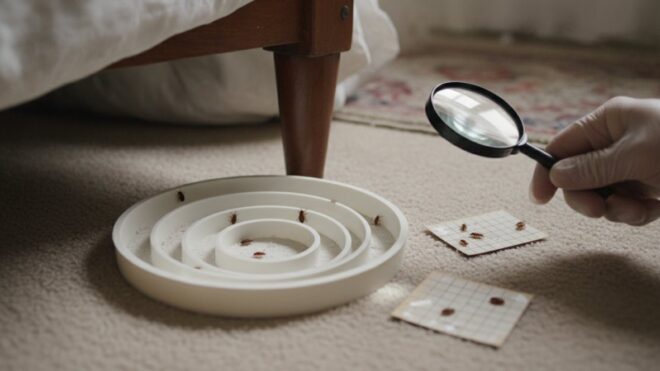
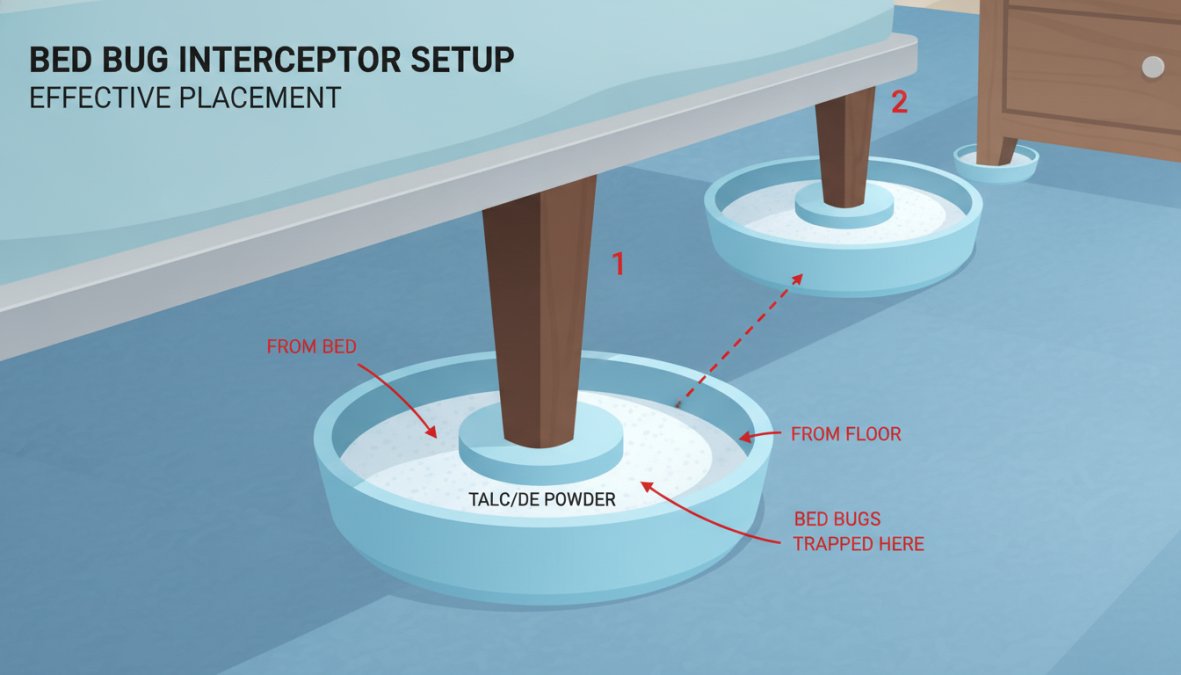
Interceptor cups are plastic or ceramic cups that slide under furniture legs. Bed bugs attempting to climb up furniture fall into the cups and become trapped. The best cups have sloped inner walls that make escape nearly impossible once a bug enters.
Effective cups cost $1 to $3 each, and you’ll need eight to twelve to monitor a bedroom properly. They work best when placed directly under all furniture legs contacting the floor, beds, nightstands, dressers, and chairs. Cups must sit flat with no gaps underneath, or bugs can crawl around them. In a light infestation with good placement, you might catch five to fifteen bugs per night.
Check interceptor cups every morning before bugs hide for the day. Daily checks show true activity levels and help track whether treatment is working.
Active Traps vs. Passive Monitoring Devices
Active traps use heat, carbon dioxide, or pheromones to lure bed bugs into sticky surfaces. While theoretically promising, bed bugs are attracted to living humans far more strongly than artificial lures. Studies show active traps catch fewer bugs than interceptor cups placed under the same furniture.
Active traps do have one advantage: they provide visual confirmation without requiring furniture leg placement. This makes them useful for inspecting luggage, furniture before purchase, or checking hotel rooms. But for monitoring active infestations, passive interceptor cups consistently outperform active traps.
| Trap Type | Best For | Catch Rate | Cost | Setup Difficulty |
|---|---|---|---|---|
| Interceptor cups | Monitoring active infestations | 5-50+ per night | $1-3 each | Very easy |
| Heat traps | Pre-purchase inspections | Low to moderate | $15-30 | Easy |
| CO2 traps | Hotel room checks | Low to moderate | $20-50 | Moderate |
| Pheromone traps | Early detection | Low | $10-20 | Easy |
How to Use Bed Bug Interceptors Effectively
Proper placement and monitoring transform interceptor cups into genuinely useful diagnostic tools. Most people fail with traps not because they’re ineffective, but because they use them incorrectly.
(/how-to-choose-professional-bed-bug-exterminator/) Interceptors Effectively]
Step-by-Step Placement Strategy
Identify every piece of furniture touching the floor: bed frame, nightstands, dressers, chairs, and shelves. Place each interceptor cup directly under a furniture leg with no gap between cup and floor. Fill each cup with water or mineral oil. Water is cheaper; mineral oil prevents evaporation. Leave cups undisturbed for at least one week before checking, then check daily in early morning between 5 and 7 AM when bugs return to hiding spots. Document your findings with photos and counts.
Inspection and Monitoring Frequency
Daily monitoring during the first two weeks of treatment shows whether treatment is working. You should see a dramatic decline in bug catches if treatment is effective. After two weeks of professional treatment, shift to twice-weekly monitoring. Once you’re consistently catching zero bugs for two full weeks, reduce to weekly checks. Continue weekly checks for at least a month after your last professional treatment.
If you stop monitoring too early, you might miss a resurgence. Continue monitoring for at least a month after you think the infestation is gone.
Do DIY Bed Bug Traps Work Without Professional Help?
DIY traps alone rarely eliminate bed bug infestations completely, though they can work for extremely light infestations caught very early.
Limitations of DIY-Only Approaches
Traps catch bugs actively moving and attempting to climb furniture. They do nothing to address bugs hiding in mattress seams, box springs, wall voids, or inside furniture. In a typical infestation, trapped bugs represent maybe 5 to 10 percent of the total population.
DIY approaches combining traps with vacuuming, laundering, and mattress encasements have better success rates, but they’re still incomplete. Professional exterminators use residual pesticides that continue killing bed bugs for weeks after application and can apply heat treatment to reach bugs chemicals can’t penetrate.
When DIY Traps Are Sufficient vs. When You Need a Professional
DIY traps might be sufficient if you catch a single bed bug and no others appear within two weeks. You need professional help immediately if you catch more than three bugs within a week, find evidence in multiple rooms, or catch bugs over multiple weeks despite DIY efforts. If you’ve used DIY methods for three weeks and still catch bugs regularly, professional treatment is necessary.
How to Get Rid of Bed Bugs Permanently: Traps as Part of IPM
Permanent elimination requires a coordinated strategy integrating multiple control methods. Traps play an important role but are one component among several.
Integrated Pest Management Strategy for Complete Eradication
Integrated pest management starts with thorough inspection and monitoring using interceptor cups. Before treatment, one week of trap data shows exactly where bugs concentrate and how severe the infestation is.
Next comes preparation: removing clutter where bugs hide, washing all bedding and clothing in hot water, vacuuming thoroughly, and sealing cracks and crevices. Chemical treatment follows, typically using residual pesticides applied to baseboards, furniture, and hiding spots. Heat treatment is an alternative or supplement, heating your home to 118 degrees Fahrenheit or higher to kill bed bugs at all life stages in a single day.
Monitoring with traps continues throughout and after treatment. Daily checks during treatment show whether bugs are being eliminated. Weekly checks for a month after the last treatment catch any survivors before they establish a new population.
Chemical and Non-Chemical Control Methods
Chemical treatment uses insecticides that kill bed bugs on contact or through residual action. Non-chemical methods include heat treatment and physical removal through vacuuming and laundering. The most effective approach combines multiple methods.
Bed bug lifecycle affects treatment timing. Eggs hatch in five to ten days, and the entire lifecycle takes four to five weeks. This is why professional treatment requires multiple sessions, early treatments kill adults and older nymphs, but newly hatched eggs survive. A second treatment one to two weeks later kills newly emerged nymphs before they reach adulthood.
Preparation, Treatment Sessions, and Follow-Up Monitoring
Before professional treatment, wash all bedding, clothing, and soft furnishings in hot water and dry on high heat. Remove clutter from floors and closets. Vacuum thoroughly, paying special attention to baseboards, furniture seams, and under the bed. Seal cracks and crevices in walls and around baseboards.
The first treatment session typically occurs within three to five days of inspection. A second treatment session usually happens one to two weeks later to catch bed bugs hatched from eggs since the first treatment.
After the final professional treatment, check traps daily for two weeks, then twice weekly for two weeks, then weekly for a month. If you’re catching zero bugs for two consecutive weeks, the infestation is likely eliminated.
Successful bed bug treatment comes down to consistency and patience. Treatment requires multiple sessions spaced weeks apart, and monitoring must continue for months.
Apartment and Multi-Unit Infestation Timelines
Bed bug infestations in apartments and multi-unit buildings follow different timelines because bugs can travel between units through shared walls, plumbing, and electrical conduits.
Why Multi-Unit Buildings Complicate Treatment Duration
In a single-family home, once professional treatment eliminates bed bugs, the infestation is over. In an apartment building, bugs can migrate from untreated units into your treated unit, creating a continuous re-infestation cycle. Coordinated treatment across multiple units is essential. Treatment duration in multi-unit buildings typically takes longer than single-family homes, four to eight weeks instead of two to three weeks.
Tracking Progress: Visual Monitoring and Mental Health Support
Bed bug infestations take a psychological toll extending beyond physical discomfort. Uncertainty and sense of invasion create anxiety that can persist long after the infestation is eliminated.
Using Traps to Monitor Treatment Progress
Visual evidence of progress is psychologically critical. Seeing fewer bugs in traps week-to-week provides concrete proof that treatment is working. Create a simple tracking chart with dates and bug counts. A clear downward trend is reassuring and motivates you to stick with treatment.
Managing the Psychological Impact of Infestation
The mental health impact of bed bug infestations is real and often underestimated. People report anxiety, insomnia, paranoia, and depression during and after infestations. Professional support through a therapist can help, particularly if the infestation lasted several months. Practical strategies also help: maintain a regular sleep schedule, use white noise or relaxation recordings, avoid obsessive checking for bed bugs, and set specific monitoring times instead.
Cost-Benefit Analysis: DIY Traps vs. Professional Extermination
DIY traps cost $30 to $100 total. Professional treatment typically costs $300 to $1,500 depending on severity and method. However, if DIY efforts fail and you eventually need professional treatment anyway, you’ve wasted time and money on failed attempts and allowed the infestation to grow larger, making professional treatment more expensive and time-consuming.
Professional treatment successfully eliminates infestations in 85 to 95 percent of cases. DIY-only approaches succeed in perhaps 20 to 30 percent of cases. From a cost-benefit perspective, professional treatment is usually the better choice if you’ve confirmed an infestation of any significant size.
Bed bug infestations are stressful, and pressure to solve the problem quickly often leads people to rely on traps alone. However, understanding what traps can and cannot do helps you make better decisions. Traps are invaluable monitoring tools that confirm infestations and track treatment progress, but they’re not standalone solutions for active infestations.
If you’ve confirmed bed bugs in your home, professional treatment is your most reliable path to permanent eradication. Zoifia Pest Control provides fast, effective treatment backed by a 90-day guarantee. Our licensed and insured team specializes in bed bug elimination using proven integrated pest management strategies. Get a quote today and reclaim your home from bed bugs.
Frequently Asked Questions
Do bed bug traps actually work for eliminating an entire infestation?
Bed bug traps are effective monitoring and detection tools, but they cannot eliminate an infestation alone. Interceptor cups and passive traps catch bugs that crawl across floors, helping you detect the problem and track treatment progress. However, they don't reach bugs hiding in mattresses, baseboards, and cracks and crevices. Complete eradication requires integrated pest management combining traps, chemical or heat treatment, sanitation, and professional inspection. Traps work best as part of a comprehensive treatment plan, not as a standalone solution.
Where should you place bed bug interceptors for maximum effectiveness?
Place interceptor cups under all four legs of beds, sofas, and furniture where people sleep or rest frequently. Position them on the floor directly under each leg, ensuring bugs must cross them to reach the furniture. Also place traps along baseboards in bedrooms and common areas, in corners, and near known hiding spots. For multi-unit apartments, coordinate placement with neighbors to prevent re-infestation from adjacent units. Check traps every 3-7 days, as catching bugs early helps monitor infestation level and treatment success.
How long does it take for bed bug traps to show results?
You may catch bed bugs in traps within 24-48 hours if an active infestation exists, though this depends on infestation severity and trap placement. Early-stage infestations may take 1-2 weeks to show trap activity. Remember that traps only catch bugs that cross them, they don't indicate the total population. Professional treatment typically requires 2-3 sessions spaced 7-14 days apart, with traps monitoring progress throughout. Full eradication usually takes 2-4 weeks with professional help, though apartment buildings may take longer due to potential re-infestation from neighboring units.
What is the best way to detect bed bugs using traps versus other methods?
Interceptor cups and passive monitoring devices catch live bugs, while visual inspection reveals eggs, nymphs, and fecal spots in mattress seams and baseboards. Combine both methods for accurate detection: place traps under furniture and check them weekly, while also inspecting sleeping areas with a flashlight. Professional pest control inspectors use specialized monitoring equipment and thermal imaging to locate hidden bugs. Early detection using traps prevents small infestations from becoming severe. If traps catch bugs or you find evidence during inspection, contact a professional exterminator immediately to assess infestation level and treatment options.
Can bed bug traps alone work for small infestations?
Traps alone cannot eliminate even small infestations. A single mated female bed bug can restart an infestation, and traps only capture bugs crossing floors, missing those in mattresses, walls, and furniture. Small infestations are actually easier to treat completely with professional intervention, which combines traps for monitoring with residual pesticides, heat treatment, or integrated pest management (IPM). Early professional treatment costs less and prevents the infestation from spreading to other rooms or units. Using traps as your only strategy typically allows the infestation to persist or worsen.
This article was written using GrandRanker
