Table of Contents
- Does Homeowners Insurance Cover Rodent Exclusion?
- Understanding Policy Exclusions: Standard HO3 and HO6 Coverage
- Sudden vs. Gradual Damage: When Insurance Might Pay
- Filing a Rodent Damage Insurance Claim: What You Need to Know
- Cost of Professional Rodent Exclusion and Prevention
- State-Specific Variations in Rodent Coverage
- What to Do If You Find Rodent Damage in Your Home
- Conclusion: Managing Rodent Risk Without Insurance Coverage
Last Updated: July 15, 2026
Does Homeowners Insurance Cover Rodent Exclusion?
Standard homeowners insurance policies explicitly exclude coverage for damage caused by rodents, vermin, or pest infestations. This exclusion is standard across HO3 and HO6 policies nationwide. Understanding the nuances can help you identify situations where secondary coverage options might apply.
The Short Answer
Rodent damage falls under the "vermin and pest" exclusion in virtually every standard homeowners insurance policy. Your insurer will not pay for rodent removal or the damage these animals cause to your home’s structure, wiring, or insulation. However, secondary damage sometimes falls into a gray area. If a rodent chews through an electrical wire and causes a fire, the fire damage itself might be covered even though the rodent damage is not.
Check your policy’s exclusion section directly. Look for language about “vermin,” “insects,” “rodents,” or “pest infestation.” Most policies use ISO standard language, which means the wording is nearly identical across different insurers.
Understanding Policy Exclusions: Standard HO3 and HO6 Coverage
Most homeowners carry either an HO3 policy (standard single-family homes) or an HO6 policy (condos and townhomes). Both use similar exclusionary language regarding rodent damage.
What Standard Policies Say About Vermin and Infestation
Your homeowners insurance policy defines coverage by listing what IS covered, then providing exclusions. Rodent damage appears in the exclusions section under various phrasings: "vermin," "insects," "rodents," "pest infestation," or "damage caused by animals." This exclusion is absolute regardless of whether the infestation was present when you bought the home or whether you were negligent in maintaining entry points.
Insurers exclude rodent damage because pest infestations are preventable through maintenance. Insurance covers sudden, accidental losses, not predictable costs that homeowners can control through regular upkeep.
ISO Standard Language in Your Policy
ISO (Insurance Services Office) publishes the standard form language that most insurers adopt for homeowners policies. The ISO standard exclusion typically reads: "We do not insure for loss caused directly or indirectly by: … vermin, rodents, insects, birds, or other animals, whether wild or domestic, including disease or parasites carried by such creatures." This language is broad enough to cover everything from mice in the walls to squirrels in the attic.
The exclusion covers both the direct cost of removing the animal and the damage it causes.
ISO standard language makes rodent exclusions consistent across insurers. Your policy likely uses the exact same exclusion wording as competitors’ policies.
Sudden vs. Gradual Damage: When Insurance Might Pay
The distinction between sudden and gradual damage is where homeowners sometimes find a narrow opening for coverage. If a rodent causes damage that triggers a separate, insurable event, like a fire, you may have a claim for that secondary damage even though the rodent damage itself is excluded.
Secondary Damage vs. Primary Rodent Damage
Imagine a rodent chews through an electrical wire in your attic, and the exposed wire sparks a fire that destroys your roof and bedroom. The rodent damage (the chewed wire) is not covered, but the fire damage might be, because fire is a covered peril. Most insurers will deny this claim, arguing that the rodent damage is the proximate cause. However, if the fire damage is sufficiently separate from the rodent damage, for example, if the rodent chewed the wire weeks ago and the fire started for a different reason, an adjuster might argue that the fire is a separate, covered event.
Documentation is critical. If you discover rodent damage and have it professionally remediated, you create a clear timeline. If a fire occurs weeks or months later, you have evidence that the rodent damage was addressed before the fire started.
Secondary damage also includes situations where rodent activity causes water damage. If rodents chew through a water line, the water damage from that leak might be covered under your water damage provisions, even though the rodent damage is excluded.
The Negligence Clause: Your Maintenance Responsibilities
Homeowners insurance policies include language about maintenance responsibilities. If an insurer can prove that you were negligent in maintaining your home, that you failed to seal obvious entry points or ignored visible signs of infestation, they may use that negligence to deny claims.
However, the negligence clause requires the insurer to prove fault on your part. They cannot deny a claim simply because rodents exist. If you maintain your home reasonably well, seal entry points, and respond promptly to signs of infestation, the negligence clause cannot be used against you.
Document your maintenance efforts. Keep receipts for pest control services, seal entry points and photograph them, and respond quickly to any signs of infestation.
Ignoring visible rodent damage or entry points gives your insurer grounds to deny future claims under the negligence clause. If you discover droppings, gnaw marks, or entry holes, address them immediately.
Filing a Rodent Damage Insurance Claim: What You Need to Know
Even though rodent damage itself is excluded, you may still file a claim if you believe secondary damage or another covered peril is involved.
Documentation and Evidence for Secondary Damage Claims
If you’re claiming secondary damage, documentation is everything. Photograph all visible rodent damage: droppings, gnaw marks on wood or wiring, nesting materials, and entry points. Take photos from multiple angles and include a date stamp if possible.
Have a licensed pest control professional inspect the property and provide a written report. This report should document the extent of the infestation, identify entry points, and describe any damage visible to the professional. A professional report carries more weight with an adjuster than your own observations.
For secondary damage claims, you’ll also need documentation of the triggering event. If a fire occurred, get the fire department’s report. If water damage resulted from rodent-chewed pipes, document the water damage with photos and professional assessment.
When you file the claim, be explicit about what you’re claiming. Claim the secondary damage specifically: "Claim for fire damage resulting from electrical fire caused by rodent-chewed wires" rather than "Claim for rodent damage."
Working with Your Insurance Adjuster
Once you’ve filed a claim, an adjuster will investigate to determine whether the loss falls within your coverage. Provide copies of all documentation: photos, professional pest control reports, receipts for remediation work, and any other evidence relevant to the claim.
Be honest with the adjuster. If you knew about rodent activity and delayed addressing it, admitting that now is better than having the adjuster discover it during their investigation. Honesty builds credibility, which matters when an adjuster is deciding whether to approve a claim.
If the adjuster denies your claim and you believe the denial is incorrect, you have the right to appeal. Review the denial letter carefully to understand the adjuster’s reasoning, gather additional evidence, and submit a formal appeal.
Cost of Professional Rodent Exclusion and Prevention
Since homeowners insurance won’t cover rodent damage, the financial responsibility falls on you. Professional pest control and preventative maintenance are the most cost-effective ways to avoid expensive damage.
DIY vs. Professional Exclusion: Coverage Implications
The term "rodent exclusion" refers to the process of sealing entry points and preventing rodents from entering your home. You can attempt this yourself by caulking gaps and sealing openings around pipes and vents. However, DIY exclusion has significant limitations. Rodents can exploit entry points you miss. A gap as small as one-quarter inch is enough for a mouse to squeeze through.
Professional rodent exclusion involves a comprehensive inspection to identify all potential entry points, followed by systematic sealing using materials rodents cannot chew through. A professional service identifies entry points you would miss: gaps under siding, openings in foundation cracks, spaces around utility lines, and vulnerabilities in roof vents and chimney caps.
From an insurance perspective, professional exclusion creates documentation of your maintenance efforts. If you later file a claim and the insurer raises the negligence clause, you can point to the professional exclusion report as evidence that you took reasonable care to prevent infestation.
Preventative Maintenance as Your First Line of Defense
Preventative maintenance is your most cost-effective defense against rodent damage. Sealing entry points is the foundation of prevention. Walk your home’s exterior and look for gaps, cracks, or openings. Pay special attention to areas where utilities enter the home, foundation cracks, gaps under siding, and openings around windows and doors.
Removing food sources is equally important. Store food in airtight containers, keep your kitchen clean, secure garbage in sealed bins, and don’t leave pet food out overnight. Eliminating harborage areas means removing clutter and keeping your attic, basement, and crawl spaces organized. Maintaining your home’s exterior prevents access points from developing. Keep gutters clean, trim tree branches away from your roof, and repair holes in siding or foundation promptly.
Focus your maintenance efforts on the areas where rodents most commonly enter: foundation cracks, gaps around pipes and vents, spaces under siding, and openings in roof overhangs.
State-Specific Variations in Rodent Coverage
While rodent exclusions are standard across homeowners policies nationwide, a few states have specific regulations that create limited exceptions or require insurers to disclose the exclusion clearly. California, for example, requires insurers to clearly explain what pests are excluded and why. This doesn’t change the coverage, but it ensures homeowners understand the exclusion before purchasing a policy.
A small number of states allow riders or endorsements that provide limited rodent coverage. These are rare and typically expensive, but they exist. Some states also regulate how insurers can apply the negligence clause. If you live in a state with strict negligence standards, the insurer must prove clear negligence on your part, not just that rodents were present.
Check your state’s insurance commissioner website to learn whether your state has specific regulations regarding rodent coverage or exclusion disclosures.
What to Do If You Find Rodent Damage in Your Home
Discovering rodent damage is stressful, but taking the right steps immediately can minimize further damage and preserve your options for insurance claims involving secondary damage.
Immediate Steps and Safety Concerns
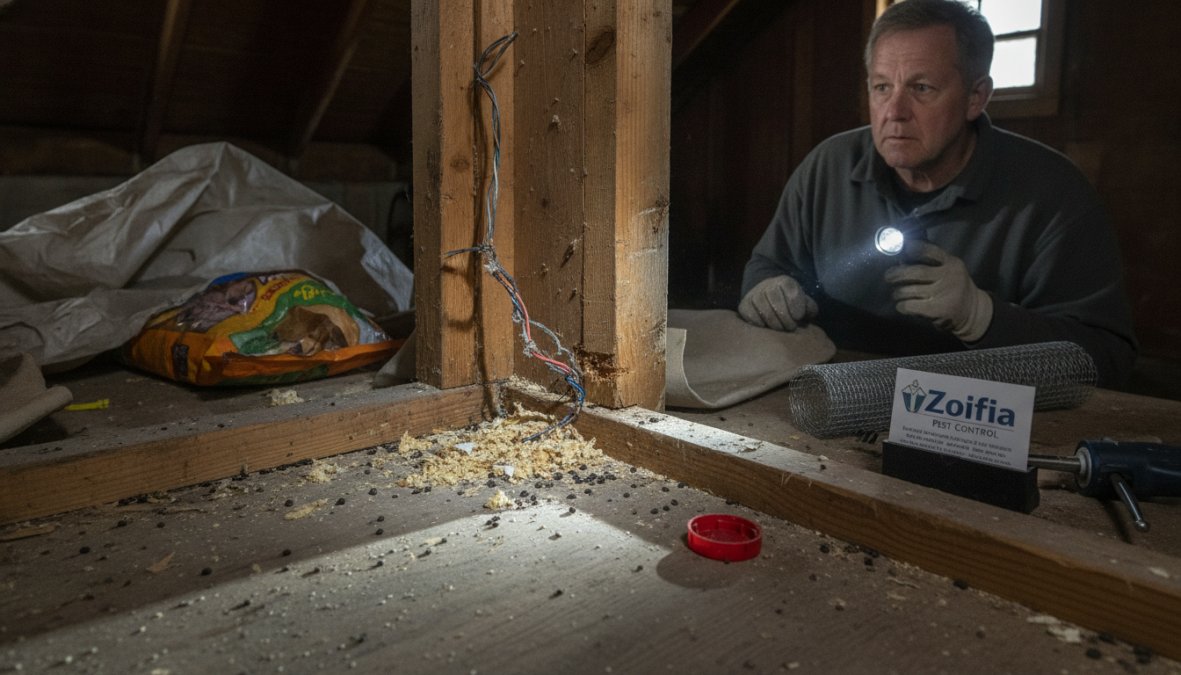
When you discover rodent evidence, your first priority is safety. Rodent droppings can carry hantavirus and other pathogens. Avoid touching droppings with bare hands. Wear gloves and a mask when cleaning.
Second, photograph everything. Take photos of droppings, gnaw marks, nesting materials, entry points, and any visible damage. Include wide shots showing the location within your home and close-ups showing the damage clearly.
Third, do not attempt to remove rodents yourself unless you’re confident in your ability to do so safely. Call a professional immediately if you see live rodents.
Fourth, identify entry points if you can. Look for holes in walls, gaps around pipes, openings under doors, and cracks in the foundation. Don’t seal these yet; a professional should assess them first.
Finally, begin keeping a log. Write down the date you discovered the problem, what you found, where it was located, and any actions you’ve taken.
When to Call Professional Pest Control
Call a professional pest control service as soon as you confirm rodent activity. Rodent populations grow quickly. A single female mouse can produce 5-10 litters per year, each with 5-6 pups. What starts as a small problem becomes a serious infestation within weeks.
A professional service identifies all entry points, safely removes rodents, provides professional-grade exclusion materials and installation, and provides documentation of their work, which is valuable if you need to file an insurance claim or prove to your insurer that you took reasonable steps to address the problem.
Is rodent exclusion covered by homeowners insurance? The answer is definitively no. Standard HO3 and HO6 policies exclude rodent damage. However, understanding secondary damage, negligence clauses, and state-specific variations can help you identify situations where coverage might apply. Taking preventative maintenance seriously and responding quickly to signs of infestation protects your home from expensive damage.
| Damage Type | Insurance Coverage | Your Responsibility | Best Response |
|---|---|---|---|
| Rodent removal | Not covered | 100% | Call professional pest control immediately |
| Chewed wiring/structure | Not covered | 100% | Professional inspection and remediation |
| Secondary fire damage | Possibly covered | Document timeline | File claim with professional report |
| Water damage from chewed pipes | Possibly covered | Document timeline | File claim with professional documentation |
| Preventative exclusion | Not covered | 100% | Professional sealing and maintenance |
Frequently Asked Questions
Does homeowners insurance cover rodent damage and pest removal?
No. Standard homeowners insurance policies explicitly exclude damage caused by rodents, vermin, and infestation, including pest removal and extermination costs. However, secondary damage caused by rodents, such as electrical fires from chewed wires or water damage from burst pipes they damaged, may be covered under your dwelling coverage if you can prove the rodent damage was not due to negligence or lack of preventative maintenance.
What is the difference between sudden and gradual damage in rodent claims?
Sudden damage occurs unexpectedly and is often covered (e.g., a fire caused by rodent-chewed electrical wires). Gradual damage develops over time due to ongoing infestation and is typically excluded because it reflects poor home maintenance. Insurance adjusters will examine whether you neglected entry points or ignored signs of infestation, which can deny secondary damage claims even if the initial cause seems sudden.
Can I claim rodent damage insurance if I file for secondary damage like electrical or water damage?
Possibly, but only if the secondary damage meets specific conditions: it must be sudden and accidental (not gradual), you must demonstrate you maintained your property and sealed entry points, and the damage cannot stem from negligence. For example, if a rodent-chewed wire causes a fire the day after you discover the infestation, that fire damage may be covered. Document all preventative maintenance efforts and contact your insurance adjuster immediately with photos and evidence.
How does professional rodent exclusion affect my insurance coverage?
Hiring a licensed pest control professional for rodent exclusion, sealing entry points, installing barriers, and removing nesting materials, strengthens your position if you later file a secondary damage claim. It demonstrates you took reasonable preventative maintenance steps and did not act negligently. Insurance companies view professional exclusion work more favorably than DIY efforts when evaluating claims, as it shows documented, expert-level prevention.
What should I do immediately if I find rodent damage in my home?
First, ensure safety: avoid direct contact with droppings or nesting areas due to health risks. Document the damage with photos and note the location and extent. Contact a professional pest control service to assess the infestation and perform safe removal and exclusion work. Then contact your insurance company to report any secondary damage (electrical, structural, or water damage) and ask whether it qualifies for coverage. Keep all receipts and documentation from pest control services and repairs.
Supporting Resources
[EXTERNAL_LINK: National Association of Insurance Commissioners (NAIC) guidance on homeowners policy exclusions | naic.org]
[EXTERNAL_LINK: CDC information on rodent-borne diseases and health risks | cdc.gov]
[EXTERNAL_LINK: American Society of Home Inspectors (ASHI) rodent prevention checklist | ashi.org]
This article was written using GrandRanker
