Table of Contents
- Why Do Roaches Keep Coming Back After Treatment
- Why DIY Roach Control Fails: Common Treatment Mistakes
- Cockroaches Coming Back After Treatment: The Nocturnal Factor
- How to Get Rid of Roaches Permanently: Integrated Pest Management Approach
- Identifying Cockroach Hiding Spots: Where They Actually Live
- Why Do Roaches Keep Coming Back: Professional vs. DIY Solutions
- The Psychological Impact of Recurring Infestations
- Conclusion: Breaking the Cockroach Cycle
Why Do Roaches Keep Coming Back: 7 Root Causes
Last Updated: June 30, 2026
If you’ve treated your home for cockroaches only to see them return weeks later, you’re not alone. Understanding why roaches keep coming back is the first step toward breaking the cycle. Most recurring roach problems stem from incomplete egg elimination, hidden harborage sites, ineffective DIY sprays, and structural vulnerabilities that allow re-entry.
Why Do Roaches Keep Coming Back After Treatment
The most common reason roaches reappear after treatment is that over-the-counter sprays kill adult insects but miss the eggs. Cockroaches reproduce rapidly, a single female can produce hundreds of offspring over her lifetime. When you spray visible roaches, eggs survive in protected locations and hatch weeks later, creating the illusion that your treatment failed.
Female cockroaches lay eggs in protective cases called oothecae. These egg cases are incredibly resilient and can withstand temperatures, moisture fluctuations, and even some pesticides. A single ootheca contains 15-40 eggs. German cockroaches, the most common household pest, can develop from egg to adult in as little as 60 days under ideal conditions. If your initial treatment didn’t address the eggs, you’ll see a resurgence within two months.
The real solution isn’t a one-time spray. It’s a [multi-step approach that targets both adult roaches and their eggs](/how-to-handle-roach-infestation-in-apartment/) over multiple weeks. Bait stations combined with residual treatments create a timeline that catches multiple generations.
The Ootheca Problem: Why Eggs Survive Sprays
The ootheca is nature’s perfect protective container for cockroach eggs. This dark, leathery case shields developing embryos from predators, pesticides, and environmental stress. When you spray insecticide, the ootheca sits protected inside wall voids, under baseboards, and deep within cabinetry, places spray cannot reach.
Females glue oothecae to surfaces in the most secure locations: behind appliances, inside electrical outlets, or within structural cracks. Standard household sprays are contact pesticides that kill what they touch, but they can’t penetrate the ootheca’s shell or reach sealed spaces where eggs are laid.
Professional pest control uses insect growth regulators (IGRs) that disrupt the hormonal systems controlling development, preventing eggs from maturing into adults even if they survive the initial spray. Without targeting eggs specifically, you’re guaranteed to see roaches again.
Harborage Sites and Hidden Nesting Areas
Cockroaches spend 75% of their time hiding in dark, tight spaces. Your home contains hundreds of potential harborage sites: wall voids behind baseboards, gaps between kitchen cabinets and walls, underneath appliances, plumbing penetrations, electrical outlets, cracks in concrete floors, and drain pipes.
Professional pest control technicians know exactly where to look because roaches follow predictable patterns. They establish pathways between food sources, water, and harborage. When you treat only visible areas, you miss 90% of the population.
Apartment dwellers struggle especially with recurring infestations. In multi-unit buildings, roaches migrate between units through shared wall voids, utility chases, and plumbing systems. You can treat your apartment perfectly, but if your neighbor has an infestation, roaches will simply move through the walls and return.
Clutter and stored items create additional harborage. Cardboard boxes, stacked papers, and fabric piles are ideal roach shelters. Even a single cardboard box in a corner can harbor dozens of insects. Removing clutter is free pest control.
Why DIY Roach Control Fails: Common Treatment Mistakes
The gap between DIY efforts and professional results is enormous. Most over-the-counter roach treatments fail because they address only symptoms, not the underlying infestation structure.
Over-the-Counter Sprays Don’t Reach Deep Harborage
Canned insecticide sprays create the illusion of control. You see roaches die, but the roaches living deep within walls, inside electrical conduits, or beneath floorboards are completely unaffected. Additionally, roaches develop resistance to commonly used pesticides. Pyrethroid-based sprays, sold in most hardware stores, have been used for decades. Populations exposed to repeated applications evolve resistance, their nervous systems adapt to tolerate the poison.
Professional exterminators rotate between chemical classes to prevent resistance and use different application methods: perimeter treatments, wall void injections, and targeted baiting. A single can of spray cannot compete with this approach.
Incomplete Structural Sealing and Entry Points
Roaches don’t materialize in your home, they enter from outside. Every crack in the foundation, gap around pipes, and unsealed conduit is a potential entry point. Many homeowners treat existing roaches but never seal entry points, so new roaches simply walk in from outside.
The most common entry routes are gaps around water pipes, foundation cracks, electrical conduits, gaps between siding and foundation, and unsealed utility penetrations. A single roach can squeeze through a gap the width of a credit card. Professional pest control includes structural assessment and sealing recommendations to close vulnerabilities before re-infestation occurs.
Cockroaches Coming Back After Treatment: The Nocturnal Factor
Cockroaches are strictly nocturnal. During the day, they hide in secure locations. At night, they emerge to forage for food and water, then return to harborage before dawn.
Most homeowners spray during the day when roaches are hidden. The spray settles on surfaces, but roaches are protected in wall voids and under baseboards. By the time roaches emerge at night, the spray has dried and lost effectiveness.
Why Timing Matters in Pest Control
Professional treatments are timed to intercept roaches during their active foraging period. Bait stations are placed along known roach pathways. Residual treatments are applied to surfaces where roaches travel. Professional treatments also use multiple active ingredients with different mechanisms, some kill on contact, others are ingested through baiting, and others disrupt development.
Breeding Cycles and Re-Infestation Windows
German cockroaches breed year-round in heated buildings. A female can produce a new ootheca every two weeks, with each containing 30-40 eggs. One female can produce 300-400 offspring annually. Even if your initial treatment kills 95% of roaches, the surviving 5% will rebuild the population within 30-45 days. Professional pest control requires follow-up visits spaced 2-3 weeks apart to catch each new generation as it develops.
How to Get Rid of Roaches Permanently: Integrated Pest Management Approach
Integrated Pest Management (IPM) combines multiple strategies to eliminate roaches and prevent re-infestation.
Step 1: Eliminate Food Residue and Moisture Sources
Roaches need food and water to survive. Start by removing all accessible food sources: clean kitchen surfaces daily, store food in sealed containers, never leave pet food out overnight, take out trash daily, and clean under appliances monthly. Fix leaky pipes immediately, dry sinks before bedtime, and use dehumidifiers in basements. Eliminating moisture can reduce roach populations by 30-40% without any pesticide.
Step 2: Deploy Bait Stations and Residual Treatments
Bait stations contain slow-acting poison mixed with attractive food. Roaches eat the bait, return to harborage, and die. They also share the poison with other roaches through contact and feces, creating a cascading effect. Place bait stations along roach pathways: under sinks, behind appliances, in corners, and along baseboards. Change stations every two weeks. Combine baiting with residual treatments, long-lasting pesticides applied to surfaces where roaches travel.
Roaches follow established pathways. Watch for droppings (small black specks) or dead roaches to identify these routes. Place bait stations directly on these pathways, not randomly around the room.
Step 3: Seal Entry Points and Structural Gaps
After treating the existing population, prevent new roaches from entering. Seal gaps around pipes with caulk or spray foam, install door sweeps on exterior doors, repair foundation cracks, ensure window screens are intact, and caulk gaps between baseboards and walls. Even if you eliminate every roach inside, new ones will enter from outside unless entry points are sealed.
Step 4: Maintain Sanitation and Monitor for Re-Infestation
IPM is ongoing, not a one-time event. Continue sanitation practices indefinitely. Weekly cleaning of kitchen areas, daily trash removal, and monthly deep cleaning of hidden spaces keep roach populations suppressed. Monitor for signs of re-infestation: droppings, dead roaches, or musty odors.
Identifying Cockroach Hiding Spots: Where They Actually Live
Knowing where roaches hide is essential to effective treatment. All cockroaches seek shelter in tight, dark spaces near food and water.
German Cockroach vs. American Cockroach Preferences
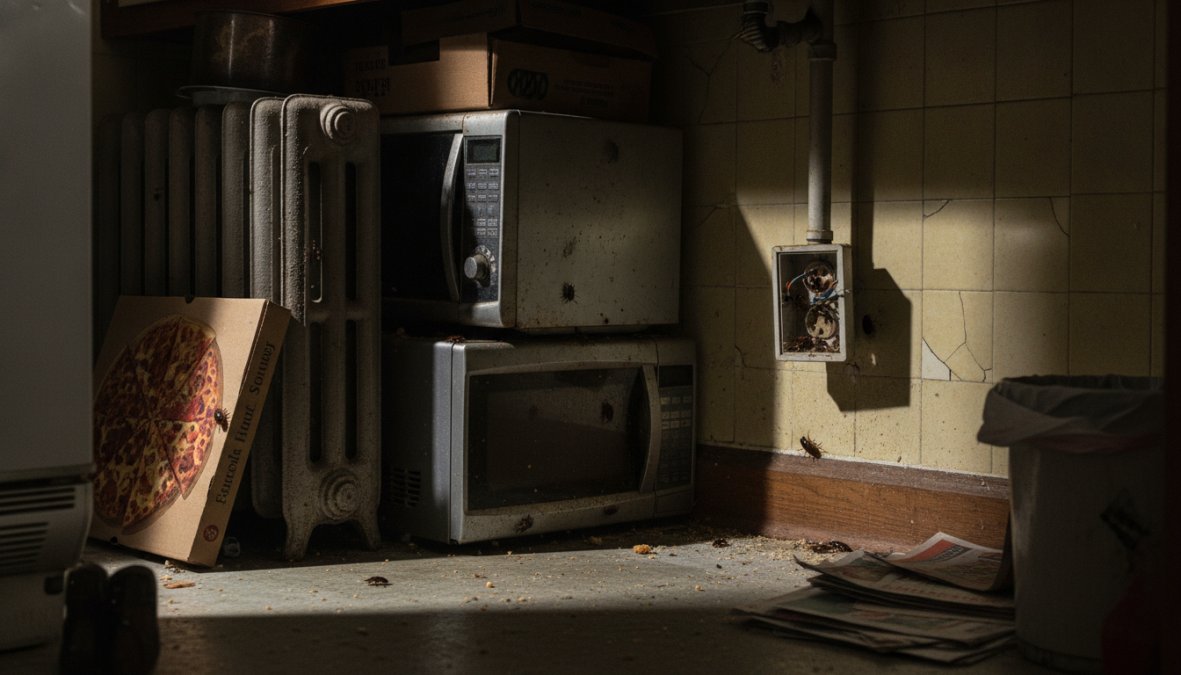
German cockroaches are smaller (0.5-0.6 inches) and prefer warm, humid environments in kitchens and bathrooms. They hide in tight cracks within 10 feet of food and water and reproduce rapidly. American cockroaches are larger (1.3-2.1 inches) and prefer cooler, damper areas like basements and crawl spaces. They reproduce more slowly but are more resilient to pesticides.
Both species establish routes between harborage and food sources and use pheromones to communicate, so multiple roaches congregate in the same areas. Focus treatment on these congregation points.
Apartment and Multi-Unit Building Challenges
In multi-unit buildings, roaches migrate between units through shared wall voids, utility chases, plumbing systems, and electrical conduits. A single untreated unit can re-infest an entire building. Landlords and property managers must treat all units simultaneously. For renters, document the infestation, notify your landlord in writing, and demand building-wide treatment.
Why Do Roaches Keep Coming Back: Professional vs. DIY Solutions
Professional exterminators have knowledge, access, and persistence that homeowners don’t possess. They understand building construction and identify hidden harborage, use restricted pesticides not available to consumers, have tools for reaching wall voids and tight spaces, include follow-up visits to catch emerging generations, and back their work with satisfaction guarantees.
DIY treatments fail because they address only visible roaches. The hidden population survives and rebuilds. Additionally, many homeowners don’t understand that a single treatment is never sufficient, roach elimination requires multiple applications spaced weeks apart.
Insect Growth Regulators and Long-Term Prevention
Insect Growth Regulators (IGRs) disrupt the hormonal systems that control roach development. They don’t kill adult roaches but prevent eggs from hatching and nymphs from maturing. IGRs are applied to harborage areas and combined with traditional pesticides. While the pesticide kills adults, the IGR prevents the next generation from developing, breaking the reproductive cycle.
Pet-Safe and Eco-Friendly Alternatives
Diatomaceous Earth (Food-Grade): This powder damages insect exoskeletons, causing dehydration. It’s non-toxic to humans and pets but requires reapplication after moisture exposure.
Heat Treatment: Professional heat treatment raises interior temperatures to lethal levels (above 120°F) for extended periods. It kills all life stages, including eggs, and is highly effective and chemical-free, though expensive.
Boric Acid Powder: This traditional treatment is still effective but requires careful application to avoid exposure to children and pets.
None of these alternatives work as reliably as professional chemical treatment, but they can be combined with sanitation and sealing for a less-chemical approach.
The Psychological Impact of Recurring Infestations
Recurring roach infestations take a psychological toll. The stress of dealing with an infestation that keeps returning can affect sleep, anxiety levels, and overall quality of life. The uncertainty of not knowing whether the problem is truly solved creates ongoing stress.
Investing in professional treatment and monitoring provides peace of mind that DIY treatments never can. Knowing that a licensed, insured professional is handling the problem and backing it with a guarantee offers confidence as valuable as the actual pest elimination.
Roaches return because DIY treatments address only visible insects while missing eggs, harborage sites, and entry points. Cockroach infestations require a multi-faceted approach that homeowners typically can’t execute alone. Zoifia Pest Control eliminates roaches permanently using integrated pest management: targeted baiting, residual treatments, structural sealing, and follow-up monitoring. Our licensed technicians identify hidden harborage, apply professional-grade treatments, and back every service with a 90-day guarantee.
| Problem | Root Cause | Professional Solution |
|---|---|---|
| Roaches return after spraying | Eggs survive in protected oothecae | IGR treatments target eggs and nymphs |
| Hidden populations persist | Harborage sites unreachable by sprays | Wall void injections and strategic baiting |
| New roaches keep entering | Entry points remain unsealed | Structural sealing and perimeter treatment |
| Resistance to DIY pesticides | Single-chemical repeated use | Rotation of chemical classes and methods |
| Apartment re-infestation | Multi-unit migration through shared spaces | Building-wide coordinated treatment |
Frequently Asked Questions
Why do I still see roaches after professional pest control treatment?
Roaches often return because eggs (ootheca) survive initial sprays and hatch weeks later, or because treatment didn't reach all harborage sites where cockroaches hide. Additionally, if entry points and food sources aren't addressed simultaneously, new roaches migrate in from neighboring areas. Professional pest control using residual treatments, bait stations, and insect growth regulators provides better long-term results than over-the-counter sprays alone.
How long does it take for a cockroach infestation to return after treatment?
Depending on the treatment method, re-infestation can occur within 2-4 weeks if only surface sprays are used, as eggs continue hatching and survivors breed. German cockroaches reproduce rapidly with short breeding cycles. With comprehensive integrated pest management, including bait stations, sanitation, and structural sealing, you can prevent re-infestation for 90+ days. This is why follow-up treatments and ongoing monitoring are essential.
What are the most common cockroach hiding spots I should treat?
Cockroaches hide in cracks and crevices, behind baseboards, under sinks, inside drain pipes, kitchen cabinets, and appliance voids where moisture and food residue accumulate. German cockroaches prefer tight spaces near food sources, while American cockroaches favor damp areas. Identifying these harborage sites is critical because over-the-counter sprays rarely penetrate deep enough to eliminate all roaches hiding there. Professional exterminators use bait stations and residual treatments specifically designed to reach these areas.
Can roaches develop resistance to store-bought insecticides?
Yes, cockroach populations can develop resistance to repeated applications of the same over-the-counter spray, especially if treatments aren't comprehensive or don't target all life stages. This is why integrated pest management rotating different treatment types, such as bait stations, insect growth regulators, and professional-grade residual treatments, is more effective than relying solely on consumer sprays. Professional pest control services use varied approaches to prevent resistance and ensure lasting elimination.
This article was written using GrandRanker
