Table of Contents
- Physical Differences: Ants vs Termites at a Glance
- Identifying Swarmers: Flying Ants vs Termite Swarmers
- Dietary Habits: What They Eat and How
- Signs of Termite Infestation in Massachusetts
- Carpenter Ants vs Termites Damage: What to Expect
- Boston’s Climate and Seasonal Swarming Patterns
- Cost of Termite Treatment Boston: Professional vs DIY
- When to Call a Professional Pest Control Service
Last Updated: August 5, 2026
Physical Differences: Ants vs Termites at a Glance
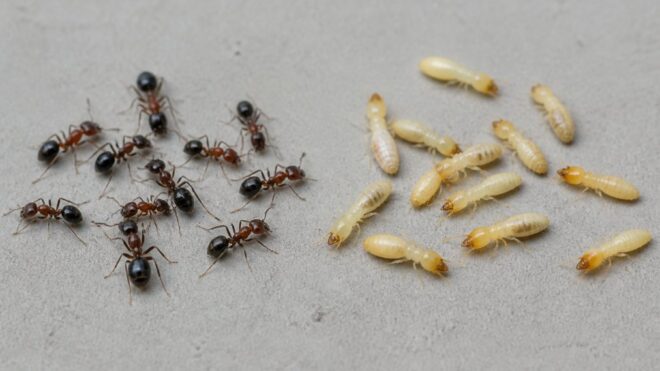
The most reliable way to distinguish between ants and termites in Boston starts with their body structure. While both are social insects that form colonies, their physical anatomy tells completely different stories about what they’ll do to your home.
Body Shape and Waist
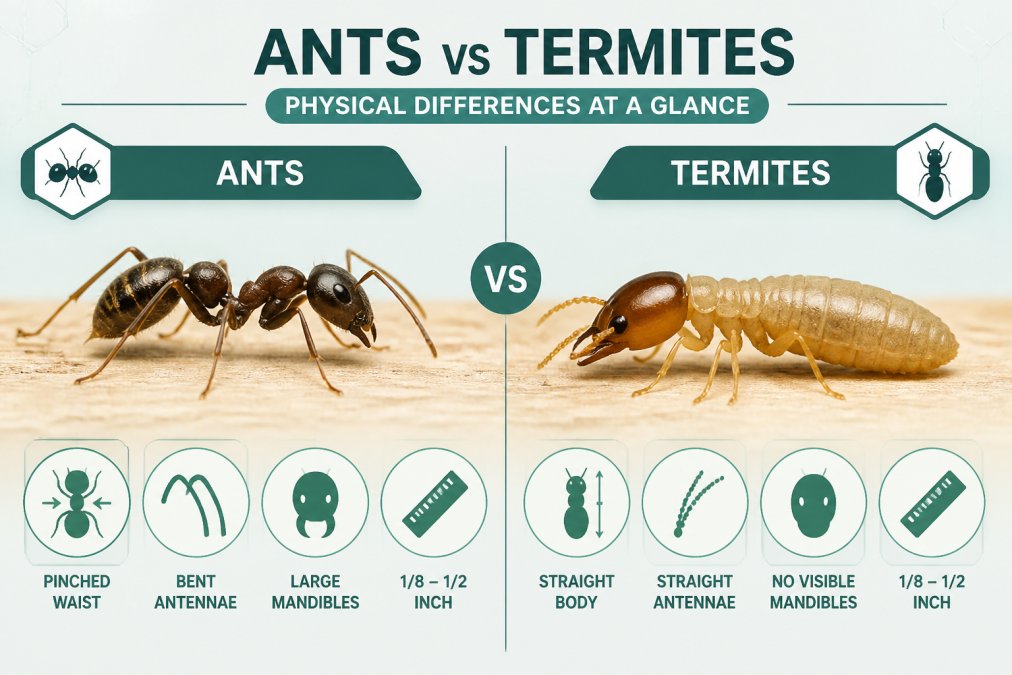
An ant has a clearly pinched waist, called a petiole, that divides its body into three distinct sections: head, thorax, and abdomen. A termite has a straight body with no waist constriction. This single difference is unmistakable and eliminates confusion faster than any other identifying feature. Ants are foragers that hunt for food and return to their colony. Termites are wood-eating machines that damage your home’s structural integrity from the inside out.
Antennae Structure
Ant antennae are distinctly elbowed or bent, forming a clear angle like tiny hockey sticks. Termite antennae are straight and beaded, resembling a string of pearls. This difference is visible to the naked eye if you can observe a specimen closely.
Wings and Flight Patterns
Termite swarmers have two pairs of wings that are roughly equal in length. Ant swarmers have two pairs of wings, but the front pair is noticeably longer than the back pair. Termite swarmers move slowly and clumsily, often dropping their wings shortly after emerging. Flying ants are more agile and keep their wings longer during flight.
Identifying Swarmers: Flying Ants vs Termite Swarmers
Swarming season in Boston typically occurs in spring and early summer, when both ants and termites release reproductive swarmers to establish new colonies. This is when homeowners most often spot these pests indoors, usually near windows and light sources.
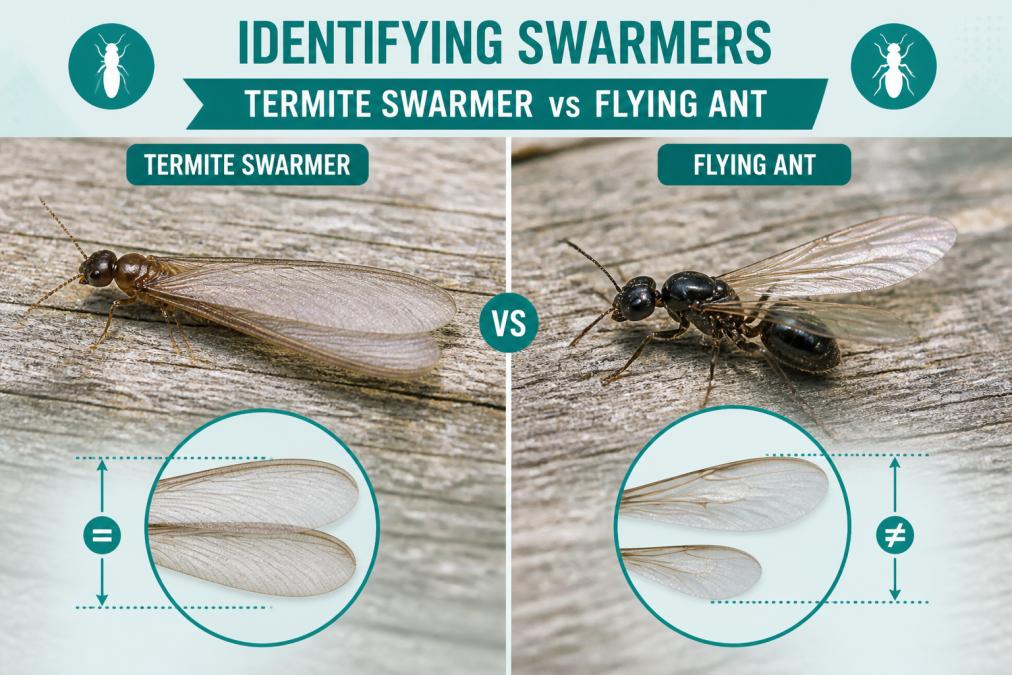
Termite swarmers emerge in organized groups in response to warm, humid conditions following rain. They’re attracted to light and commonly appear indoors near windows and doors. Once they land, they shed their wings, which pile up in small heaps on windowsills and floors. Finding discarded termite wings is one of the strongest indicators of an active infestation.
Flying ants swarm differently and are less commonly found indoors in large numbers. When they do appear inside, it’s usually because they’ve been attracted through cracks or openings, not because they’re living in your walls. Termite swarmers indicate a colony already established in your home, while flying ants typically mean outdoor nests nearby. In Massachusetts, subterranean termites typically swarm in spring, while carpenter ants may swarm in late spring through early summer.
Dietary Habits: What They Eat and How
Carpenter ants don’t actually eat wood. They excavate it to create galleries and tunnels where they nest. They’re foragers that hunt for proteins, fats, and sugars found in kitchens, bathrooms, and anywhere food is available. They’re attracted to moisture and often nest in damaged or wet wood, but they’re not consuming the cellulose structure of your home. The damage they cause is localized to their nesting galleries.
Termites are cellulose-eaters that consume wood as their primary food source. Worker termites break down the cellulose in wood and share the nutrients with the colony through a process called trophallaxis. A single termite colony can consume a pound of wood per year. Over years, this adds up to catastrophic structural damage. Subterranean termites in Massachusetts work hidden inside wood, leaving the exterior intact while hollowing out the interior.
The feeding behavior affects treatment strategy. Carpenter ant colonies are typically smaller and can sometimes be controlled through localized treatment and moisture management. Termite colonies contain hundreds of thousands of workers and require comprehensive barrier treatments or bait systems to eliminate the entire colony.
Signs of Termite Infestation in Massachusetts
Recognizing early signs of termite infestation can save your home thousands in repair costs.
Mud Tubes and Wood Damage
Subterranean termites build mud tubes from the soil to wood sources. These tubes are about the width of a pencil and appear as brown, crusty structures on foundation walls, basement beams, and crawl space supports. Finding mud tubes is a definitive sign of subterranean termite activity.
Termites hollow out the interior of wood, leaving a thin shell of intact wood on the outside. If you probe suspected wood with a screwdriver, it may collapse inward, revealing the hollow galleries inside. This differs from carpenter ant damage, which creates smooth, clean galleries without mud-like debris.
Frass and Other Evidence
Termite frass, or droppings, looks like fine sawdust or sand and accumulates in piles below infested wood. Unlike carpenter ant frass, which is coarser and mixed with wood debris, termite frass is uniform and pellet-like. You may also notice sagging floors, buckling walls, or doors that no longer close properly. In advanced infestations, you might hear a faint clicking sound from inside walls, which is termite soldiers communicating alarm signals.
Carpenter Ants vs Termites Damage: What to Expect
Carpenter ant damage is typically localized to specific areas where moisture is present. Bathrooms with leaking pipes, attics with roof leaks, and basements with water intrusion are common hotspots. The damage progresses slowly unless the colony is very large, giving you time to address the problem.
Termite damage is often widespread and hidden. A single colony can have multiple feeding sites throughout your home. The damage is progressive and accelerating as the colony grows. Subterranean termites can cause severe structural damage to foundations, support beams, and floor joists. In older Boston homes with wood-frame construction, termite damage can be catastrophic if left untreated.
Carpenter ant damage is usually visible and localized; termite damage is often hidden and systemic. This is why termite detection requires professional inspection.
Boston’s Climate and Seasonal Swarming Patterns
Massachusetts’s climate creates specific conditions that affect when and how ants and termites become active. Subterranean termites have a distinct swarming season in spring, typically April through June, when swarmers emerge as temperatures warm and soil moisture increases. This is the best time to detect an infestation before significant damage occurs.
Carpenter ants are active year-round but become most visible in late spring through summer. Unlike termites, which need soil contact, carpenter ants can nest entirely within your home’s structure. The Boston area’s humid summers and freeze-thaw cycles create ideal conditions for both pests. Termites remain active in heated basements and crawl spaces throughout winter.
Spring inspections catch early swarming activity. Summer monitoring identifies active foraging. Fall preparation involves sealing entry points and addressing moisture sources before winter.
Cost of Termite Treatment Boston: Professional vs DIY
DIY treatments using products like Spectracide Terminate for localized termite control can address small, localized infestations or serve as preventative barrier treatments. However, they typically provide only surface-level control and don’t reach hidden colonies inside walls or deep in soil. For subterranean termites, which live underground and maintain constant contact with soil, DIY treatments rarely eliminate the entire colony.
Professional termite treatment through companies like Orkin’s comprehensive termite control plans involves inspection, customized treatment plans, and ongoing monitoring. These services use advanced techniques like liquid barrier treatments, bait stations such as Sentricon Always Active, and foam applications that penetrate deep into wood and soil. Professional treatments provide guarantees, meaning if termites return within the coverage period, re-treatment is included at no additional cost.
DIY products range from modest investment to a few hundred dollars. Professional treatments vary based on home size, infestation severity, and treatment method, but represent a significant upfront investment. However, the cost of repairing termite damage, which can reach tens of thousands of dollars for structural repairs, makes professional treatment economically justified as preventative investment.
For Boston homeowners, professional treatment is strongly recommended if you’ve found evidence of termite activity. For carpenter ants, professional treatment is advisable if the infestation is widespread or if DIY attempts have failed.
Zoifia Pest Control offers fast, reliable treatment for both carpenter ants and termites in the Boston area. Our licensed and insured technicians provide thorough inspections to identify the pest species and extent of infestation, then recommend appropriate treatment. We back our work with a 90-day guarantee, meaning if pests return within that period, we re-treat at no additional cost. We offer flexible treatment options that fit your needs and budget.
When to Call a Professional Pest Control Service
If you find evidence of swarming, discarded wings, swarmers near windows, or mud tubes on foundation walls, call a professional the same day. These signs indicate an established colony actively reproducing.
If you’ve attempted DIY treatment and pests persist after two weeks, professional help is needed. If your home is older than 50 years, located in a damp basement area, or has a history of water damage, professional inspection is preventative maintenance. If you’re buying or selling a home, professional pest inspection is standard due diligence.
When selecting a service, verify licensing and insurance, ask about the specific treatment method recommended for your situation, understand what the guarantee covers and for how long, and confirm whether the service includes follow-up inspections or monitoring.
Zoifia Pest Control serves the Metro Boston area with licensed and insured technicians who specialize in identifying and eliminating ants, termites, and other wood-destroying insects. We provide thorough inspections, clear explanations of findings, and flexible treatment options without long-term contracts. Our 90-day guarantee ensures you’re protected if pests return after treatment.
The difference between ants and termites in Boston comes down to a few key physical features: the pinched waist, the antennae shape, and the wing structure. The real difference is what they do to your home. Carpenter ants nest in wood but don’t eat it. Termites consume cellulose and can destroy structural integrity over time. Early identification prevents costly damage. If you’ve found evidence of either pest, professional inspection from a licensed service like Zoifia Pest Control provides peace of mind and a clear treatment plan backed by a guarantee.
| Feature | Carpenter Ants | Subterranean Termites |
|---|---|---|
| Body Shape | Pinched waist (petiole) | Straight, no constriction |
| Antennae | Elbowed/bent | Straight and beaded |
| Swarmer Wings | Unequal length (front longer) | Equal length |
| Food Source | Proteins, sugars; nest in wood | Cellulose; eat wood |
| Damage Pattern | Localized galleries, visible | Widespread, hidden galleries |
| Mud Tubes | Rarely build | Characteristic feature |
| Swarming Season | Late spring through summer | Spring (April-June in MA) |
| Colony Size | Typically smaller | Hundreds of thousands |
| Treatment Approach | Localized or targeted | Barrier or bait systems |
Frequently Asked Questions
How can I tell if I have ants or termites in my Boston home?
The fastest way is to look at the waist and antennae. Ants have a pinched waist (called a petiole) and bent antennae that look like an elbow. Termites have a straight waist and straight antennae. If you see swarmers (winged insects), check the wings: termite swarmers have two pairs of equal-length wings, while flying ants have two pairs of unequal wings. You can also check for damage patterns. Termites create hollow galleries inside wood and leave mud tubes. Carpenter ants tunnel cleanly through wood and leave sawdust-like frass outside their tunnels.
What are signs of termite infestation in Massachusetts homes?
Look for mud tubes running up foundation walls or along wood beams, these are the most obvious sign. Inside, watch for hollow-sounding wood, buckling floors, or blistering paint. Subterranean termites (the most common type in Massachusetts) eat wood from the inside out, so damage may not be visible until it's severe. You may also see discarded wings near windows or light sources during swarming season (spring through early summer in Boston). Frass that looks like fine sawdust is another indicator, though it's less common with subterranean termites than with drywood termites.
Do carpenter ants cause as much damage as termites?
Carpenter ants and termites damage wood differently, but termites typically cause more structural harm over time. Carpenter ants tunnel through wood to create nests but don't eat the cellulose, they discard the wood as frass. Termites, however, consume the cellulose in wood, weakening its structural integrity. A termite colony can cause significant damage in just a few years if left untreated. Carpenter ant colonies grow more slowly and their damage is usually more localized. Both require professional treatment to prevent long-term structural problems in Boston homes.
What should I do if I find swarmers in my house?
Don't panic, swarmers alone don't mean a large colony is already established in your home. They may be coming from outside. Capture a few in a sealed container if possible (this helps with identification) and contact a pest control professional immediately. Avoid spraying them with household insecticide, as this won't address the colony. A professional can inspect your home, identify the species, and determine whether treatment is needed. In Boston, swarmers typically appear in spring, so timing matters for scheduling an inspection.
How much does termite treatment cost in Boston?
Professional termite treatment in Boston varies based on the extent of infestation, home size, and treatment method. Initial inspections are often free, and treatment plans typically range from a few hundred to over a thousand dollars for comprehensive solutions. Some companies offer annual monitoring plans with guarantees. DIY treatments like Spectracide sprays cost $20-50 but only work for localized problems and carpenter ants, they're not effective for established termite colonies. For accurate pricing, request a quote from a licensed pest control company that can assess your specific situation.
This article was written using GrandRanker
