Table of Contents
- Why Pest Control Matters on Construction Sites
- Common Pests on Construction and Demolition Sites
- OSHA Pest Control Requirements and Regulatory Compliance
- Developing a Construction Site Pest Management Plan
- Preventing Pest Infestations During Demolition
- Integrated Pest Management Strategies for Active Sites
- Choosing Professional Pest Control Services for Your Project
- Conclusion
Last Updated: August 13, 2026
Why Pest Control Matters on Construction Sites
Pest infestations on construction sites are far more than a nuisance. They create serious health risks, compromise project timelines, and expose contractors to regulatory violations that can halt work entirely. When rodents, cockroaches, or other pests establish themselves in active construction zones, they contaminate work areas, damage materials, and create unsafe conditions for crews. The longer an infestation goes unaddressed, the harder and more expensive it becomes to eliminate.
Construction sites present unique vulnerabilities that residential or commercial properties don’t face. Open foundations, exposed structural gaps, accumulated debris, and inconsistent occupancy create ideal breeding grounds and entry points for pests. A demolition project exposes hidden cavities where colonies have thrived for years. New construction brings in materials and equipment that can harbor pests during transport. Without a deliberate pest control strategy for construction sites, you’re essentially inviting infestation.
The most effective approach is prevention through integrated site management. Start pest control before the infestation becomes visible, once you see signs of activity, the problem is already established and far more difficult to reverse.
Professional pest control for construction sites differs fundamentally from standard residential treatment. It requires understanding site-specific conditions, regulatory requirements, and the logistics of treating active work environments where crews are present. This is why construction project managers increasingly partner with specialized pest control services that understand the unique demands of job sites.
Common Pests on Construction and Demolition Sites
Construction and demolition sites attract specific pest species that thrive in these environments. Understanding which pests pose the greatest risk helps you implement targeted prevention and treatment strategies.
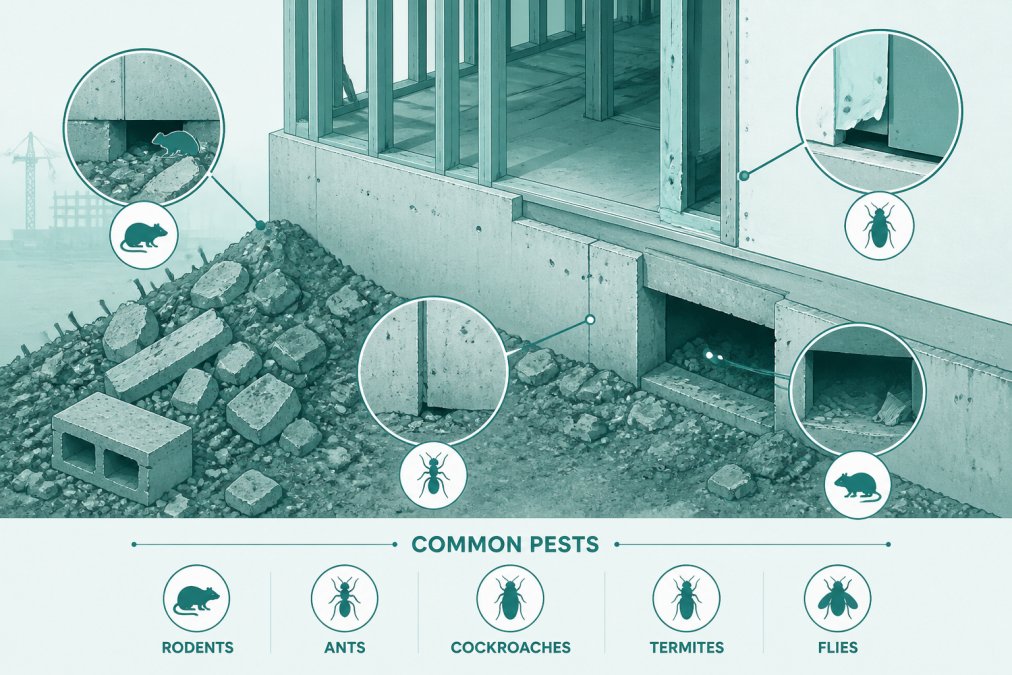
Rodents are the primary pest threat on construction sites. Rats and mice exploit foundation gaps, openings around utilities, and spaces between structural elements. They contaminate work areas with droppings, spread disease, and damage insulation and wiring. Demolition projects are particularly vulnerable, as walls come down, rodent colonies that nested inside are exposed and displaced, causing them to seek new shelter within remaining structures or adjacent buildings.
Cockroaches thrive in construction environments where food waste accumulates and sanitation is inconsistent. They hide in wall voids, under debris, and within equipment storage areas. Cockroach populations can explode rapidly in warm months, and they’re notoriously difficult to eliminate once established. They contaminate surfaces and pose health risks to workers.
Termites represent a structural threat that can cause thousands of dollars in damage if left unchecked. They attack wood framing, subflooring, and structural supports. New construction sites with exposed wood are particularly vulnerable. Demolition debris left on-site can harbor termite colonies that then migrate to adjacent structures.
Flies and other insects breed in accumulated waste, standing water, and decomposing materials common on construction sites. While less immediately damaging than rodents or termites, they create sanitation concerns and attract larger pests.
The key insight: construction sites don’t just have pest problems, they create conditions that actively encourage pest colonization. This is why prevention through site management is far more effective than reactive treatment after infestation occurs.
OSHA Pest Control Requirements and Regulatory Compliance
Pest control for construction sites isn’t optional from a regulatory perspective. OSHA standards require that construction employers maintain sanitary conditions and eliminate hazards that could harm workers. Pest infestations violate these requirements and create liability exposure.
The OSHA General Duty Clause requires employers to provide workplaces free from recognized hazards likely to cause death or serious physical harm. Pest infestations, particularly rodent colonies that spread disease or cockroach populations that contaminate food and water sources, qualify as recognized hazards. Failure to address infestations can result in citations, fines, and work stoppages.
Beyond OSHA, local health departments and building codes impose specific sanitation standards for construction sites. Many jurisdictions require documented pest management plans before demolition or construction permits are issued. If your site fails inspection due to pest activity, you may face permit revocation or project delays.
Ignoring pest control compliance isn’t just a health issue, it’s a legal and financial risk. A single OSHA citation for pest-related hazards can cost thousands and delay project completion by weeks.
Pest control services can structure treatment plans to ensure compliance with local and federal requirements. Documentation of pest management activities protects your project from liability and demonstrates due diligence to inspectors and authorities.
The practical requirement: develop a written pest control construction sites plan before work begins, implement prevention measures consistently, and maintain records of all pest management activities. This protects workers, ensures regulatory compliance, and protects your project timeline.
Developing a Construction Site Pest Management Plan
A construction site pest management plan is your primary tool for preventing and managing pest activity. This plan should be developed before work begins and refined as the project progresses through different phases.
Start with a pre-construction site survey. Before equipment arrives or excavation begins, have a pest control professional conduct a thorough inspection of the property. This assessment identifies existing pest populations, potential entry points, and environmental factors that encourage infestation. The survey becomes your baseline for measuring prevention effectiveness throughout the project.
Define exclusion measures. Exclusion, preventing pests from entering the structure, is the foundation of any effective plan. This includes:
- Sealing foundation cracks and gaps around utilities
- Installing door sweeps and weather stripping on temporary site offices
- Screening vents and openings with 1/4-inch mesh or smaller
- Maintaining gaps of less than 1/4 inch around penetrations for pipes and conduits
Establish sanitation protocols. Pests need food, water, and shelter. Remove these and you dramatically reduce infestation risk:
- Require daily cleanup of work areas and removal of food waste
- Eliminate standing water and fix leaking pipes promptly
- Store materials in sealed containers or elevated racks
- Organize equipment storage to eliminate hiding spaces
- Remove construction debris regularly rather than allowing accumulation
Implement routine monitoring. Regular inspections catch pest activity before populations become established. Schedule weekly walk-throughs of the site specifically to look for pest signs: droppings, gnaw marks, entry holes, dead insects, or live specimens. Document findings in a pest activity log that becomes part of your compliance records.
Develop response protocols. Your plan should specify what happens when pest activity is detected. This includes immediate notification to your pest control contractor, isolation of affected areas, and specific treatment approaches appropriate to active work zones. Clear protocols prevent delays and ensure consistent response.
A well-developed plan demonstrates that your project takes pest control seriously and has systems in place to manage it effectively. This protects your crew, maintains your schedule, and satisfies regulatory requirements.
Preventing Pest Infestations During Demolition
Demolition projects create unique pest control challenges. As walls and structures come down, hidden pest populations are exposed and displaced. Without deliberate prevention measures, these displaced pests migrate to adjacent structures or establish new colonies in remaining areas.
Pre-demolition assessment is critical. Before demolition begins, conduct a thorough pest inspection of the structure. Identify where pest populations are currently living, wall voids, attic spaces, crawl spaces, and foundation areas. Understanding existing infestations allows you to plan targeted treatment before demolition work begins.
Treat before you demolish. The most effective approach is to eliminate existing pest populations before demolition starts. This prevents displaced pests from becoming a problem during active work. Treatment methods vary based on pest type and structure, but the principle is consistent: address infestations proactively rather than reactively.
Manage debris carefully. Demolition debris is a major pest attractant. Piles of wood, cardboard, and other materials provide shelter and breeding grounds. Implement these practices:
- Remove debris from the site regularly rather than stockpiling it
- Cover debris piles with tarps to reduce shelter availability
- Avoid placing debris directly on soil where it can harbor pests
- Inspect debris for active pest populations before removal
Isolate remaining structures. If demolition is partial or occurs adjacent to occupied buildings, prevent pest migration by creating barriers:
- Seal temporary walls with caulk and weatherstripping
- Install door sweeps on all entry points
- Maintain exclusion measures throughout the project duration
Coordinate with neighbors. Demolition-related pest activity can affect adjacent properties. Inform neighboring property owners about your demolition timeline and pest management plan. Coordinate with their pest control providers if needed. This prevents disputes and ensures comprehensive site-wide management.
Demolition-specific pest control requires specialized knowledge. Professional contractors understand how to treat structures before demolition, manage displaced populations, and prevent migration to adjacent areas.
Integrated Pest Management Strategies for Active Sites
Integrated Pest Management (IPM) is the gold standard for pest control construction sites. Rather than relying solely on chemical treatments, IPM combines multiple strategies to prevent infestations and manage problems with minimal pesticide use.
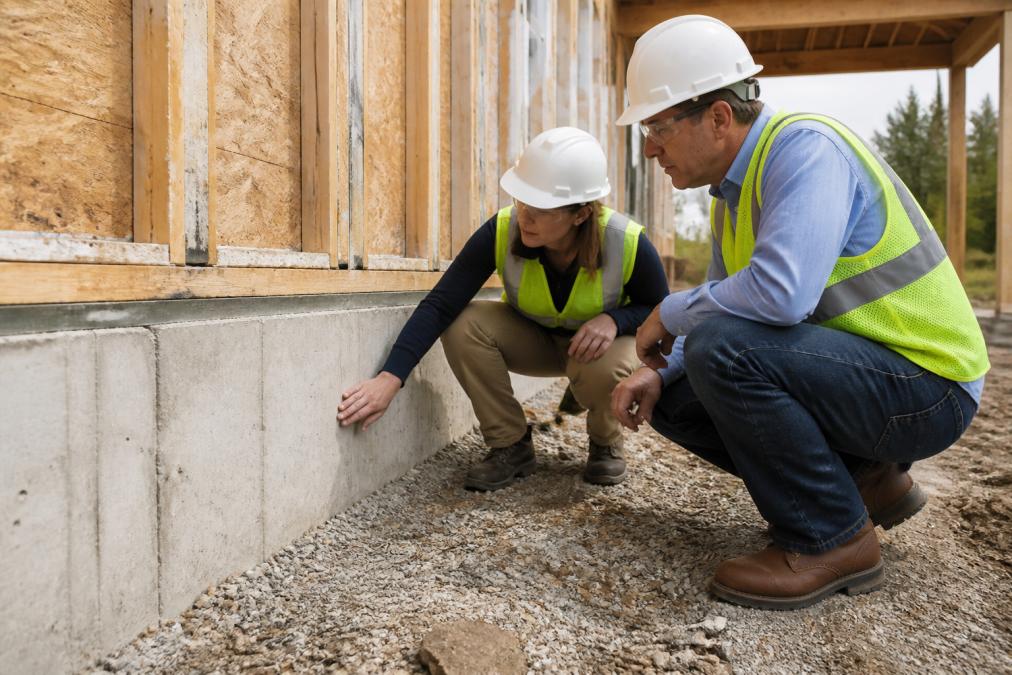
IPM begins with prevention. The most effective pest management happens before pests arrive. Prevention includes exclusion measures, sanitation protocols, and environmental modifications that make the site less attractive to pests. A site that eliminates food sources, water access, and shelter won’t support large pest populations regardless of external pressures.
Monitoring is continuous. IPM relies on regular inspections to detect pest activity early, before populations become established. Monitoring includes visual inspections, pheromone traps for rodents and insects, and documentation of findings. Early detection allows for targeted, low-impact interventions rather than broad-spectrum treatments.
Treatment is targeted and proportional. When pest activity is detected, IPM uses the least toxic, most effective approach appropriate to the situation. This might include:
- Mechanical traps for rodent control rather than poison
- Bait stations that isolate pesticide exposure to target pests
- Exclusion improvements that prevent future entry
- Sanitation corrections that remove pest attractants
Chemical treatments are used strategically. Pesticides are part of IPM, but they’re used only when other methods are insufficient. When chemicals are necessary, they’re applied in ways that minimize exposure to workers and the environment, targeted applications rather than broad spraying.
IPM is more effective long-term than reactive pesticide application because it addresses the root causes of infestation rather than just killing current pests. Sites that implement IPM see fewer pest problems, lower treatment costs, and better regulatory compliance.
The benefits of IPM extend beyond pest control. It reduces chemical exposure for workers, minimizes environmental impact, and demonstrates commitment to safety and sustainability, increasingly important for LEED-certified and green building projects.
Choosing Professional Pest Control Services for Your Project
Selecting the right pest control contractor is one of the most important decisions for your construction project. The wrong choice can result in ineffective treatment, regulatory violations, and project delays. The right partner provides expertise, reliability, and documentation that protects your project.
Look for construction-specific experience. Not all pest control companies understand construction site requirements. You need a contractor that has managed active construction and demolition sites, understands OSHA requirements, and can work within the constraints of ongoing work. Ask potential contractors about their experience with projects similar to yours.
Verify licensing and insurance. All pest control technicians should be licensed by the state. Verify that your contractor maintains current licenses and carries liability insurance. This protects you if something goes wrong during treatment. Ask for proof of insurance and licensing before work begins.
Request a detailed plan before work starts. A professional contractor will develop a site-specific pest management plan based on your property assessment. This plan should detail prevention measures, monitoring protocols, treatment approaches, and documentation procedures. Review it carefully and ask questions about anything unclear.
Prioritize documentation. Your pest control contractor should maintain detailed records of all activities: inspection findings, treatment dates and methods, materials used, and results. This documentation is essential for regulatory compliance and protects you if questions arise later. Ensure your contract specifies that records will be provided to you regularly.
Evaluate responsiveness and communication. Construction timelines are tight. Your pest control contractor needs to respond quickly to requests, provide regular updates, and communicate clearly about findings and recommendations. During your initial conversations, assess how well they listen and whether they answer your questions directly.
Pest control services can provide licensed, experienced technicians to construction projects throughout the region. They understand the unique demands of active job sites, maintain detailed documentation for compliance, and provide the fast response times that construction schedules require. With a 90-day guarantee backing some work, you have confidence that problems will be resolved.
The selection process matters because your pest control contractor becomes part of your project team. Choose someone you trust to protect your crew, maintain your schedule, and ensure regulatory compliance.
Pest infestations on construction sites create health hazards, regulatory exposure, and project delays that compound over time. The solution isn’t reactive treatment after problems emerge, it’s a deliberate prevention strategy implemented from the project’s start. A comprehensive pest control construction sites plan, combined with professional management from a contractor experienced in construction environments, eliminates the uncertainty and keeps your project on track. Zoifia Pest Control specializes in this type of work, providing licensed, documented pest management tailored to active construction and demolition sites with the fast response your schedule demands.
Frequently Asked Questions
What are the legal requirements for pest control on construction sites?
Construction sites must comply with OSHA regulations and local health codes governing pest control. Sites must maintain sanitation standards, manage debris properly, and document pest activity. Many jurisdictions require licensed pest control contractors for commercial applications. Your pest management plan should address rodent exclusion, vector control, and monitoring protocols. Check with your local building department for specific requirements in your area.
How can project managers prevent pest infestations during demolition?
Demolition creates ideal conditions for pests: exposed food sources, shelter, and entry points. Implement strict site sanitation by removing debris daily, sealing waste in covered containers, and maintaining clear perimeters. Install rodent exclusion barriers around the site boundary. Conduct pre-demolition inspections to identify existing infestations. Schedule regular pest monitoring and maintain detailed activity logs. Coordinate with your pest control contractor before demolition begins to establish preventative measures.
What are the most common pests found on construction sites?
Rodents (rats and mice) are the primary concern on construction sites due to abundant food waste and shelter. Termites pose structural risks, especially during foundation and framing work. Cockroaches thrive in debris and warm areas. Flies and other vectors multiply in unsanitary conditions. Each pest requires different control strategies: rodent exclusion and trapping programs for rodents, structural inspections for termites, and sanitation audits for cockroaches. A professional pest control contractor can identify which pests threaten your specific site.
How do construction activities attract rodents and other pests?
Construction sites provide ideal pest habitat: exposed food from worker meals and waste, shelter in debris piles and building cavities, and easy access through open doors and gaps. Demolition work exposes hidden pest populations and creates new entry points. Disturbed soil and removed barriers eliminate natural defenses. Ongoing work creates constant opportunities for pests to enter. This is why integrated pest management and routine monitoring are essential from project start to completion.
What should a construction site pest management plan include?
A comprehensive plan covers site sanitation protocols, debris management schedules, rodent exclusion methods, pest monitoring frequency, and emergency response procedures. Document baseline pest activity before work begins, establish bait stations and trapping programs, and assign responsibility for daily inspections. Include preventative maintenance schedules and communication procedures with your pest control contractor. The plan should address specific risks for your site type (new construction, renovation, or demolition) and include contingency measures for active infestations.
Why is the 90-day guarantee important for construction site pest control?
Construction projects span weeks or months, and pest problems can recur as conditions change. A 90-day guarantee ensures continuous protection throughout your project timeline without requiring separate treatments or additional contracts. If pest activity resumes within the guarantee period, your contractor returns to address it at no extra cost. This protects your project schedule, maintains regulatory compliance, and gives you confidence that the infestation is truly resolved, not just temporarily managed.
This article was written using GrandRanker
