
Last Updated: October 23, 2026
Quick Summary
Natural roach repellents like essential oils, vinegar spray, and bay leaves deter roaches from settling in treated areas, making them effective for prevention in apartments. However, they work best as deterrents, not eliminators, and should be combined with sealing entry points, removing food and moisture, and professional treatment if an infestation is severe.
- Peppermint and citrus oils are the most effective essential oils, applied at 10-20 drops per 8 ounces of water and reapplied every 3-5 days
- Vinegar spray made from equal parts distilled white vinegar and water is non-toxic, inexpensive, and safe for kids and pets
- Bay leaves and cinnamon are long-lasting, safe alternatives that require no mixing and work well in cabinets and along baseboards
- Roaches seen during the day, droppings in multiple rooms, or a musty odor indicate a severe infestation requiring professional treatment
- Sealing entry points around pipes, baseboards, outlets, and doors is essential because roaches travel between units through shared walls and gaps
Table of Contents
- Why Natural Roach Repellents Matter in Apartments
- Essential Oils That Repel Roaches
- Home Remedies for Cockroaches Beyond Essential Oils
- How to Keep Roaches Out of an Apartment
- Roach Prevention Tips for Apartments
- The Reality of Repellent Effectiveness and Safety
- When Natural Repellents Aren’t Enough
- Frequently Asked Questions
Why Natural Roach Repellents Matter in Apartments
Roaches thrive in apartments, hiding in shared walls, traveling through pipes, and multiplying fast.
A neighbor’s infestation becomes your problem overnight. Natural repellents won’t eliminate an established colony, but they deter roaches from settling in and complement professional treatment.
This guide covers natural roach repellents that work for apartment living, safe use around kids and pets, and when to call a professional.
Essential Oils That Repel Roaches
Essential oils are the most talked-about natural roach repellent and easy to apply in small spaces. You can explore natural cockroach repellents in depth to complement the essential oils discussion. But scent-based repellents only discourage roaches from lingering in a treated zone; they don’t kill roaches or collapse a colony in a shared wall.
A practical dilution is roughly 10-20 drops of essential oil per 8 ounces of water in a fine-mist spray bottle, plus a quarter teaspoon of mild dish soap to help the oil disperse. Shake before every use. Spray a light film along baseboards, under the sink, and behind the refrigerator, then let it dry. Reapply every 3-5 days, or sooner if the scent fades.
Peppermint Oil and Tea Tree Oil
Peppermint oil is the most popular choice because the menthol scent is strong and roaches avoid treated surfaces.
How to use them:
- Mix 10-20 drops of peppermint or tea tree oil with 8 ounces of water in a spray bottle
- Add a quarter teaspoon of mild dish soap to help the oil mix with water
- Spray a light film around baseboards, under sinks, and behind appliances
These oils can irritate airways if overused in small spaces, so use sparingly, spray low, and ensure airflow while surfaces dry.
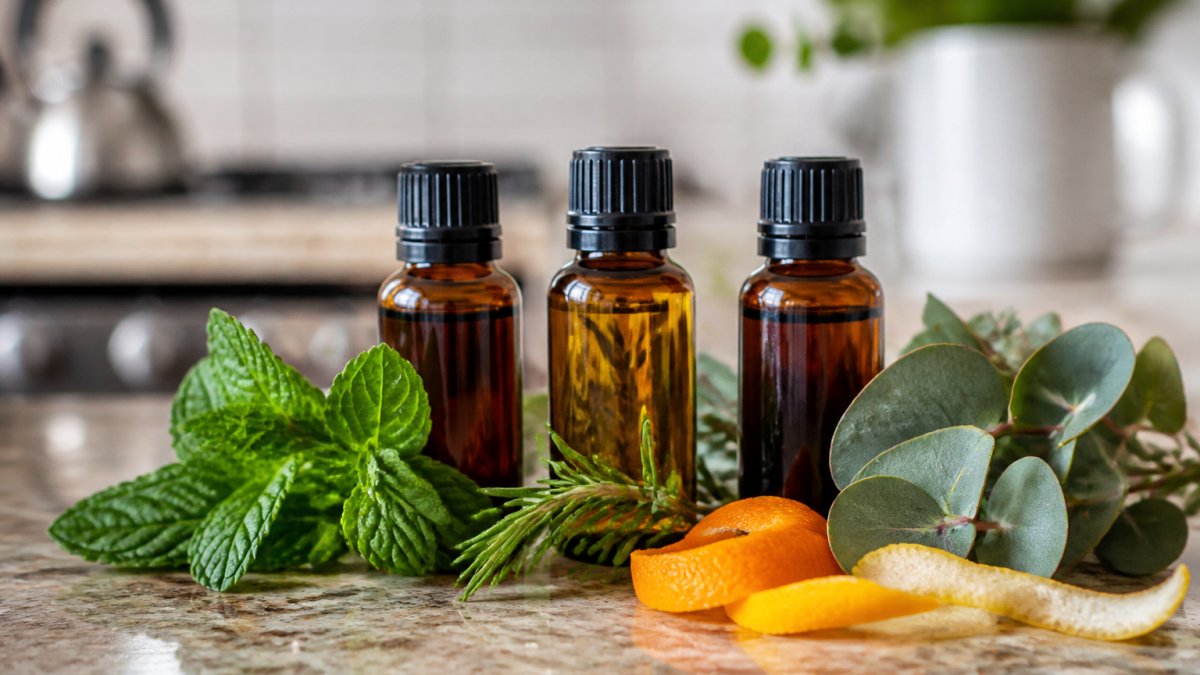
Eucalyptus, Lavender, and Citrus Oils
Eucalyptus oil has a sharp, medicinal smell roaches avoid, but it’s a respiratory irritant and hazardous to pets if ingested.
Lavender is the gentlest of the group and the least likely to trigger respiratory complaints in a tight apartment.
Citrus oils (lemon, orange, grapefruit) work because roaches dislike the acidic scent, and they pose a lower irritation risk than menthol-heavy oils.
Place fresh citrus peels under the sink, near entry points, and in kitchen cabinets, replacing them every 2-3 days as they dry out. Lavender oil at the same 10-20 drops per 8 ounces can be sprayed around entry points as part of a layered approach.
Essential oils are not interchangeable with food-safe spices. Never apply undiluted oil directly to a surface a pet or child will touch, and never mix oils into a spray you also use on food-contact surfaces without wiping it off afterward.
Matching the Oil to the Room
Match the oil to the space rather than using one spray everywhere:
- Kitchen and bathroom: peppermint or citrus, applied low along baseboards and under the sink, because these rooms ventilate better.
- Bedroom and closet: lavender, the lowest-irritation option for a room with a closed door.
- Entryway and hallway: citrus peel or a light citrus spray, since these are transition zones where roaches scout first.
Rotate the scent every few weeks: roaches can become less responsive to a scent that’s always present, and rotating prevents over-applying any single oil in a small space.
Home Remedies for Cockroaches Beyond Essential Oils
Common household items also deter roaches when used strategically.
Bay Leaves, Cinnamon, and Cedar
Bay leaves have a strong scent roaches avoid.
Cinnamon works similarly. Sprinkle ground cinnamon around baseboards or mix it with water for a spray.
Cedar chips or oil can be placed in small containers near entry points, but the smell is strong in confined spaces.
For apartments, bay leaves and cinnamon are your best bets: safe, long-lasting, and no ventilation required.
Vinegar-Based DIY Sprays
Distilled white vinegar is acidic, and roaches hate it. Mix equal parts vinegar and water in a spray bottle for one of the cheapest, safest options available.
How to make and use vinegar spray:
- Combine 1 cup distilled white vinegar with 1 cup water
- Add 10 drops of dish soap to help it stick to surfaces
- Spray along baseboards, under sinks, and around entry points
Advantages of vinegar spray:
- Non-toxic to humans and pets
- Inexpensive
- No respiratory irritation
The smell fades as it dries, so neighbors won’t complain. It’s often the first line of defense apartment dwellers try.
How to Keep Roaches Out of an Apartment
Natural repellents work best when combined with prevention. Roaches need entry points and reasons to stay. Remove both.
Sealing Entry Points in Older Buildings
Older apartment buildings have gaps everywhere. Roaches use them to move between units and from outside.
Key entry points to seal:
- Gaps around pipes under sinks
- Cracks in baseboards
- Space between walls and electrical outlets
Use caulk or weatherstripping to seal these. For renters, ask your landlord to handle this, it’s their responsibility. If they won’t, document the gaps and seal apartment gaps to prevent roaches yourself using removable caulk.
Managing Shared Building Sources
Roaches travel through walls, pipes, and shared ventilation. You can’t control your neighbors, but you can control your unit.
What you can do:
- Seal your entry points (listed above)
- Keep your apartment extremely clean
- Store food in airtight containers
What you can’t control:
- Your neighbor’s cleanliness
- Roaches entering from adjacent units
- Infestations in the building’s walls
When shared building sources are the problem, natural repellents alone won’t work.
Roach Prevention Tips for Apartments
Prevention is where apartment dwellers have the most leverage. Remove the food, water, and harborage roaches need, and make your unit a harder target than the one next door.
Sanitation and Food Storage
Roaches need food. Remove access and they have less reason to stay.
Food storage rules:
- Store all food in airtight containers (glass or plastic with tight seals)
- Don’t leave dishes in the sink overnight
- Wipe down counters and stovetops after every meal
Pay special attention to:
- Pet food (store in airtight containers, don’t leave bowls out overnight)
- Pantry items (transfer from boxes to sealed containers, since roaches chew through cardboard)
- Under appliances (crumbs accumulate here and are easy to miss)
If roaches are common in the building, your cleanliness alone may not prevent them, but it reduces the likelihood they settle in your unit.
Moisture Control and Clutter Reduction
Roaches need moisture. Fix leaks and reduce humidity.
Moisture control:
- Fix dripping faucets immediately and report them to management if you rent
- Wipe down sinks before bed
- Use a dehumidifier if your apartment is damp
Clutter reduction:
- Remove cardboard boxes (roaches hide in them and can hitchhike in on deliveries)
- Organize cabinets so you can see everything
- Don’t store items under the sink unless necessary
Roaches hide in dark, damp, cluttered spaces. Make your apartment the opposite.
Monitoring for Shared-Building Sources
This is the step most apartment dwellers skip, and it tells you whether your prevention is working. Place sticky roach monitors, small glue boards sold at hardware stores, behind the refrigerator, under the sink, in the back of a cabinet, and along the wall where your unit meets a shared wall.
A pattern worth knowing: if monitors near a shared wall or a pipe penetration keep catching roaches while monitors in the middle of your unit stay clean, the source is likely outside your unit.
Coordinating With Building Management
In a rental, structural pest problems are generally the landlord’s responsibility, and most leases and state landlord-tenant rules require the property owner to address infestations that affect habitability.
What you can do:
- Seal your entry points and document gaps with photos
- Keep your apartment clean and dry
- Store food in airtight containers
What you can’t control:
- Your neighbor’s cleanliness
- Roaches entering from adjacent units
- Infestations inside the building’s walls
When shared building sources are the problem, natural repellents alone won’t work. Pair your prevention with a written report to management and, if the problem persists, professional treatment.
Prevention in an apartment is a two-part job: make your unit inhospitable, and build a paper trail that pushes the building to treat the shared source. Repellents support that plan; they do not replace it.
The Reality of Repellent Effectiveness and Safety
Natural repellents have limits. Understanding them helps you make smart decisions.
What the Evidence Actually Shows
Natural roach repellents work best as deterrents, not eliminators. They discourage roaches from entering or settling in an area. They don’t kill roaches or eliminate existing colonies.
The evidence suggests:
- Essential oils reduce roach activity in treated areas
- Vinegar and bay leaves work similarly
- Results vary depending on how consistently you apply them
If you already have roaches, repellents alone won’t solve the problem. You need to eliminate the colony, not just deter new roaches.
Pet, Child, and Respiratory Safety
Natural doesn’t always mean safe, especially in apartments with limited ventilation.
Safety considerations:
| Repellent | Kids | Pets | Respiratory | Notes |
|---|---|---|---|---|
| Peppermint oil | Safe (diluted) | Safe (diluted) | Irritating | Use sparingly in small spaces |
| Tea tree oil | Safe (diluted) | Caution | Irritating | Can be toxic to cats, avoid |
| Eucalyptus oil | Safe (diluted) | Caution | Irritating | Strong smell, needs ventilation |
| Lavender oil | Safe | Safe | Safe | Gentlest option for apartments |
| Citrus oils | Safe | Safe | Safe | Low irritation risk |
| Cinnamon | Safe | Safe | Safe | No respiratory concerns |
| Bay leaves | Safe | Safe | Safe | Choking risk if ingested, place high |
| Vinegar spray | Safe | Safe | Safe | Very safe for all |
For apartments with young children or pets, vinegar spray and cinnamon are your safest bets. They’re effective, non-toxic, and don’t cause respiratory irritation.
When Natural Repellents Aren’t Enough
Some infestations are beyond what natural repellents can handle. Know when to escalate.
Recognizing a Severe Infestation
You have a severe infestation if:
- You see roaches during the day (they’re nocturnal, daytime activity means high numbers)
- You find roach droppings (small black specks) in multiple rooms
- You smell a musty odor (sign of many roaches)
Severe infestations require professional treatment. Natural repellents won’t solve them.
Integrated Pest Management for Renters
When natural repellents fail, use an integrated approach:
- Clean aggressively. Remove all food sources, moisture, and clutter.
- Seal entry points. Seal apartment gaps to prevent roaches and keep roaches out of apartment cabinets.
- Call a professional. Professional vs DIY roach control explains when professional treatment is necessary.
- Know your rights. Renter’s legal rights for pest infestations covers what landlords must do.
For renters in older buildings, professional treatment is often necessary. Zoifia Pest Control specializes in apartment infestations and works with renters on flexible terms, no long-term contracts required.
Natural roach repellents are a smart first step for apartment dwellers. They’re safe, affordable, and can prevent minor problems from becoming major ones. But they have real limits.
Frequently Asked Questions
What home remedies actually kill or repel cockroaches?
Essential oils like peppermint, tea tree, and eucalyptus, along with bay leaves, cinnamon, and vinegar-based sprays, are commonly used natural roach repellents. However, their effectiveness is limited, they may deter roaches temporarily but rarely eliminate an active infestation. These remedies work best as part of a prevention strategy combined with sanitation and sealing entry points, not as standalone solutions for severe infestations.
How can I keep roaches out of my apartment without pesticides?
Focus on prevention: seal cracks and crevices around pipes, baseboards, and windows; remove food sources and clean up crumbs immediately; fix water leaks and reduce moisture; store food in airtight containers; and reduce clutter where roaches hide. In older apartment buildings, coordinate with your landlord or neighbors since roaches often travel through shared walls and pipes. Natural repellents can supplement these efforts but are most effective when combined with these structural and sanitation measures.
Do essential oils really repel roaches?
Essential oils have scents that roaches find unpleasant, so they may avoid treated areas temporarily. Peppermint, tea tree, eucalyptus, and citrus oils show the most promise in anecdotal reports. However, scientific evidence of their effectiveness is limited, and roaches can adapt to or ignore these scents over time. They are better viewed as a deterrent for prevention rather than a treatment for an existing infestation.
What should I do if roaches keep coming back despite using natural remedies?
If natural repellents and prevention measures aren’t working, you likely have a more serious infestation that requires professional intervention. A licensed pest control service can identify entry points, assess the severity, and apply targeted treatments. Many pest control companies, including those serving apartment dwellers, offer flexible options without long-term contracts and provide guarantees on their work, giving you peace of mind that the problem will be resolved.

