Table of Contents
- Why Ants Keep Invading Your Kitchen (And How to Prevent Ants in Kitchen for Good)
- How to Find Ant Entry Points in Your Kitchen
- How to Store Food to Prevent Ants From Entering Your Kitchen
- Natural Ant Repellent for Kitchen: What Actually Works
- How to Get Rid of Sugar Ants in the Kitchen Fast
- How to Prevent Ants in Kitchen With Sanitation and Moisture Control
- When to Call a Professional Exterminator for Kitchen Ants
- Conclusion
Last Updated: May 19, 2026
Ants find your kitchen irresistible for three reasons: food, water, and shelter. Knowing how to prevent ants in kitchen spaces comes down to cutting off all three at once, not just wiping down counters after dinner. At Zoifia Pest Control, we’ve helped hundreds of Metro Boston homeowners break the cycle of recurring ant invasions, and the patterns are remarkably consistent. Below, we’ll show you exactly where ants get in, what keeps attracting them, and which methods actually stop them for good rather than just scattering the colony temporarily.
Here’s what most guides get wrong: they treat ant prevention as a single-step fix. Spray here, wipe there, done. But ants are persistent, and a colony can send out scouts for days before you notice a trail. The real solution is layered, and it starts before a single ant crosses your threshold.
Why Ants Keep Invading Your Kitchen (And How to Prevent Ants in Kitchen for Good)
Ant infestations in kitchens are not random events. Ants are highly organized foragers, and once a scout finds a food or moisture source, it lays a pheromone trail that recruits the entire colony. That trail persists even after you clean the surface, which explains why ants seem to reappear in exactly the same spot days after you’ve wiped them away.
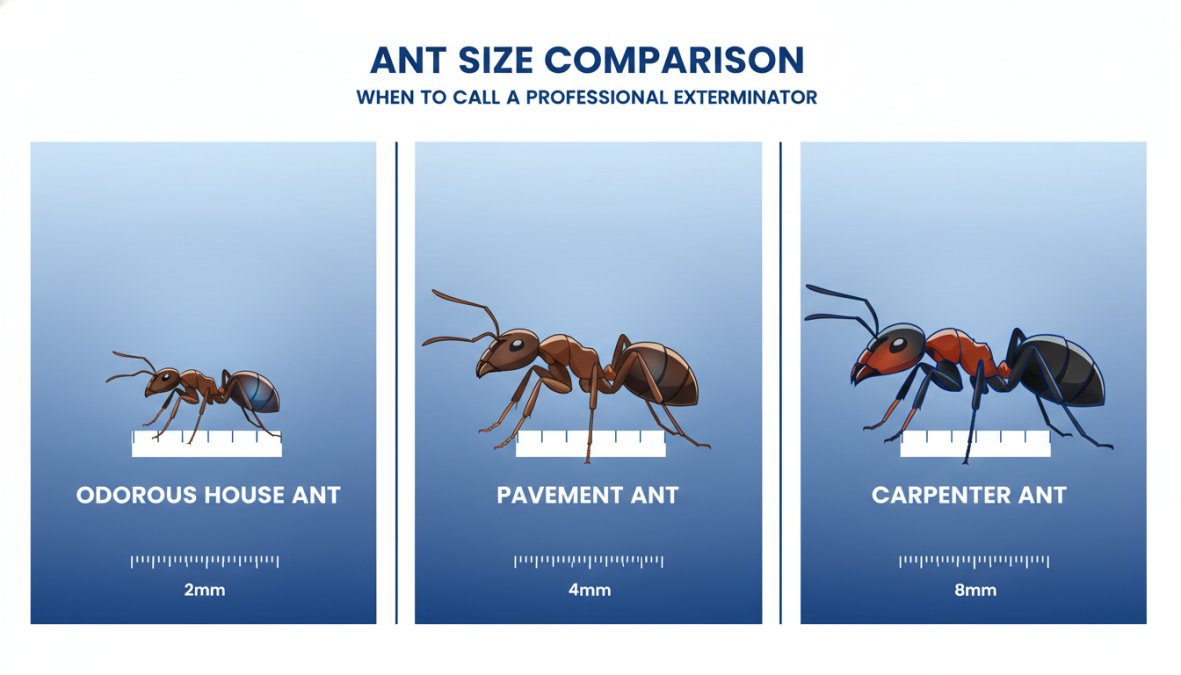
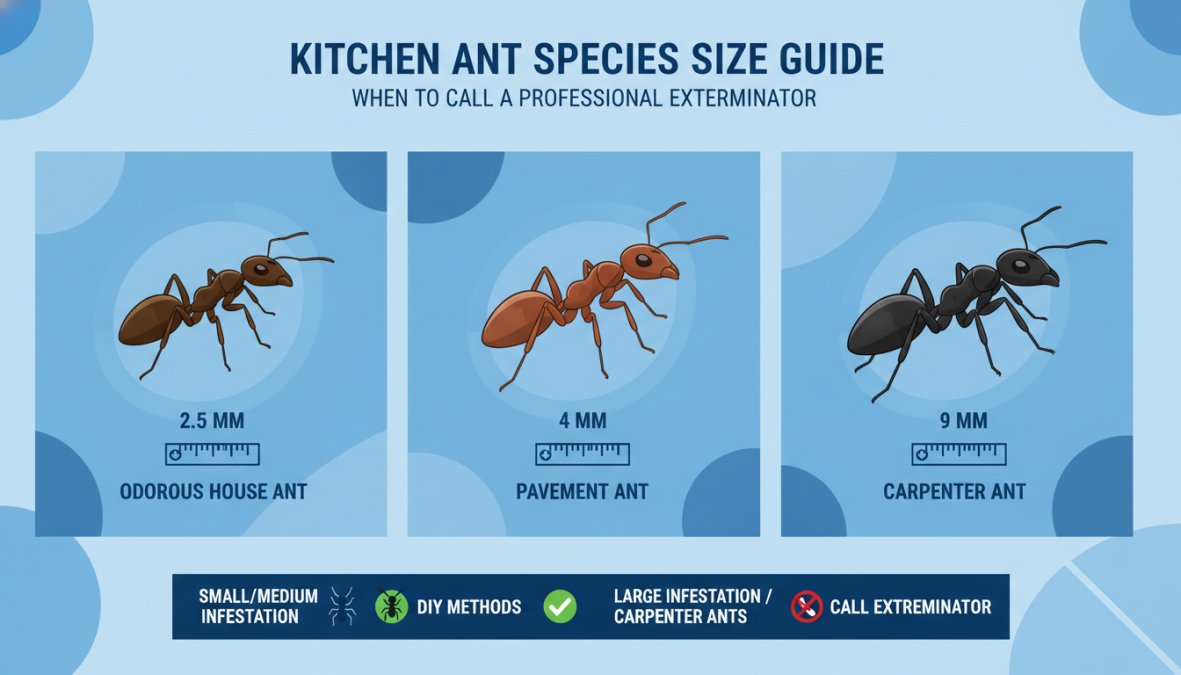
The most common kitchen invaders in New England are odorous house ants, pavement ants, and carpenter ants. Each species behaves differently. Odorous house ants are drawn to sugary spills and will nest inside walls or under flooring. Pavement ants typically enter through foundation cracks and are opportunistic feeders. Carpenter ants are the most serious, since they excavate wood to build nesting sites and can cause structural damage over time.
Moisture is as powerful an attractant as food. A slow drip under the sink, condensation around pipes, or a wet sponge left on the counter can draw ants even when your food storage is flawless. According to the University of California’s Integrated Pest Management Program, eliminating moisture sources is one of the most effective long-term strategies for controlling ant activity indoors.
The throughline here is this: you cannot out-clean a pheromone trail without also removing what created it. Every section below addresses one layer of that system.
How to Find Ant Entry Points in Your Kitchen
Finding where ants enter is the most underrated step in any prevention plan. Most homeowners skip straight to spraying, which addresses the symptom without fixing the cause.
Start by following an active ant trail backward. Ants move in relatively straight lines toward their entry point, so resist the urge to kill them immediately. Watch where the trail leads. Common entry points include gaps around pipe penetrations, cracks along baseboards, spaces under door frames, and openings around window sills. Even a gap the width of a credit card is enough for most ant species.
Common Entry Points Most Homeowners Miss
The entry points that get missed are almost always structural rather than obvious. A few worth checking:
- Where plumbing pipes enter under the sink cabinet
- The gap between the countertop and the wall (especially near the stove)
- Weep holes in brick exteriors near the kitchen wall
- Where the dishwasher drain hose exits the cabinet
- Cracks in the foundation visible from the basement or crawlspace
Seal confirmed entry points with silicone caulk or expanding foam. Avoid latex caulk for gaps near moisture, since it shrinks and cracks over time.
Step-by-Step: Tracing an Ant Trail Back to the Source
- Identify the active trail during peak foraging hours (early morning or evening).
- Follow the trail without disrupting it, moving from the food source backward toward the wall.
- Mark the wall location where ants disappear with a small piece of tape.
- Inspect the exterior wall on the opposite side of that mark for cracks, gaps, or vegetation contact.
- Seal the exterior gap first, then the interior gap, to avoid trapping ants inside the wall cavity.
- Recheck the area after 48 hours for new trail activity.
Sealing the exterior gap before the interior gap matters. If you seal from the inside first, trapped ants may chew through drywall or find a new interior exit point, making the problem worse.
How to Store Food to Prevent Ants From Entering Your Kitchen
Proper food storage is the single fastest way to reduce ant activity. Remove the food signal, and scouts have no reason to recruit the colony.
The standard advice is "use airtight containers," but the execution matters more than the concept. Many homeowners transfer dry goods into containers but leave the original cardboard boxes nearby, which still carry food odors. The container and the box both need to go.
The Worst Food Storage Mistakes That Attract Ants
A few specific mistakes come up repeatedly:
- Leaving fruit in an open bowl on the counter, especially overripe fruit
- Storing honey, maple syrup, or jam jars without wiping the exterior after each use
- Keeping pet food in its original bag rather than a sealed bin
- Leaving crumbs inside appliances (toasters, air fryers, under the stove burner grates)
- Storing onions and potatoes in mesh bags near the floor
The fix for most of these is a set of glass or hard-sided plastic containers with locking lids. Soft-sided containers with snap lids are not reliable long-term since the seal degrades.
Pet food bowls left on the floor overnight are one of the most common ant attractants in kitchens. Either pick up the bowl after feeding or place it inside a shallow dish filled with water, which creates a moat ants cannot cross.
Natural Ant Repellent for Kitchen: What Actually Works
Natural ant repellent for kitchen use is genuinely effective in some situations, but the category is plagued by overstatement. Some remedies disrupt foraging behavior temporarily. None eliminate a colony on their own. Understanding why they work, and where they fail, is what separates a useful tool from a false sense of control.
How Natural Repellents Actually Work (The Mechanism)
Most ants navigate almost entirely by chemical signals. Foragers deposit pheromone trails from the food source back to the nest, and recruits follow those trails with high precision. Natural repellents work through one of two mechanisms:
-
Trail masking: Strong aromatic compounds, acetic acid in vinegar, menthol in peppermint oil, eugenol in cloves, temporarily overwhelm the olfactory receptors ants use to detect pheromone trails. The trail is not destroyed; it is chemically buried under a stronger signal. Once the aromatic compound evaporates, the original trail can be re-detected and re-followed.
-
Physical barrier damage: Diatomaceous earth works differently. It is not aromatic. The microscopic silica particles abrade the waxy cuticle layer of an ant’s exoskeleton, causing the insect to lose moisture and die from desiccation. This is a physical kill mechanism, not a repellent, which is why it remains effective after it dries, as long as it stays dry and undisturbed.
Practical options that show consistent results:
- Diatomaceous earth (food-grade): Applied in a thin, dry line along baseboards and confirmed entry points. Effective as long as it remains dry. Loses effectiveness immediately when wet. Reapply after mopping or any moisture exposure.
- Peppermint oil (diluted): 10-15 drops per cup of water, applied to entry points and trail paths. Disrupts scent trails for 24-48 hours before reapplication is needed. Most effective as a short-term deterrent while you seal entry points.
- White vinegar (50/50 with water): Best used as a cleaning agent to erase an active trail after you’ve removed the food source. Not a standalone deterrent. Once dry, the masking effect is gone.
- Cinnamon and cloves: Work as deterrents at entry points, not as killers. Ground cinnamon applied at a threshold can redirect foragers, but it does not stop a motivated colony with a confirmed food source nearby.
Does Vinegar Really Keep Ants Away?
White vinegar is one of the most widely recommended natural ant repellents, and it does work, but not in the way most people think. Vinegar does not kill ants or destroy a colony. It temporarily erases pheromone trails by masking the chemical signal with acetic acid. Once the vinegar dries, the trail can be re-established by any forager that retraces the route.
Use vinegar as a cleaning agent after removing an active trail, not as a standalone deterrent. Spray a 50/50 solution of white vinegar and water along the trail path and wipe clean. Follow up by sealing the entry point. Used this way, vinegar is a useful part of a broader strategy rather than a solution by itself.
Safety Protocols for Pets and Children, The Part Most Guides Skip
This is the question most homeowners are actually searching for, and most pest control articles ignore it entirely in favor of explaining why ants come back. Here is what you need to know before applying any natural repellent in a kitchen where children or pets are present.
Diatomaceous earth:
Food-grade diatomaceous earth is considered safe for use around children and pets when applied correctly. The key word is food-grade, pool-grade diatomaceous earth is chemically treated and should never be used indoors. Even food-grade DE is a fine powder that can irritate lungs if inhaled during application. Apply it when children and pets are out of the room, allow the dust to settle before re-entry, and avoid applying it to surfaces where pets eat or drink. Once settled into a thin line along a baseboard, it poses minimal inhalation risk during normal activity.
Peppermint oil:
Peppermint oil is toxic to cats. Cats lack the liver enzyme (glucuronyl transferase) needed to metabolize phenols, which are present in peppermint and many other essential oils. Applying peppermint oil along floor-level entry points in a home with cats is not recommended. For dog owners, diluted peppermint oil at low concentrations is generally tolerated, but direct skin contact should be avoided. Keep pets away from treated surfaces until dry.
Vinegar:
Generally safe around children and pets once dry. The acetic acid concentration in household white vinegar (typically 5%) is low enough that surface residue after drying poses no meaningful risk. Do not apply to natural stone countertops, the acid etches marble and granite.
Cinnamon and cloves:
Safe around children. Cinnamon essential oil (as opposed to ground cinnamon) can irritate mucous membranes in high concentrations and should be kept away from pets, particularly birds, which are highly sensitive to airborne irritants.
If you have cats in the home, avoid all essential oil-based repellents at floor level. Stick to diatomaceous earth (food-grade only) and physical sealing as your primary natural prevention tools. The peppermint-oil advice that circulates widely online does not account for feline physiology.
The Honest Limitation of Natural Repellents
Natural repellents are most effective as a supporting layer in a broader prevention system. They are not a substitute for sealing entry points, eliminating food signals, or using bait to address an established colony. If you have an active infestation, meaning a consistent trail with more than a dozen ants, natural repellents will not resolve it. They may temporarily redirect foragers, which can make the problem harder to track.
The most productive use of natural repellents is as a maintenance tool after an infestation has been resolved: applied to entry points that have been sealed, as a secondary deterrent against new scouts testing the perimeter.
Natural repellents work by masking pheromone trails or physically damaging ant exoskeletons, not by eliminating colonies. Use them as a maintenance layer after sealing entry points, not as a primary treatment. If you have cats, avoid essential oil-based options entirely and use food-grade diatomaceous earth instead.
How to Get Rid of Sugar Ants in the Kitchen Fast
"Sugar ants" is a catch-all term most homeowners use for small, trail-forming ants attracted to sweet foods. In the northeastern U.S., these are usually odorous house ants or pavement ants. Knowing which species you’re dealing with changes the treatment approach.
Odorous house ants produce a distinct rotten-coconut smell when crushed. If you notice that odor, you’re dealing with a colony that likely has multiple queens and satellite nests, which makes elimination more complex. Pavement ants are slower to spread and more responsive to bait treatments.
Speed matters here. A small scout group can become a full trail within hours once a food source is confirmed.
Baiting vs. Spraying: Which Method Wins Against Sugar Ants?
This is the part most guides get wrong, and the answer has real consequences for how quickly you resolve the problem.
Spraying kills ants on contact but triggers a scatter effect in many species. Odorous house ants, in particular, will split their colony when threatened, creating multiple new satellite nests. You may see fewer ants in one spot and more in three others within days.
Baiting is slower but more effective. Bait stations use a slow-acting insecticide mixed with a food attractant. Foragers carry the bait back to the nest, where it spreads through the colony via trophallaxis (food sharing). This domino effect reaches the queen, which is the only outcome that actually ends the infestation.
| Method | Speed | Targets Colony? | Risk of Scatter? | Best For |
|---|---|---|---|---|
| Contact spray | Immediate | No | Yes | Visible trail control only |
| Gel bait | 3-7 days | Yes | No | Full colony elimination |
| Bait stations | 5-10 days | Yes | No | Ongoing prevention |
| Natural repellents | Immediate | No | No | Minor deterrence |
For sugar ants specifically, place gel bait directly on the active trail rather than disrupting the trail first. Let the ants find and carry the bait. The temptation to spray first is understandable, but it undermines the bait’s effectiveness.
The single most effective approach against sugar ants is gel bait placed on an undisturbed trail. Do not spray before baiting. The scatter effect from sprays can split a colony and extend the infestation by weeks.
How to Prevent Ants in Kitchen With Sanitation and Moisture Control
Sanitation is not just about cleanliness in the cosmetic sense. It’s about removing every chemical signal that communicates "food available here" to foraging ants. That includes odors from residue you cannot see.
A few sanitation habits that make a measurable difference:
- Clean under and behind appliances monthly. Grease buildup under the stove and crumbs under the refrigerator are persistent attractants.
- Empty and rinse recycling bins weekly. Residue in bottles and cans is a major ant draw that most households overlook.
- Wipe down cabinet interiors twice a year, paying attention to corners and shelf edges.
- Run the garbage disposal with ice and dish soap weekly to clear food residue from the drain.
Moisture control deserves equal attention. According to the EPA’s guide to integrated pest management for schools and homes, moisture reduction is a cornerstone of any effective pest management program. Fix dripping faucets, check the seal on the dishwasher door, and ensure the area under the sink is dry and well-ventilated. A dehumidifier in a damp basement adjacent to the kitchen can reduce ant pressure significantly.
The combination of sanitation and moisture control does not just prevent ants. It removes the conditions that make your kitchen attractive to a broad range of pests, which makes it the highest-use investment in this entire guide.
When to Call a Professional Exterminator for Kitchen Ants
Most ant problems respond to the methods in this guide within two to three weeks. Some do not, and recognizing the difference early saves significant time, money, and frustration. The decision to call a professional is not about giving up on DIY, it is about correctly identifying which species you are dealing with and whether the treatment approach you are using is even capable of working against that species.
Species Behavior Changes Everything, And Most Guides Ignore This
The single most important factor in deciding whether to escalate to professional treatment is species identification. The three most common kitchen ant species in New England behave very differently when exposed to the same treatments, and applying the wrong method does not just fail, it can actively make the infestation worse.
Odorous house ants (Tapinoma sessile):
This is the species most homeowners are dealing with when they describe a recurring sugar ant problem. Odorous house ants are polydomous, meaning a single colony maintains multiple satellite nests simultaneously, sometimes dozens of them. When threatened by a contact spray or a strong chemical barrier, the colony does not die, it buds. The queen (or one of several queens) relocates with a portion of the workers to a new satellite nest, and the infestation spreads laterally through the structure. This is why spraying an odorous house ant trail often results in ants appearing in a new location within days. Gel bait is the correct tool because it exploits the colony’s food-sharing behavior (trophallaxis) to deliver the active ingredient to multiple nest sites simultaneously. If you have been baiting consistently for two weeks with no reduction, the bait placement or formulation may be wrong, a professional can identify which.
Pavement ants (Tetramorium immigrans):
Pavement ants are slower to spread and typically maintain a single primary nest in soil beneath a concrete slab, foundation, or sidewalk. They enter kitchens opportunistically through expansion joints and foundation cracks. Because their nest is usually outside the structure, interior bait treatments alone are often insufficient, the colony is simply too far from the bait placement. Pavement ant infestations that persist despite interior treatment usually require exterior perimeter treatment targeting the nest site directly. A professional can locate the exterior nest entry point, which is often not visible without knowing where to look.
Carpenter ants (Camponotus spp.):
Carpenter ants are in a different category entirely. They do not eat wood, they excavate it to build galleries for nesting. They are drawn to wood that has been softened by moisture damage: window frames with failed caulk, roof soffits with water intrusion, subfloor framing near a slow plumbing leak. Seeing large black ants (typically 1/4 to 1/2 inch) in your kitchen, especially at night, is a serious signal. Carpenter ants are nocturnal foragers, and a kitchen sighting often means the primary nest is somewhere in the structure, not outside. Standard ant baits formulated for sugar-feeding species are largely ineffective against carpenter ants, which are protein and fat feeders. Treating a carpenter ant infestation without locating the nest risks missing the structural damage entirely. This is the species that most clearly warrants a professional inspection.
Clear Signals That DIY Has Reached Its Limit
Call a professional exterminator when any of the following apply:
- You’ve used gel bait consistently for two weeks with no reduction in trail activity. This usually means the bait formulation is wrong for the species, the placement is off, or the colony has a moisture or protein need that the bait is not addressing.
- You are seeing large, winged ants (swarmers) inside the kitchen. Winged reproductives, alates, are produced by a mature, established colony preparing to expand. Their presence indoors means the primary nest is almost certainly inside the structure, not outside.
- Ants are emerging from inside wall voids rather than from identifiable entry points along the floor or foundation. This indicates nesting activity inside the wall cavity, which requires targeted void treatment that is difficult to execute correctly without professional equipment.
- You suspect or have confirmed carpenter ants. The combination of structural risk and species-specific treatment requirements makes this a professional job in almost every case.
- The infestation involves multiple rooms or has persisted through two full seasons. Multi-room infestations with multiple entry points typically involve polydomous colonies with satellite nests distributed through the structure, a situation where the number of bait placements and the coordination of treatment timing matters significantly.
What to Expect From a Professional Ant Treatment
A professional inspection for kitchen ants should include more than a spray application. A thorough visit typically involves:
- Species identification, confirmed visually or by behavior, which determines the treatment protocol.
- Nest location assessment, tracing activity to likely nest sites inside or outside the structure.
- Entry point mapping, identifying all active and potential entry points, including ones not visible during a casual inspection.
- Treatment selection, which may include void injection, exterior perimeter treatment, targeted interior bait placement, or a combination, depending on species and nest location.
- Follow-up timeline, a reputable exterminator will tell you when to expect results and when a follow-up visit is warranted. For odorous house ants treated with bait, visible reduction typically takes 5-14 days. For carpenter ants with an established interior nest, full resolution may take 4-6 weeks.
Before your professional visit, do not spray anything in the kitchen for at least 48 hours. Residual insecticide from a contact spray can repel ants from bait stations and make it harder for the technician to locate active trails and assess the extent of the infestation.
Zoifia Pest Control offers licensed and insured ant treatment for residential kitchens throughout the Metro Boston area, backed by a 90-day guarantee. There are no long-term contracts, and the team responds quickly to new service requests. For infestations that have resisted DIY efforts, particularly those involving odorous house ants with satellite nests or suspected carpenter ant activity, a professional inspection identifies nest locations and entry points that are genuinely difficult to find without experience.
As documented in the National Pest Management Association’s pest prevention resources, professional pest management is recommended when infestations persist beyond initial treatment attempts or when structural pests like carpenter ants are suspected.
Conclusion: Build a Kitchen Ants Cannot Use
The framework here is straightforward: remove food signals, eliminate moisture, seal entry points, and use bait rather than spray when you need to treat an active infestation. None of these steps are complicated individually. The challenge is doing all of them consistently rather than responding only when you see ants.
A quick prevention checklist before you close this guide:
- Inspect and seal all pipe penetrations and baseboard gaps with silicone caulk
- Transfer dry goods to hard-sided airtight containers
- Wipe jam, honey, and syrup jars after every use
- Fix any dripping faucets or moisture sources under the sink
- Pick up pet food bowls overnight
- Clean under and behind appliances monthly
- Replace open fruit bowls with refrigerated storage during warm months
- Use gel bait on active trails rather than contact spray
For most households, these steps resolve the problem permanently. For infestations that persist, professional treatment is the faster path.
Frequently Asked Questions
Why do I keep getting ants in my kitchen even when it's clean?
Even a clean kitchen can attract ants if there are hidden moisture sources, unsealed food containers, or small entry points they can exploit. Ants are drawn to water as much as food, a dripping pipe under the sink or a damp sponge is enough to invite them in. Check for gaps around plumbing, window frames, and baseboards. Learning how to prevent ants in kitchen long-term means addressing both food storage and structural entry points, not just surface cleanliness.
What scent keeps ants away from kitchen counters?
Several scents act as a natural ant repellent for kitchen surfaces, including peppermint oil, cinnamon, cloves, and citrus peels. Ants navigate using pheromone trails, and strong scents disrupt those signals. Wiping counters with diluted peppermint or eucalyptus essential oil can deter scouts from returning. These are best used as a supplement to sealing entry points and proper food storage, not as a standalone solution for an active infestation.
Does vinegar really stop ants in the kitchen?
Vinegar can temporarily disrupt ant pheromone trails, which is why many homeowners reach for it first. Spraying a 50/50 mix of white vinegar and water on counters and along known trails can slow ant activity. However, it does not kill ants or eliminate a colony, and the effect fades quickly once it dries. For a persistent problem, vinegar works best as a short-term deterrent while you address the root cause, food sources, moisture, and entry points.
How do I find where ants are coming from in my kitchen?
To find ant entry points, follow an active ant trail slowly back toward the wall rather than killing ants on sight. Look for gaps around pipes under the sink, cracks in caulking along the backsplash, spaces behind appliances, and openings where utility lines enter the wall. Inspecting early in the morning or late at night when ants are most active gives you the clearest trail to follow. Sealing these gaps with caulk is one of the most effective long-term prevention steps.
What is the difference between baiting and spraying for sugar ants?
Spraying kills ants on contact but rarely reaches the colony, often causing a scatter effect where ants split and re-emerge elsewhere. Baiting works differently, worker ants carry toxic bait back to the nest, triggering secondary poisoning that can eliminate the queen and the colony. For sugar ants specifically, gel baits placed near trails tend to outperform sprays. If DIY methods aren't resolving the problem, a licensed pest control technician can apply targeted treatments with longer residual effect.
Recurring ant problems in kitchens are rarely about a single gap or a single spill. They reflect conditions that have built up over time and require a systematic response. Zoifia Pest Control provides fast, affordable ant treatment for Metro Boston homeowners, with licensed and insured technicians and a 90-day guarantee on all services. No contracts, no guesswork. Get a quote from Zoifia Pest Control and stop the cycle for good.
This article was written using GrandRanker
