Table of Contents
- Why Post-Extermination Cleaning Matters
- How Long to Stay Out of Apartment After Roach Treatment
- Essential Safety Gear and Preparation
- Removing Roach Droppings from Kitchen Cabinets
- Deep Cleaning Cracks, Crevices, and Porous Surfaces
- Sanitizing Kitchen Surfaces and Food Storage Areas
- Preventing Roach Re-Infestation in Apartments
- Restoring Air Quality and Ventilation
- Frequently Asked Questions
Last Updated: September 29, 2026
Why Post-Extermination Cleaning Matters
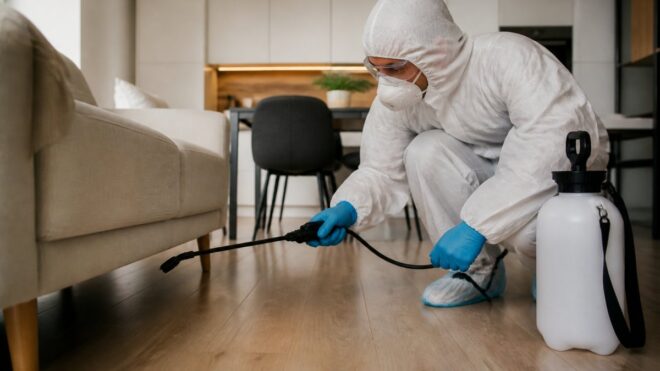
Pest control treatment eliminates the roaches, but you must clean apartment after roach extermination to remove the contamination they left behind. Roach droppings, shed skin, and residual chemicals from the extermination process create health hazards that linger in your apartment long after the insects are gone.
Skipping post-extermination cleaning puts you at risk for respiratory problems, allergic reactions, and potential re-infestation. Roach allergens remain active on surfaces for weeks.
How Long to Stay Out of Apartment After Roach Treatment
Most pest control treatments require you to stay out of your apartment for 2-4 hours after application. The exact timeframe depends on the type of chemical used and the treatment method. Always follow your pest control provider’s specific instructions, some treatments may require 6-8 hours for heavily infested apartments or if children and pets are present.
Post-Extermination Cleaning Timeline
Day 1 (Treatment Day): 0-4 Hours After Extermination
- Remain outside your apartment during the waiting period specified by your pest control provider
- Do not open windows or doors during treatment, this disrupts chemical dispersal
- Ensure pets and children stay away from the apartment
Day 2 (24 Hours Post-Treatment): Initial Ventilation and Light Cleaning
- Return home and immediately open all windows and doors for 2-3 hours
- Run ceiling fans and air purifiers to clear chemical fumes
- Wipe down high-touch surfaces with a damp microfiber cloth
- Do NOT begin deep cleaning yet, the treatment is still working on hidden roaches
- Change clothes and shower to remove chemical residue
Day 3 (48 Hours Post-Treatment): Deep Cleaning Begins
- Begin removing roach droppings from kitchen cabinets and visible contamination areas
- Clean cracks, crevices, and porous surfaces with borax solution
- Sanitize kitchen surfaces and food storage areas
- Continue ventilation, keep windows open during the day
Day 7 (One Week Post-Treatment): Final Inspection and Prevention
- Conduct a thorough inspection for any signs of remaining roaches (droppings, live insects, shed skin)
- Seal cracks and gaps around baseboards, pipes, and electrical outlets
- Install or repair door sweeps and weatherstripping
- Set up ongoing prevention measures (sealed food storage, decluttering, moisture control)
- If you notice any roach activity, contact your pest control provider immediately, your treatment may include a follow-up visit. Zoifia Pest Control offers a 90-day guarantee.
Ongoing (Weeks 2-12): Monitoring and Maintenance
- Most pest control treatments include a guarantee
- Continue preventive measures to avoid re-infestation
- Monitor for any signs of roach activity
- Keep your apartment clean and well-ventilated
- If re-infestation occurs within the guarantee period, contact your provider for a free follow-up treatment
Set phone reminders for Day 2 and Day 3 milestones. Write down your pest control company’s specific instructions and the treatment date on a calendar. This prevents confusion about when it’s safe to return home and when deep cleaning should begin.
The 24-hour delay before deep cleaning is critical, it allows treatment to work on hidden roaches. Premature cleaning disrupts effectiveness and increases re-infestation risk.
Essential Safety Gear and Preparation
Personal Protective Equipment (PPE) Requirements
Proper PPE protects you from chemical exposure and roach allergens during cleaning.
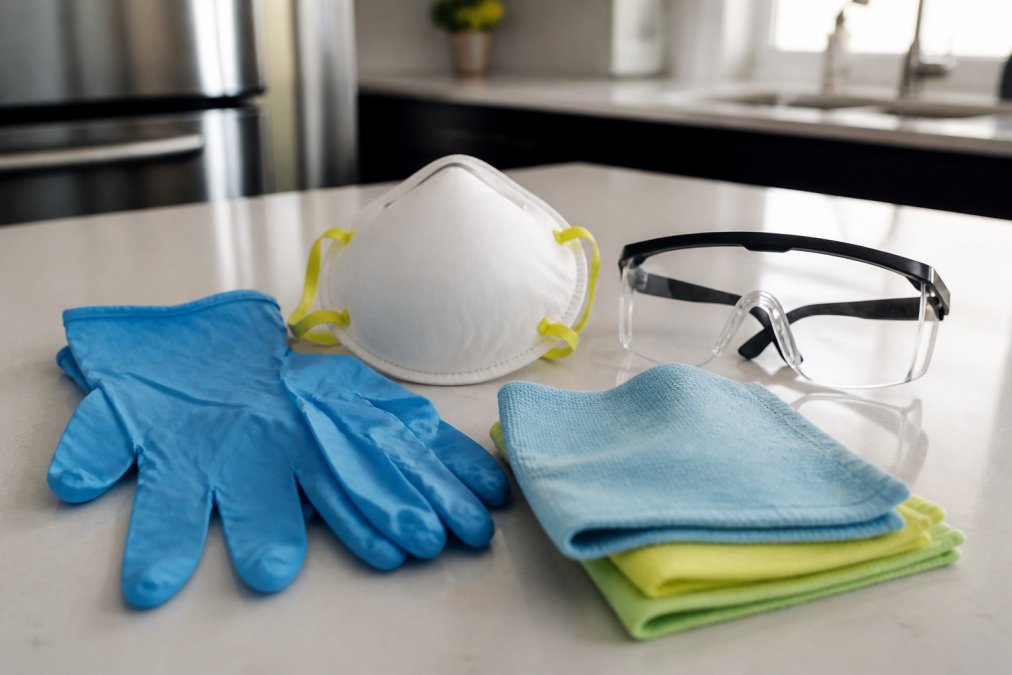
You’ll need:
- Nitrile gloves (latex-free to avoid allergic reactions)
- N95 or KN95 respirator mask
- Safety glasses or face shield
- Long sleeves and pants (optional but recommended)
- Shoe covers or dedicated cleaning shoes
Preparing Your Cleaning Supplies
Essential cleaning supplies:
- Microfiber mops and cloths (trap allergens better than cotton)
- HEPA-filter vacuum cleaner
- Disinfectant spray or vinegar solution (1:1 ratio with water)
- Borax powder for porous surfaces
- Garbage bags for disposal
- Bucket with hot water
Microfiber cloths trap allergens more effectively than regular cloth. A HEPA vacuum captures 99.97% of particles; regular vacuums circulate roach allergens throughout your apartment.
Removing Roach Droppings from Kitchen Cabinets
Identifying and Locating Contaminated Areas
Roach droppings are small black specks or pellets (1-3mm) that accumulate in corners, under appliances, and inside cabinets.
Safe Removal and Disposal Process
Never sweep or dry-wipe roach droppings, this releases allergens into the air. Wet cleaning is the only safe method.
- Put on your N95 mask and gloves
- Dampen a microfiber cloth with vinegar solution or disinfectant spray
- Wipe all surfaces slowly, paying special attention to cabinet corners and crevices
- Place contaminated cloths in a sealed garbage bag
- Repeat with a fresh cloth until no visible droppings remain
- Wipe surfaces a second time with clean water
- Seal and dispose of all contaminated materials in an outdoor trash bin
Wet cleaning with disinfectant is the only safe way to remove roach droppings. Never dry-sweep or use a regular vacuum, both spread allergens into the air.
Deep Cleaning Cracks, Crevices, and Porous Surfaces
Roaches hide in cracks and crevices where droppings and allergens accumulate. These hidden areas need aggressive cleaning to prevent re-infestation and health hazards.
Cracks and crevices are where roaches breed and deposit the most concentrated allergen loads. Incomplete cleaning of these areas leads to ongoing health problems and re-infestation risk.
Sanitizing Kitchen Surfaces and Food Storage Areas
Kitchen surfaces require special attention because food preparation happens there. Any roach contamination poses direct health risks.
Preventing Roach Re-Infestation in Apartments
The extermination treatment kills existing roaches, but your apartment remains vulnerable to new infestations. Re-infestation is common in multi-unit buildings where roaches travel between apartments through shared walls and pipes.
Restoring Air Quality and Ventilation
Chemical fumes from the extermination treatment linger in your apartment. Restoring air quality is essential for your family’s health, especially for vulnerable household members.
Understanding Post-Extermination Chemical Residue
Pyrethroid-based treatments (most common) can cause respiratory irritation, skin sensitivity, and neurological symptoms in sensitive individuals. Neonicotinoid-based treatments (less common) have longer residual activity but pose greater risk to children and pets.
Ventilation Protocol for Different Household Members
For Apartments with Healthy Adults Only:
- Open all windows and doors for at least 2-3 hours after returning home
- Run ceiling fans to push air toward open windows
- Keep windows open during daylight hours for 3-5 days post-treatment
- Use HEPA air purifiers in main living areas for 48 hours
For Apartments with Children (Under 12):
- Extend initial ventilation to 4-6 hours before children re-enter
- Keep children out of the apartment for the first 24 hours if possible
- Open windows continuously for the first 5-7 days
- Run HEPA air purifiers in bedrooms and play areas continuously for 72 hours
- Wipe down all surfaces children touch with a damp cloth before allowing contact
- Monitor children for coughing, wheezing, or unusual behavior
For Apartments with Pets:
- Keep pets out of the apartment for at least 24-48 hours post-treatment
- When pets return, keep them in well-ventilated areas away from treated surfaces
- Wipe down pet bedding and food/water bowls with a damp cloth before use
- Watch for excessive grooming, lethargy, or respiratory distress, these indicate chemical exposure
For Apartments with Pregnant Women or People with Respiratory Conditions:
- Pregnant women should avoid the apartment for 48-72 hours post-treatment
- People with asthma, COPD, or other respiratory conditions should stay away for at least 24-48 hours
- When returning, use a P100 respirator mask during the first week of ventilation and cleaning
- Run HEPA air purifiers continuously for at least one week
Active Air Quality Restoration Steps
Immediate Actions (First 24 Hours):
- Open all windows and doors simultaneously to create cross-ventilation
- Run ceiling fans on high speed, directing air toward open windows
- Use portable box fans in windows to actively push air out
- Avoid using air conditioning, it recirculates indoor air and traps chemical fumes
- Leave bedroom doors open to allow air circulation
Extended Ventilation (Days 2-7):
- Keep at least two windows open during daylight hours
- Run HEPA air purifiers in bedrooms and main living areas
- Continue using ceiling fans during the day
- At night, open windows slightly (4-6 inches) to maintain air exchange
- Avoid cooking with gas stoves, cooking fumes combine with chemical residue and increase respiratory irritation
HVAC System Management:
- Turn off central air conditioning for the first 24 hours
- Change HVAC filters after treatment, old filters trap chemical particles and roach allergens
- Set programmable thermostats to “fan only” mode to circulate fresh air without recirculating indoor air
- Keep window air conditioning units off for 48 hours, then use with windows open
Monitoring Air Quality and Health Symptoms
Monitor your family for these warning signs:
Immediate Symptoms (0-24 Hours):
- Headaches, dizziness, eye/nose/throat irritation, mild coughing, or skin irritation
Delayed Symptoms (24-72 Hours):
- Persistent coughing, wheezing, shortness of breath, nausea, or unusual fatigue
If anyone experiences these symptoms:
- Increase ventilation immediately, open all windows and doors
- Move affected individuals to the most well-ventilated area
- Contact your pest control provider and describe the symptoms
- If symptoms are severe (difficulty breathing, chest pain, severe dizziness), seek emergency medical care
- Consider staying elsewhere for 24-48 hours while ventilation continues
Using Air Purifiers Effectively
For post-extermination cleanup:
- HEPA filters only: Capture particles but not chemical gases, adequate for roach allergens but not for volatile organic compounds (VOCs)
- HEPA + activated carbon filters: Capture both particles and some chemical gases, minimum standard for post-extermination use
- HEPA + activated carbon + photocatalytic filters: Most comprehensive option
Run air purifiers continuously for the first 48-72 hours, then 8-12 hours daily for one week. Place units in bedrooms and main living areas away from walls and furniture.
Chemical residue from extermination treatments poses greater health risks to children, pets, pregnant women, and people with respiratory conditions. Do not rush vulnerable household members back into the apartment. Extend ventilation timelines by 24-48 hours for these populations.
Air quality restoration is not optional, it’s a critical health safety step. The 2-3 hour initial ventilation period is a minimum, not a complete solution. Continue active ventilation for 5-7 days, monitor household members for symptoms, and adjust your timeline based on individual health factors.
Frequently Asked Questions
How long should I wait to clean after professional roach extermination?
Most pest control professionals recommend waiting 24-48 hours after treatment before beginning cleanup. This allows residual spray and bait stations to work effectively. Always confirm the exact timeline with your technician, as some treatments may require longer waiting periods. Cleaning too early can reduce treatment effectiveness and increase your exposure to chemical residue.
What’s the safest way to remove roach droppings from kitchen cabinets?
Wear nitrile gloves, an N95 mask, and eye protection before starting. Use a damp microfiber mop or cloth to wipe surfaces rather than sweeping, which can spread particles. For cracks and crevices, use a small brush dampened with a vinegar solution. Dispose of all contaminated materials in sealed bags. Wash your hands thoroughly afterward and sanitize all surfaces with a disinfectant approved for kitchen use.
How can I prevent roaches from returning to my apartment after treatment?
Seal all cracks and crevices around baseboards, pipes, and electrical outlets. Remove food sources by storing pantry items in airtight containers and cleaning up spills immediately. Fix moisture problems by repairing leaks and improving ventilation. Take out garbage regularly and don’t leave pet food out overnight. Schedule regular inspections and maintain good hygiene protocols. These steps significantly reduce the likelihood of re-infestation.
Is it safe to use my kitchen immediately after roach extermination?
Wait at least 24-48 hours before using your kitchen for food preparation. Before resuming normal activities, thoroughly clean all surfaces, cabinets, and food storage areas. Wash dishes that were exposed during treatment. Ensure adequate ventilation by opening windows and running exhaust fans. If you have concerns about chemical exposure or lingering residue, contact your pest control professional for specific guidance on your treated apartment.
