Table of Contents
- Understanding Your Legal Obligations: Landlord Responsibilities for Pest Control
- Method 1: Issue Written Notice and Document the Complaint
- Method 2: Arrange Professional Pest Control Treatment Within Legal Timeframes
- Method 3: Enforce Tenant Rights and Lease Agreement Obligations
- Protecting Tenant Rights While Handling Pest Complaints Legally
- Escalation Timeline: When to File Complaints with Housing Authorities
- Insurance and Liability Considerations
- Conclusion
3 Ways to Handle Tenant Pest Complaints Legally
Last Updated: July 29, 2026
When a tenant reports a pest infestation, landlords face a critical window to respond appropriately, or risk legal liability, tenant disputes, and escalating property damage. Understanding how to handle tenant pest complaints legally is essential for protecting your investment while meeting your legal obligations under the implied warranty of habitability. At Zoifia Pest Control, we’ve guided hundreds of property managers through this process, and the difference between a resolved complaint and a costly lawsuit often comes down to how quickly and systematically you respond.
Understanding Your Legal Obligations: Landlord Responsibilities for Pest Control
Landlords are legally required to maintain habitable living conditions. The implied warranty of habitability, recognized across all 50 states, mandates that rental properties be safe, sanitary, and suitable for human occupancy. Pest infestations directly violate this standard. According to HUD guidance on housing standards, a property infested with rodents, bedbugs, or cockroaches fails to meet basic habitability requirements, and tenants have legal remedies available if landlords fail to act.
Your specific obligations depend on state and local housing codes. In Massachusetts, the Sanitary Code explicitly requires landlords to eliminate pests and maintain sanitary conditions. In New York, the Multiple Dwelling Law holds landlords responsible for pest control in residential buildings. Many jurisdictions impose strict timelines: some require treatment within 24 hours of notice, others within 10 business days. Failure to comply can result in fines, tenant rent withholding, lease termination, or lawsuits.
Ignoring [a tenant’s](/do-roaches-travel-between-apartments/) pest complaint doesn’t make it go away, it creates a documented breach of your legal duty. Once a tenant has reported an infestation in writing, you’re on notice. Inaction becomes evidence of negligence if the case escalates to housing court.
The key principle: pest control is your responsibility, not the tenant’s, unless the lease explicitly states otherwise and local law permits such clauses. Even then, courts often rule that habitability obligations cannot be delegated away.
Method 1: Issue Written Notice and Document the Complaint
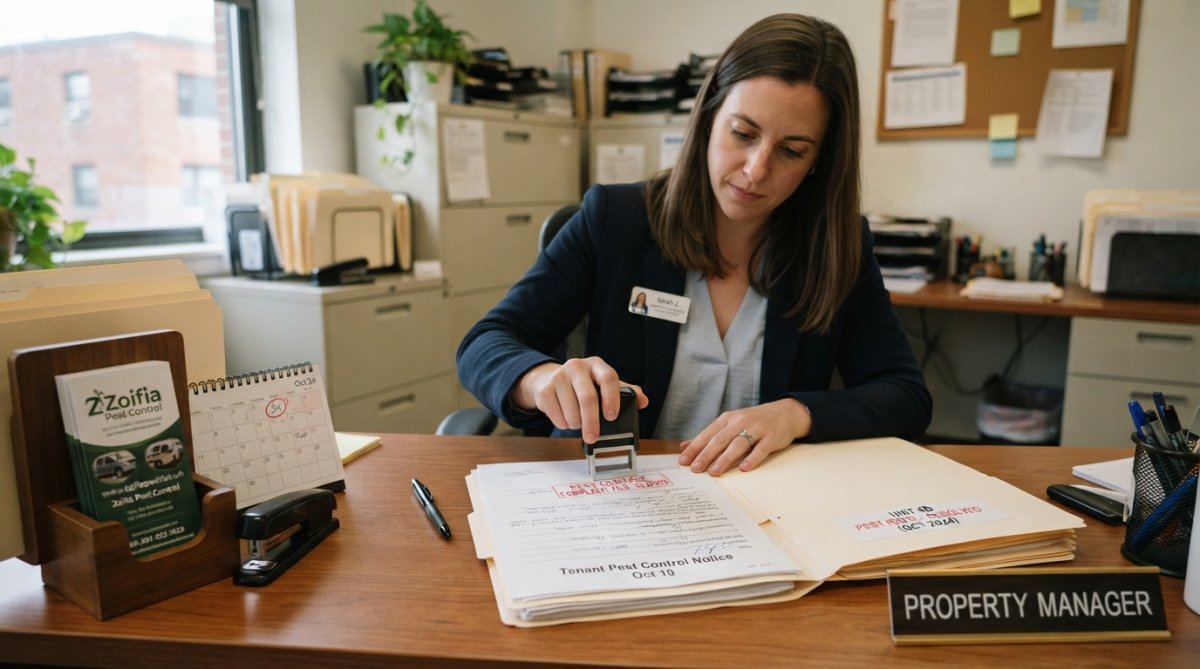
The foundation of legal pest control response is documentation. Written communication creates a paper trail that protects you in disputes and demonstrates compliance with legal timelines.
Step-by-Step Process for Documenting Pest Issues
Require tenants to report pest complaints in writing. When a tenant calls or mentions pests verbally, follow up immediately with an email summarizing their complaint: "On [date], you reported [pest type] in [specific location]. We will schedule treatment by [date]."
Request specific details: pest type, location within the unit, frequency of sightings, and when they first noticed the problem. Inspect the unit within 24-48 hours of the complaint. Take clear photos of pest sightings, droppings, damage, entry points, and conducive conditions. Store these images in a secure folder labeled with the property address, date, and unit number.
Create a pest complaint log for each property. Record the date of complaint, pest type, unit affected, tenant name, your inspection findings, treatment date, contractor used, and follow-up inspection results. This log becomes critical evidence if a tenant later claims you ignored their complaint.
Using Certified Mail and Creating a Paper Trail
Send all formal notices via certified mail with return receipt. This proves the tenant received your communication and establishes the date you acknowledged the complaint. Include in your notice:
- Acknowledgment of the pest complaint
- Pest type and affected areas
- Your proposed treatment date
- Tenant responsibilities (preparing the unit, providing access, vacating if required during treatment)
- Your commitment to follow-up inspections
- Contact information for questions
Keep copies of all correspondence in a dedicated file for each tenant and property. Courts weigh written evidence heavily; a certified letter sent within 24 hours of complaint notification shows due diligence.
Use property management software to automate this documentation. Platforms like AppFolio or Buildium create automatic timestamps for tenant requests, generate work orders for contractors, and maintain searchable records. This reduces the risk of overlooking complaints and provides organized evidence if needed later.
Method 2: Arrange Professional Pest Control Treatment Within Legal Timeframes
Once you’ve documented the complaint, your next legal obligation is arranging professional treatment. DIY pest control rarely resolves infestations completely and may violate lease terms or local regulations requiring licensed treatment.
Selecting a Licensed and Insured Pest Control Provider
Verify that any pest control company you hire is licensed by your state’s regulatory agency. In Massachusetts, pest control operators must be licensed by the Department of Agricultural Resources. In New York, they require a license from the Department of Environmental Conservation. Unlicensed operators expose you to liability if treatment fails or causes property damage.
Request proof of insurance, both general liability and workers’ compensation. Check the contractor’s experience with your specific pest type. Integrated Pest Management (IPM) approaches, which combine inspection, exclusion, and targeted treatment, are increasingly preferred by courts and housing authorities because they address root causes rather than just applying pesticides. EPA guidance on IPM programs emphasizes that IPM reduces pesticide use while improving long-term outcomes.
Get a written estimate that specifies the pest type, affected areas, treatment method, number of visits required, timeline for results, warranty period, and cost.
Integrated Pest Management (IPM) for Long-Term Solutions
IPM is increasingly a legal standard. Many jurisdictions now require or strongly recommend IPM for multi-unit dwellings because it addresses infestations at their source.
An effective IPM plan includes:
| IPM Component | Action | Outcome |
|---|---|---|
| Inspection | Identify pest entry points, harborage areas, food/water sources | Reveals root cause of infestation |
| Exclusion | Seal cracks, gaps, and entry points; repair damaged screens | Prevents pest re-entry |
| Sanitation | Remove clutter, secure food storage, eliminate moisture | Eliminates conditions supporting pest survival |
| Targeted Treatment | Apply pesticides only where needed, using least-toxic methods | Reduces chemical exposure while eliminating pests |
| Monitoring | Schedule follow-up inspections to confirm eradication | Documents successful treatment |
Rather than spraying the entire unit indiscriminately, IPM technicians identify where pests are nesting and target those areas. This approach typically requires 2-4 visits over 4-8 weeks.
Schedule treatment promptly, ideally within 3-5 business days of the complaint. Provide the tenant with advance notice (typically 24-48 hours) of treatment dates, tenant preparation requirements, and any need to vacate the unit during treatment.
Professional IPM treatment costs more upfront than basic spraying but prevents recurring infestations, reduces tenant complaints, and demonstrates legal compliance. A single comprehensive IPM plan is often cheaper long-term than repeated emergency treatments.
Method 3: Enforce Tenant Rights and Lease Agreement Obligations
Pest control is not solely a landlord responsibility. Tenants must maintain their units in a sanitary condition and cooperate with treatment efforts. Clearly defining these obligations in your lease protects you if a tenant’s behavior causes or perpetuates an infestation.
Clear Pest Control Clauses in Your Lease
Include a dedicated pest control section in your lease agreement that specifies:
- Tenant obligation to report pest sightings immediately in writing
- Tenant responsibility to maintain a clean, clutter-free unit and secure food storage
- Tenant agreement to cooperate with pest control inspections and treatment
- Landlord commitment to arrange professional treatment within a specified timeframe (e.g., within 5 business days)
- Clarification that normal pest control costs are the landlord’s responsibility; tenant liability applies only if the infestation results from tenant negligence
Some landlords add a bed bug addendum that explains bed bug biology, prevention steps, and treatment protocols. Community Rentals bed bug addendum template provides a model that many landlords adapt for their leases.
Tenant Responsibilities and the ‘Cleanliness’ Defense
Tenants cannot be held responsible for infestations caused by building conditions, structural gaps, deterioration, or pre-existing pest populations. However, tenants can be held responsible if their behavior causes or worsens an infestation: leaving food uncovered, creating clutter that harbors pests, or blocking access to treatment areas.
Document tenant living conditions during your inspection. Photograph clutter, food storage practices, and sanitation issues. If a tenant’s behavior contributed to the infestation, you have evidence to support any cost-sharing clause in your lease. If the infestation is clearly building-related, the tenant has no liability.
Include in your lease: "Tenant agrees to maintain the unit in a clean and sanitary condition, including securing food, removing clutter, and cooperating with pest control access. Infestations resulting from tenant negligence may result in treatment cost recovery."
Protecting Tenant Rights While Handling Pest Complaints Legally
While landlords have obligations, so do tenants, but only within reason. Tenants cannot be charged for pest control unless their behavior caused the problem. Tenants cannot be evicted for reporting pest complaints. Tenants have the right to habitable conditions and legal remedies if landlords fail to provide them.
Notice Requirements and Response Timelines
Check your state and local laws for specific timelines. Massachusetts requires treatment within 10 business days. New York requires treatment within 10 days in most cases. Your lease should commit to a timeline that exceeds legal minimums, for example, "Landlord will arrange professional pest control treatment within 5 business days of written complaint."
Provide tenants with written confirmation of the treatment date, time, and any preparation required. Include the pest control contractor’s name and phone number. Communicate follow-up inspection dates.
Legal Remedies for Unresolved Infestations
If you fail to respond to a pest complaint within legal timelines, tenants have several legal remedies:
Rent Withholding: Tenants can withhold a portion of rent equal to the reduced habitability of the unit. Withheld rent is held in escrow, and if the landlord fails to remedy the problem, the tenant can use the escrow funds for repairs or treatment.
Lease Termination: If a pest infestation makes the unit uninhabitable and the landlord fails to remedy it within a legal timeframe, tenants can break the lease without penalty in many jurisdictions.
Small Claims or Housing Court: Tenants can sue for damages including repair costs, temporary housing, and medical expenses.
Housing Authority Complaints: Tenants can file complaints with local code enforcement or health departments. These agencies can inspect the property, issue violation notices, and impose fines on landlords who fail to maintain habitable conditions.
Avoiding these outcomes requires prompt, documented response to pest complaints. The cost of professional treatment is far lower than the cost of rent withholding, lease termination, or legal fees.
Escalation Timeline: When to File Complaints with Housing Authorities
If a landlord fails to respond to pest complaints, tenants escalate to housing authorities. Understanding this process helps you avoid it.
Code Enforcement and Health Department Involvement
After a tenant reports a pest infestation to their landlord and the landlord fails to respond within a reasonable timeframe (typically 10-30 days depending on jurisdiction), the tenant can file a complaint with the local code enforcement office or health department. These agencies investigate, inspect the property, and issue violation notices if they confirm the infestation.
A violation notice typically requires the landlord to remedy the problem within 10-30 days. If the landlord fails to comply, fines accumulate, often $100-$500 per day in major cities. For severe infestations, housing authorities may declare the property temporarily uninhabitable, allowing tenants to withhold rent or break leases without penalty.
Rent Withholding and Lease Termination Rights
Tenants can withhold rent if they’ve notified the landlord in writing of the pest problem, the landlord has failed to respond within the legal timeframe, and the infestation materially affects habitability. The withheld rent is typically held in escrow by the court or a third party.
Tenants can terminate their lease without penalty if the pest infestation makes the unit uninhabitable and the landlord fails to remedy it within a legal cure period.
Rent withholding and lease termination are legal tenant remedies in most states. You cannot evict a tenant for using these remedies; doing so is illegal retaliation. Retaliatory evictions can result in the eviction being overturned, damages awarded to the tenant, and attorney fees charged to the landlord.
Insurance and Liability Considerations
Pest infestations create liability beyond just the cost of treatment. If a pest infestation causes property damage, health issues, or other losses, tenants may claim damages from the landlord.
Your landlord insurance policy typically covers pest control costs and liability claims arising from pest infestations. However, coverage varies. Some policies exclude certain pests or limit coverage to specific treatment methods. Review your policy with your insurance agent to understand your coverage.
If a tenant suffers health issues due to a pest infestation, they may sue for medical expenses and pain-and-suffering damages. Prompt treatment and documented response to complaints reduce your liability in these cases. Document all pest control treatments, including contractor reports, photos of treatment areas, and follow-up inspection results.
Pest complaints are inevitable in rental properties, but legal liability is not. Responding promptly with written documentation, professional treatment, and clear tenant communication prevents escalation and protects your investment. Zoifia Pest Control specializes in fast, licensed, and insured pest elimination for residential properties, with a 90-day guarantee ensuring complete eradication without long-term contracts. When a tenant reports bedbugs, roaches, or rodents, get a quote from Zoifia Pest Control to arrange professional treatment within days, not weeks, meeting your legal obligations while keeping your property and tenants protected.
Frequently Asked Questions
What are a landlord's legal obligations for pest control under the implied warranty of habitability?
Under the implied warranty of habitability, landlords must maintain rental properties in a condition fit for human occupancy. This includes addressing pest infestations promptly, as bedbugs, roaches, rodents, and other pests make a property uninhabitable. Landlords must respond to tenant pest complaints within legally mandated timeframes (typically 24-72 hours depending on state and local laws) and arrange professional extermination or mitigation. Failure to address infestations can expose landlords to tenant lawsuits, rent withholding claims, or lease termination rights.
How should I document tenant pest complaints and what role does certified mail play?
Document pest complaints in writing by requesting tenants submit issues via email, tenant portal, or written notice. Photograph evidence of infestation and keep records of all communication. When issuing your own notices regarding pest treatment, use certified mail to create a legally binding paper trail proving delivery. Certified mail receipts serve as proof that you notified the tenant of treatment dates, entry requirements, or their responsibilities. This documentation protects you in disputes and demonstrates compliance with local housing codes and the implied warranty of habitability.
Can I charge tenants for pest control costs, or is this a landlord responsibility?
In most U.S. jurisdictions, landlords are responsible for pest control costs unless the infestation resulted from tenant negligence (the 'cleanliness' defense). If a tenant's unsanitary habits caused bedbugs, roaches, or rodents, you may be able to charge them for treatment. However, this must be clearly documented and allowed under your lease agreement and local landlord-tenant law. Many states prohibit charging tenants for pest control under any circumstances. Consult your local housing authority or a landlord-tenant attorney to confirm your jurisdiction's rules before attempting to bill tenants.
What happens if I don't respond to a tenant pest complaint, can they withhold rent or break the lease?
If you fail to address a pest infestation within the required timeframe, tenants may have legal remedies including rent withholding (in most states), lease termination without penalty, or filing complaints with code enforcement and health departments. Some jurisdictions allow tenants to hire their own pest control contractor and deduct costs from rent. Unresolved infestations violate the implied warranty of habitability, giving tenants grounds for legal action. Responding promptly with professional extermination and documented mitigation efforts protects you from these escalations and demonstrates good-faith compliance with housing codes.
How quickly must I arrange professional pest control treatment after a tenant reports an infestation?
Response timeframes vary by state and local ordinance, but most jurisdictions require landlords to respond within 24-72 hours and arrange professional treatment within 7-14 days. Severe infestations (bedbugs, rodents) typically require faster action. Document your response by sending written notice via certified mail confirming the treatment date, what the tenant must do to prepare the unit, and any access requirements. Using a licensed and insured pest control provider ensures compliance with local regulations and provides professional documentation of remediation efforts, protecting you legally.
This article was written using GrandRanker
