Table of Contents
- Why Commercial Pest Prevention for Boston Office Buildings Is Non-Negotiable
- Common Office Pests in Boston and How They Get Inside
- Integrated Pest Management for Commercial Buildings: A Smarter Approach
- Exclusion and Prevention Strategies for Boston Office Spaces
- Pest Prevention Checklist for Property Managers in Boston
- What to Expect from Professional Commercial Pest Control Services
- Cost-Benefit Analysis: Is Commercial Pest Prevention Worth It for Boston Properties?
- Protecting Your Business Reputation with Commercial Pest Prevention
Last Updated: June 15, 2026
Commercial pest prevention for boston office buildings is one of the most overlooked aspects of facility management, yet it directly affects employee health, regulatory standing, and the long-term integrity of your property. At Zoifia Pest Control, we work with property managers across the Metro Boston area and see the same costly mistakes repeated: reactive extermination instead of prevention, missed inspection points in historic structures, and zero documentation when regulators come knocking. This guide covers what actually works, why Boston’s building stock creates unique challenges, and how to build a prevention program that protects your tenants, your reputation, and your bottom line.
Why Commercial Pest Prevention for Boston Office Buildings Is Non-Negotiable
Pest problems in commercial properties are not just a nuisance, they are a liability. Boston property managers face a regulatory environment that makes ignoring pest activity genuinely risky, with consequences extending well beyond a bad Yelp review.
The Hidden Costs of Ignoring Pest Problems
Many building owners calculate pest control costs in isolation, looking only at the exterminator’s invoice. The real picture is broader: structural damage from rodents chewing wiring accumulates silently, a single cockroach infestation in a break room can trigger lease non-renewals and city complaints, and reputational damage from a pest sighting shared on social media can undo years of professional credibility. For law offices, professional services firms, or medical suites, a pest-free workplace is non-negotiable.
Delaying pest treatment after the first confirmed sighting is the single most expensive mistake property managers make. Pest populations grow exponentially, and a small rodent problem in October becomes a full infestation by January if left unaddressed.
Boston Regulatory Compliance: What Property Managers Must Know
Boston property managers operate under oversight from multiple regulatory bodies. According to Boston Inspectional Services Division, commercial buildings are subject to sanitation inspections that can result in fines or orders to vacate if pest activity is documented. The Massachusetts State Sanitary Code establishes baseline requirements for pest-free conditions in workplaces, and failure to meet those standards creates direct legal exposure. A property manager who cannot produce pest monitoring reports when asked by Boston Inspectional Services is in a far weaker position than one with a complete service history on file.
Common Office Pests in Boston and How They Get Inside
Boston’s climate and urban density create ideal conditions for a specific set of pest problems. Understanding which pests target office buildings, and how they gain entry, is the foundation of any effective prevention strategy.
 technician in a dark green uniform crouching at the base of a weathered brick commercial building exterior, closely inspecting a gap near the foundation with a flashlight on a cloudy Boston afternoon](https://cdn.grandranker.com/articles/commercial-pest-prevention-for-boston-office-buildings-content-1-1781488233.jpg)
Rodents, Cockroaches, and Wildlife: The Boston Trifecta
Rodents, cockroaches, and opportunistic wildlife represent the three most common pest threats for Boston commercial properties. Rodents, primarily Norway rats and house mice, exploit gaps as small as a quarter inch around utility penetrations and loading dock areas, with October through February being the highest-risk period. Cockroaches, particularly German cockroaches, thrive in break rooms and server rooms and typically arrive via deliveries or cardboard boxes. Wildlife is a growing concern, particularly pigeons nesting in HVAC systems and squirrels entering through damaged soffit vents on older buildings.
Structural Vulnerabilities Unique to Boston’s Historic Buildings
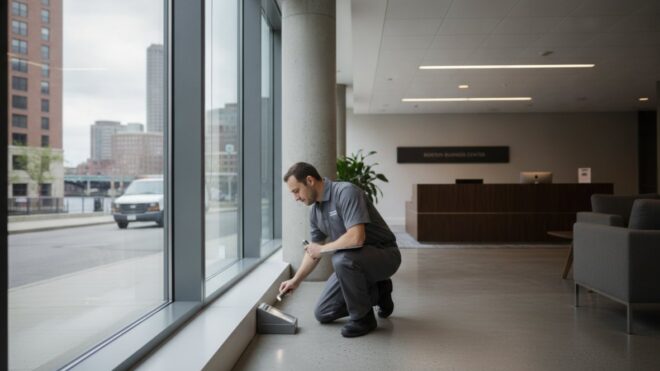
Boston’s commercial building stock is older than most American cities. In neighborhoods like Back Bay, the Financial District, and Beacon Hill, deteriorating brick mortar creates gaps rodents exploit, original wood framing provides harborage modern steel construction does not, and basement utility corridors often connect multiple tenants, meaning a pest problem in one suite can migrate laterally. A common mistake is treating pest entry as purely a ground-floor problem; roof-level entry points including deteriorating flashing, open pipe chases, and aging HVAC penetrations are equally important to inspect and seal.
Integrated Pest Management for Commercial Buildings: A Smarter Approach
Integrated Pest Management (IPM) is a systematic, prevention-focused approach that prioritizes long-term solutions over repeated chemical treatments. IPM combines inspection, monitoring, sanitation, exclusion, and targeted treatment in a coordinated program rather than responding reactively to each new problem.
IPM vs. Reactive Extermination: Why Prevention Wins Every Time
Reactive extermination addresses symptoms. IPM addresses causes. A typical program includes scheduled monthly or quarterly inspections, pest monitoring stations at key entry points, documentation of activity trends, and a threshold system that triggers treatment only when activity reaches a defined level. This reduces overall pesticide use, important for occupant health and sustainability certifications, and generates the regulatory documentation Boston Inspectional Services may request.
IPM is not a softer version of pest control. It is a more disciplined one. Buildings on IPM programs typically see fewer repeat infestations because the underlying conditions that attract pests are identified and corrected, not just treated.
Sustainability and LEED-Certified Pest Control Options
According to U.S. Green Building Council LEED documentation, LEED credits related to indoor environmental quality include provisions for low-impact pest management that minimize chemical exposure to building occupants. For Boston properties targeting LEED certification or ESG benchmarks, IPM-based pest control is the standard approach, prioritizing mechanical exclusion, sanitation corrections, and targeted low-toxicity treatments. Certified providers can supply the documentation required for LEED compliance reviews directly.
Exclusion and Prevention Strategies for Boston Office Spaces
The most effective pest prevention happens before pests enter the building. Exclusion, physically blocking entry points, is where the highest return on investment in commercial pest prevention for boston office buildings lies.
Entry Point Sealing and HVAC System Monitoring
Priority sealing locations for Boston office buildings include:
- Gaps around utility conduits, water supply lines, and drain pipes at wall penetrations
- Door sweeps on ground-floor and loading dock doors
- Gaps in brick mortar at foundation level
- Roof penetrations around HVAC equipment and exhaust vents
- Window frame gaps in older double-hung windows common to historic buildings
HVAC system monitoring deserves specific attention. Pigeons nesting in rooftop units introduce feathers, droppings, and nesting material into air handling systems, creating both pest and air quality problems. Regular inspection of HVAC access points combined with mesh screens over intake vents addresses these vulnerabilities before they become active infestations.
Break Room Sanitation and Waste Management Best Practices
Sanitation deficiencies are the leading driver of cockroach infestations in commercial office buildings. Effective break room sanitation includes:
- Emptying trash receptacles daily using bins with tight-fitting lids
- Cleaning under and behind appliances on a weekly schedule
- Storing dry goods in sealed containers rather than original cardboard packaging
- Addressing plumbing leaks immediately, since moisture is as attractive to cockroaches as food
- Scheduling professional deep-cleaning of grease traps in any kitchenette with cooking equipment
At the building level, dumpsters positioned close to entrances or left uncovered create rodent pressure that eventually translates indoors. Positioning dumpsters away from entry points and maintaining tight lids reduces this risk significantly.
Pest Prevention Checklist for Property Managers in Boston
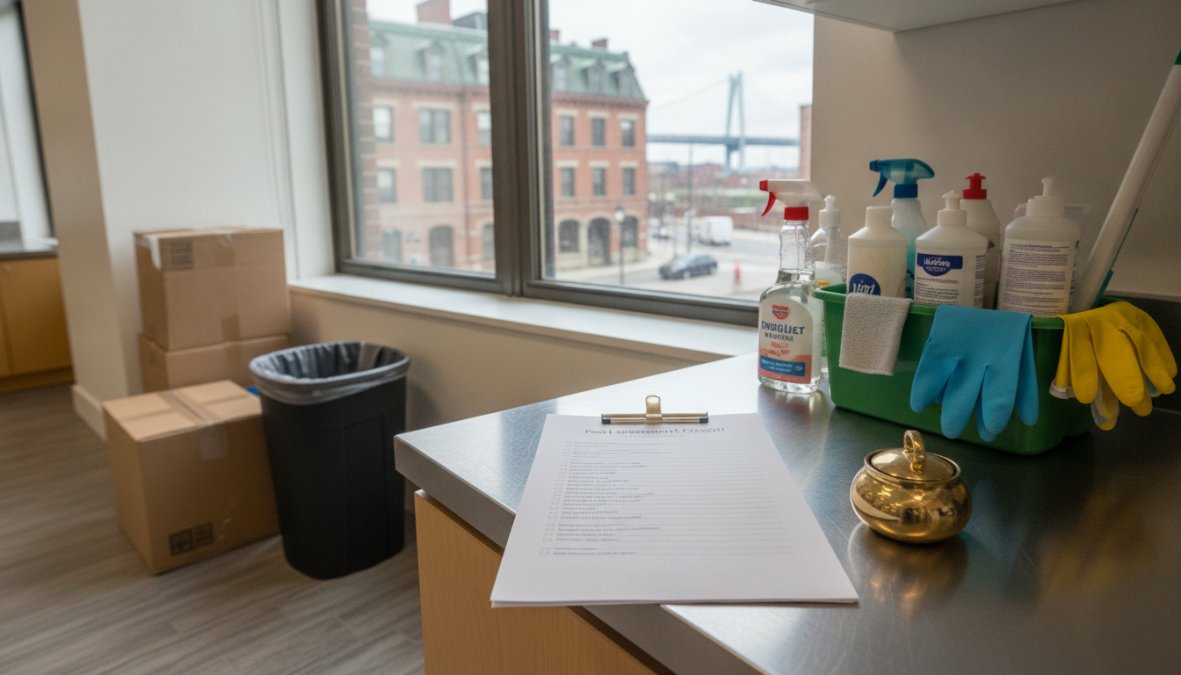
A structured checklist turns good intentions into consistent action. Use this as your baseline for commercial pest prevention in Boston office buildings.
Monthly Tasks:
- Inspect all ground-floor entry points for new gaps or deterioration
- Check pest monitoring stations and document activity levels
- Verify that door sweeps on loading dock and ground-floor doors are intact
- Confirm break room sanitation protocols are being followed by building staff
- Review waste management schedule and dumpster positioning
Quarterly Tasks:
- Schedule professional inspection with licensed pest control technician
- Inspect HVAC access points and rooftop penetrations for wildlife activity
- Review pest monitoring reports for activity trends
- Check basement utility corridors for rodent evidence (droppings, gnaw marks, burrows)
- Audit exterior lighting, since bright lighting near entrances attracts flying insects
Annual Tasks:
- Commission a full structural vulnerability assessment focused on pest entry points
- Review and update your pest management service agreement
- Confirm your pest control provider’s state certifications are current
- Update tenant communication protocols for pest reporting
- Assess whether your current IPM program meets any applicable sustainability standards
What to Expect from Professional Commercial Pest Control Services
Professional commercial pest control services for Boston office buildings go beyond showing up with a spray tank. The standard of service you should expect covers inspection, documentation, discreet service delivery, and clear communication with building occupants.
Routine Inspections, Pest Monitoring Reports, and Discreet Service
A qualified provider will conduct scheduled visits, document findings with written pest monitoring reports, and track activity trends over time. These reports are your evidence of due diligence if a tenant raises a complaint or Boston Inspectional Services conducts an audit. Pest control visits should be scheduled to minimize visibility, with technicians in professional uniforms and low-odor, low-disruption treatment formulations appropriate for occupied commercial spaces. Zoifia Pest Control provides licensed and insured commercial services across the Metro Boston area, with a 90-day guarantee and no long-term contract requirement.
Tenant Communication: How to Handle Pest Issues Professionally
Pest issues in multi-tenant buildings require careful communication. Handled poorly, a single sighting becomes a building-wide panic. Handled well, it demonstrates that management is responsive and competent.
A practical tenant communication framework:
For initial pest reports from tenants:
"Thank you for bringing this to our attention. We take pest-related concerns seriously and have already contacted our licensed pest control provider to schedule an inspection. We will follow up with you within [48 hours] with an update on findings and next steps."
For confirmed pest activity requiring treatment:
"Following our recent inspection, our pest control team has identified [type of pest activity] in [general area]. Treatment is scheduled for [date/time]. Our provider uses [low-impact/IPM-based] methods appropriate for occupied commercial spaces. Please [specific instruction, e.g., clear under-sink areas in your kitchenette]. We will notify you when treatment is complete."
Keep a log of every pest report, inspection, and treatment with dates and outcomes. This documentation protects you in lease disputes and demonstrates good-faith compliance to regulators. A simple shared spreadsheet works; a pest monitoring report from your provider is better.
Cost-Benefit Analysis: Is Commercial Pest Prevention Worth It for Boston Properties?
The financial case for preventive pest management is straightforward when you account for the full cost of reactive treatment. A single rodent infestation requiring emergency extermination, structural repairs to gnawed wiring, and potential tenant compensation will far exceed the annual cost of a structured prevention program, many property managers find a quarterly IPM-based service agreement costs less than a single emergency call. Lease retention compounds the calculus: tenants who experience repeated pest problems do not renew, and a pest-free workplace is a selling point in Boston’s competitive commercial real estate market.
According to National Pest Management Association commercial pest resources, preventive programs that address structural vulnerabilities and maintain ongoing monitoring consistently outperform reactive approaches on total cost over a three-to-five year horizon. The investment in commercial pest prevention for boston office buildings is not an overhead line item. It is risk management.
Protecting Your Business Reputation with Commercial Pest Prevention
Reputation damage from pest problems is asymmetric. A single incident, visible to clients, reported by an employee, or documented in a health inspection, can undo years of credibility. For Boston office buildings hosting professional services firms, financial institutions, or healthcare providers, the reputational stakes are high. A building that demonstrates proactive facility maintenance, including certified pest control and documented compliance with Boston Inspectional Services standards, signals professionalism to current and prospective tenants and is a tangible differentiator in lease negotiations.
As documented in Massachusetts Department of Public Health environmental health guidance, maintaining pest-free conditions in commercial properties is a component of broader public health compliance, not just a comfort issue. Buildings that treat it as such are better positioned on every dimension: regulatory, reputational, and financial.
Maintaining a pest-free commercial property in Boston requires more than a reactive call to an exterminator when something goes wrong. Zoifia Pest Control offers licensed and insured commercial pest management across the Metro Boston area, backed by a 90-day guarantee and no long-term contract requirement. Our team provides fast response, IPM-based prevention programs, and the documentation property managers need for regulatory compliance and tenant confidence. Get a quote from Zoifia Pest Control and protect your building, your tenants, and your reputation before the next problem starts.
Frequently Asked Questions
What are the most common pests found in Boston office buildings?
Boston office buildings commonly deal with rodents such as mice and rats, cockroach infestations, ants, and occasional wildlife intrusions. Older buildings with structural vulnerabilities are especially prone to rodent activity. Break rooms and areas with sanitation deficiencies tend to attract cockroaches and ants. An integrated pest management plan tailored to your building's layout and history is the most effective way to address these common office pests in Boston.
How often should a commercial building in Boston be inspected for pests?
Most commercial properties benefit from quarterly routine inspections at a minimum, though high-risk buildings, such as those near food service areas, older construction, or dense urban blocks, may require monthly monitoring. Regular pest monitoring reports from licensed technicians help property managers catch early signs of activity before infestations develop. Consistent inspections are a core component of any integrated pest management program for commercial buildings.
Is pest control legally required for Boston office buildings?
Yes. Boston Inspectional Services enforces health and safety compliance standards that require commercial property owners to maintain pest-free conditions. Failure to address infestations can result in violations, fines, or failed inspections. Property managers are responsible for proactive preventative measures, not just reactive treatment. Working with certified pest control professionals ensures your building meets local regulatory requirements and avoids costly enforcement actions.
What is an Integrated Pest Management (IPM) plan for a commercial building?
An IPM plan is a structured, prevention-first approach to pest control that combines routine inspections, exclusion services, sanitation improvements, and targeted treatments only when necessary. For commercial buildings, IPM typically includes identifying pest attractants, sealing entry points, monitoring activity with traps or sensors, and documenting findings in pest monitoring reports. It reduces chemical use, supports health and safety compliance, and is often compatible with LEED certification goals for sustainable facility maintenance.
How do pests enter high-rise and historic office buildings in Boston?
Pests most commonly enter through gaps around utility lines, aging door seals, deteriorating masonry, and HVAC system openings. Boston's many historic buildings present unique challenges, older materials and settled foundations create numerous structural vulnerabilities that standard construction may not have. Wildlife removal needs are also more common in older buildings with accessible rooflines. Entry point sealing and regular HVAC system monitoring are essential prevention strategies for commercial pest prevention in Boston office buildings.
This article was written using GrandRanker
