Table of Contents
- Identify the Wasp Species Before Removal
- What You’ll Need to Get Rid of Wasps Safely
- Natural Ways to Get Rid of Wasps
- Step-by-Step Removal at Dawn or Dusk
- Commercial Insecticides and Spray Solutions
- Wasp Repellent Plants and Prevention Strategies
- How to Prevent Wasps from Building Nests
- When to Call a Professional Exterminator
Last Updated: July 17, 2026
Dealing with wasps around your home requires understanding which species you’re facing and choosing removal methods that match your comfort level. Below, we’ll walk you through identification, DIY removal techniques, commercial solutions, and when professional help makes sense.
Identify the Wasp Species Before Removal
Different wasp species require different removal strategies. The three most common household wasps behave differently and nest in different locations.
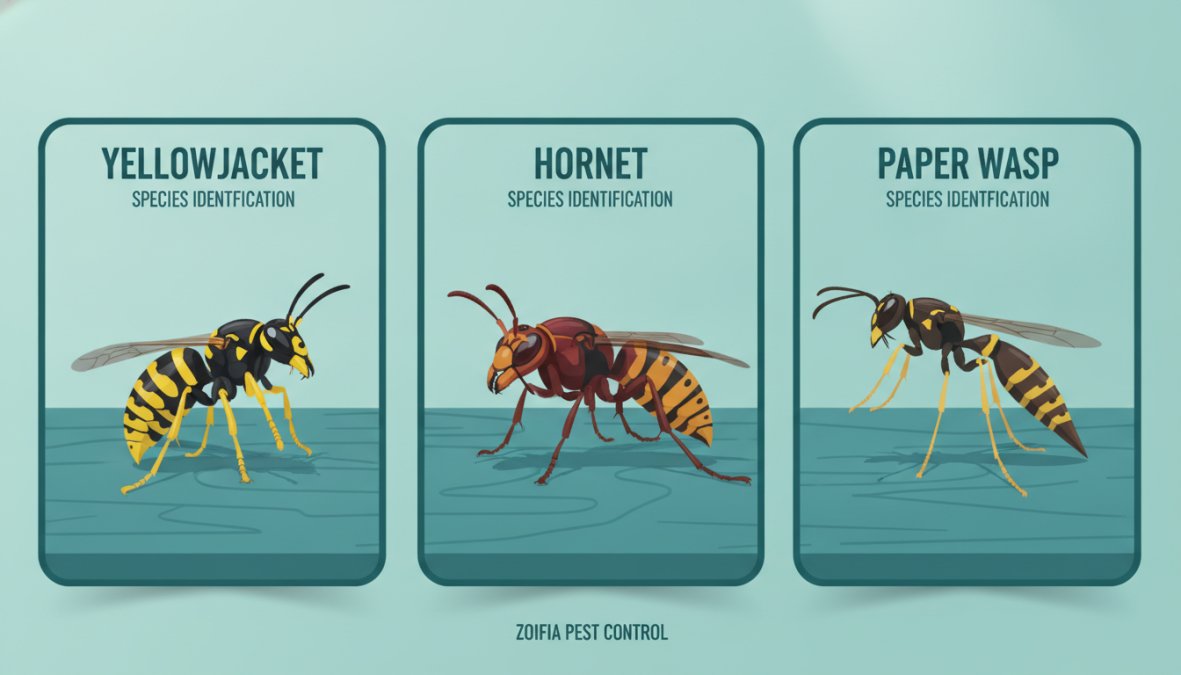
Yellowjackets are small, striped wasps with distinctive yellow and black markings. They’re highly aggressive, especially in late summer, and scavenge around outdoor meals and trash. They build paper-like nests in cavities, under eaves, or in the ground, with colonies containing hundreds of workers.
Hornets, specifically bald-faced hornets and paper wasps, are larger than yellowjackets. Bald-faced hornets create distinctive gray, football-shaped aerial nests that hang from tree branches or building eaves. Paper wasps build open, umbrella-shaped nests under soffits and porch ceilings. While generally less aggressive than yellowjackets, they’ll defend their nests vigorously if threatened.
Paper wasps are slender with long legs and reddish-brown coloring. They’re the least aggressive of the three but will sting if their nest is disturbed, and their venom can trigger severe allergic reactions in sensitive individuals.
Before attempting removal, photograph the nest from a safe distance. This helps you determine the species and assess whether DIY removal is realistic or if professional help is necessary.
What You’ll Need to Get Rid of Wasps Safely
Successful wasp removal depends on having the right protective equipment and materials. Wasps sting when threatened, and their venom can trigger anaphylaxis in people with allergies.
Protective Gear and Safety Equipment
Wear long sleeves and long pants made of thick fabric, preferably light-colored. Tuck your pants into your socks and your shirt into your pants to eliminate gaps where wasps can crawl inside your clothing. A bee suit or protective veil is ideal, but a motorcycle helmet with a clear face shield offers solid protection for your head and neck. Use gloves rated for pest control work. Avoid perfumes, scented lotions, and brightly colored clothing, as these attract wasps.
Have an epinephrine auto-injector (EpiPen) nearby if anyone in your household has a documented wasp allergy, and ensure everyone present knows where it is and how to use it.
Tools and Materials for DIY Removal
Gather these items before you begin:
- Spray bottle filled with soapy water (dish soap mixed with water)
- Commercial wasp spray (if using chemical methods)
- Ladder or step stool for reaching nests
- Flashlight or headlamp for dawn/dusk work
- Garbage bags for collecting debris
- Garden hose with spray nozzle as backup
- Vinegar solution (if using natural methods)
Never attempt removal during daylight hours when wasps are most active. Always work at dawn or dusk when most workers have returned and activity is minimal.
Natural Ways to Get Rid of Wasps
Many homeowners prefer natural removal methods to avoid harsh chemicals, especially when children and pets are present. These approaches work best on smaller nests or for prevention.
Soapy Water Solution and Vinegar Sprays
Mix one tablespoon of dish soap with a spray bottle of water. At dawn or dusk, spray the nest thoroughly until saturated. The soap breaks down the wasp exoskeleton, causing death within minutes. This method works particularly well for paper wasp nests.
For a stronger natural solution, combine equal parts white vinegar and water in a spray bottle and add a few drops of dish soap. Spray the nest and surrounding area. Repeat for two to three consecutive days to ensure you’ve eliminated the entire colony.
Both methods require close approach to the nest, so protective gear is essential. Work when wasps are least active, early morning or late evening.
Essential Oils and Non-Toxic Repellents
Peppermint, clove, and lemongrass essential oils repel wasps without killing them. Mix 10-15 drops of essential oil with water in a spray bottle and apply around areas where wasps congregate. Repeat every few days. This approach works best for prevention rather than eliminating active nests.
Hanging mothballs or dryer sheets near potential nesting sites creates an environment wasps find unpleasant. Cucumber peels contain compounds that repel wasps and can be scattered around outdoor eating areas.
Natural methods work best for prevention and small nests. For large, established colonies or ground nests, commercial sprays or professional removal becomes necessary.
Step-by-Step Removal at Dawn or Dusk
Timing is everything when removing an active wasp nest. Wasps are cold-blooded, so their activity drops dramatically when temperatures fall. At dawn and dusk, most foraging wasps have returned to the nest, making it less active and less defensive.
Executing Safe Nest Removal
Follow this sequence for the safest removal:
-
Put on full protective gear before approaching the nest.
-
Approach the nest slowly and calmly. Rapid movements trigger defensive behavior.
-
Apply your chosen treatment thoroughly, saturating the entire nest.
-
Retreat to a safe distance immediately, at least 20 feet away.
-
Wait at least 24 hours before returning. Check the nest the next evening. If wasps are still active, repeat the treatment.
-
Remove the nest only after it’s completely inactive. Wait several days, then knock the nest down into a garbage bag using a long stick. Seal the bag immediately.
-
Disinfect the area by washing the spot where the nest was attached with soapy water to remove pheromone traces.
If the nest is in an inaccessible location, high on a building, inside a wall cavity, or in a tree, professional removal becomes the safer option.
Commercial Insecticides and Spray Solutions
When natural methods aren’t working or the nest is large, commercial wasp sprays offer faster, more reliable results. Most effective sprays use pyrethrin or pyrethroid compounds, which mimic natural insecticides found in chrysanthemum flowers and have low mammalian toxicity.
Aerosol wasp sprays typically spray 15-20 feet, allowing you to maintain distance from the nest. Dust formulations work well for ground nests and wall cavities. Foam products expand into cavities and gaps, flushing out wasps hiding in crevices.
Always read the label carefully. Apply these products at dawn or dusk, wear protective gear, and keep children and pets away from treated areas for the time specified on the label.
Commercial sprays work fastest on paper wasp nests because they’re small and exposed. For ground nests or nests in cavities, dust formulations penetrate better than liquid sprays.
Wasp Repellent Plants and Prevention Strategies
The best approach to wasp problems is preventing them from building nests in the first place. Growing mint, basil, clove, and lemongrass in your garden creates a natural deterrent. Plant these in pots near seating areas or along patios.
Eliminating food sources removes the primary reason wasps visit your property. Keep garbage cans sealed, clean up fallen fruit from trees promptly, and don’t leave pet food outside. Cover outdoor trash cans with lids that close tightly.
Keep your yard free of standing water, which wasps use for drinking. Fix leaky outdoor faucets and drain low spots where water collects. Empty bird baths regularly.
Reduce nesting sites by sealing gaps under eaves, in soffits, and around vents. Caulk holes in walls and trim tree branches away from your house.
How to Prevent Wasps from Building Nests
Creating an environment where wasps don’t want to settle requires ongoing attention to both nesting sites and food sources.
Eliminating Nesting Sites and Food Sources
Wasps need shelter, food, and water to establish a colony. Inspect your home’s exterior monthly during spring and early summer when wasps are scouting nesting locations. Look for gaps under eaves, cracks in siding, and holes in screens. Seal these promptly with caulk or weatherstripping.
Remove food sources by managing outdoor dining areas carefully. Don’t leave food or drinks unattended. Use sealed containers for garbage and compost. Clean up spills immediately. Rinse recycling bins before storing them.
Eliminate standing water sources. Fix leaking outdoor faucets, drain gutters that collect water, and empty birdbaths at least twice weekly.
Post-Removal Cleanup and Sanitization
After removing a nest, proper cleanup prevents new colonies from establishing in the same location. Wasps use pheromone trails to communicate, so removing these chemical markers is essential.
Wash the area where the nest was attached with a solution of one part white vinegar to three parts water. Use a stiff brush to scrub the surface thoroughly. Rinse with clean water and allow to dry completely.
Inspect the area weekly for several weeks. If you see wasps returning or new nest construction beginning, repeat the cleaning process.
When to Call a Professional Exterminator
Call a professional exterminator if the nest is in a location you can’t safely reach, high on a building, inside a wall cavity, or in a tree where ladder work is dangerous. Professionals have equipment and experience to reach difficult nests safely.
If you have a severe wasp allergy or anyone in your household does, professional removal eliminates the risk of accidental exposure. Large ground nests or multiple nests on your property also warrant professional help. If DIY methods haven’t worked after two attempts, professional treatment is more cost-effective than continued trial and error.
Wasp Nest Removal Cost and Service Options
Professional wasp removal pricing depends on nest size, location, and accessibility. Nests in easily accessible locations cost less than nests requiring ladder work or cavity treatment. Most professional services charge based on the number of nests and their location rather than by the hour.
Service options typically include nest removal, treatment to eliminate remaining wasps, and cleanup of the nesting area. Some services include follow-up visits to ensure complete elimination. Ask about guarantees; reputable companies stand behind their work and return for free if wasps return within a specified period.
When comparing services, prioritize licensed and insured providers. Ask about the specific treatment methods they use and whether they offer non-toxic options if you prefer natural approaches.
Wasp problems escalate quickly once a colony establishes itself on your property. Whether you choose DIY removal using soapy water and natural repellents or professional treatment, acting promptly prevents the nest from growing larger and more aggressive.
| Removal Method | Best For | Timing | Success Rate |
|---|---|---|---|
| Soapy water spray | Small paper wasp nests | Dawn/dusk, single application | High for small nests |
| Vinegar solution | Prevention and small nests | Multiple applications over 3 days | Moderate, requires patience |
| Commercial spray | Medium nests, accessible locations | Dawn/dusk, single application | High, fast-acting |
| Professional removal | Large colonies, difficult locations, allergies | Same-day to next-day service | Very high, guaranteed |
Frequently Asked Questions
What is the fastest way to get rid of wasps?
The fastest approach is calling a professional exterminator, especially for active nests with large colonies. For DIY methods, soapy water spray applied at dawn or dusk can neutralize wasps quickly, though results depend on nest size and accessibility. Commercial insecticides work faster than natural solutions but carry higher safety risks. Timing matters, treating during cooler hours when wasps are less active increases effectiveness and reduces your exposure to stinging insects.
What smells deter wasps naturally?
Wasps dislike strong aromatic scents including vinegar, peppermint essential oil, clove oil, and lemongrass. Cucumber peels and dryer sheets also repel them. Planting wasp repellent plants like mint, basil, and marigolds around your property creates natural barriers. However, these natural repellents work best for prevention rather than eliminating existing nests. Combine scent-based deterrents with physical removal or professional pest control for complete wasp management.
Does dish soap and water really kill wasps?
Yes, a soapy water solution effectively kills wasps by breaking down their exoskeleton and disrupting their nervous system. Mix one tablespoon of dish soap per cup of water in a spray bottle and apply directly to the nest or individual wasps at dawn or dusk. The solution works best on exposed nests like paper wasp colonies. For best results, soak the entire nest thoroughly. This method is safer than chemical insecticides and poses lower risks to pets and beneficial pollinators.
When should you call an exterminator for wasps?
Contact a professional exterminator if the nest is in a hard-to-reach location, you have a large active colony, or anyone in your household has a wasp allergy or history of allergic reactions. Hornets and yellowjackets are more aggressive than paper wasps and warrant professional removal. If DIY attempts fail or the nest returns, professional pest control with a 90-day guarantee ensures complete elimination. Exterminators have proper protective gear and commercial-grade solutions that homeowners lack.
This article was written using GrandRanker
