Table of Contents
- Why Roach Traps Work Better in Tight Spaces
- How to Get Rid of Roaches in Apartment Kitchen: Trap Types Explained
- Top Roach Traps for Small Kitchens
- How Long Do Roach Bait Stations Last
- Roach Trap Placement Tips for Maximum Effectiveness
- Safety Considerations for Pets and Children
- When to Call a Professional Exterminator
- Maintenance and Monitoring for Long-Term Control
- Frequently Asked Questions
Last Updated: September 27, 2026
Why Roach Traps Work Better in Tight Spaces
Finding the best roach traps for small apartment kitchens requires targeted pest control. Limited space concentrates roach populations under appliances, inside cabinet joints, and along baseboards, where traps deliver faster results than broad spray treatments.
How to Get Rid of Roaches in Apartment Kitchen: Trap Types Explained
The best roach traps for small apartment kitchens fall into three categories: gel baits, bait stations, and glue traps. Choice depends on infestation severity, pet safety, and speed needed.
Gel Baits vs. Bait Stations vs. Glue Traps
Gel baits deliver precision application in cracks and crevices via syringe applicators. Roaches consume and carry them back to nests, killing entire colonies. Non-repellent formulas attract rather than repel roaches.
Top Roach Traps for Small Kitchens
Gel Bait Options for Precision Placement
Advion Cockroach Gel Bait offers precision application via syringe in cabinet hinges, under sinks, and appliance seams. The indoxacarb ingredient attracts German and American roaches. Apply small dots spaced several inches apart, not large amounts in one spot.
Bait Stations for Set-and-Forget Control
Terro T500 Multi-Surface Roach Baits are low-profile stations for tight spaces. Adhesive backing allows vertical mounting. Child-resistant housing protects families while killing entire colonies.
Glue Traps for Monitoring and Non-Chemical Control
Black Flag Roach Motel Insect Hotel is a poison-free monitoring option with enclosed design. Use alongside baits to track effectiveness; persistent catches after two weeks suggest escalation is needed.
How Long Do Roach Bait Stations Last
Most bait stations remain effective for 30-90 days depending on formulation and roach population. Heavy infestations require replacement every 30 days; lighter ones every 60-90 days. Check monthly through transparent housing and replace when bait is mostly consumed. Minimal consumption suggests fewer roaches or poor placement.
Roach Trap Placement Tips for Maximum Effectiveness
Kitchen Cabinet and Appliance Placement
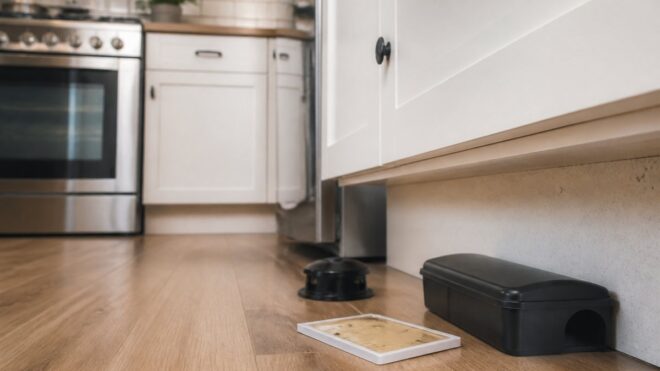
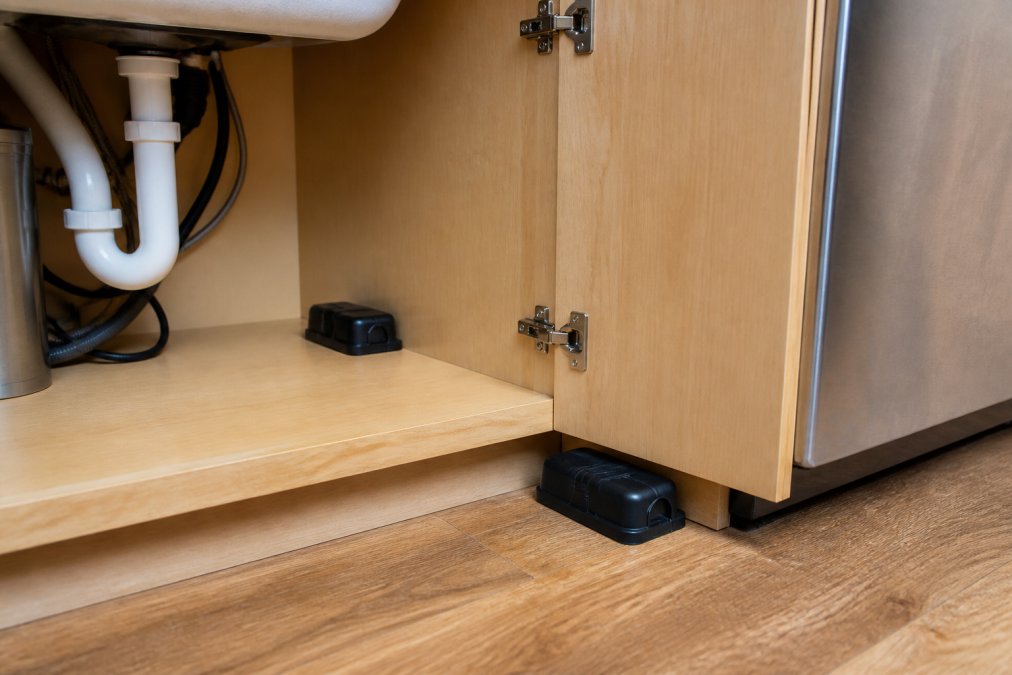
Place baits under cabinets where they meet walls, under sinks (moisture and debris attract roaches), and behind refrigerators and stoves. Don’t forget gaps between cabinets and walls, a single gel bait dot here intercepts roaches before they reach food areas.
Identifying Harborage Areas and Application Zones
Walk your kitchen at night with a flashlight to spot roach trails and greasy marks showing travel routes. Look for moisture sources (leaks, condensation, damp corners) where roaches congregate. Inspect behind appliances with a mirror or phone camera; any gap larger than a quarter-inch is a harborage area.
Safety Considerations for Pets and Children
Use child-resistant bait stations away from play and sleep areas. Place gel baits only in inaccessible spots: cabinet hinges, under appliances, wall cracks, never on countertops or shelves. Avoid roach pathways where pets sleep. Non-toxic glue traps are safest if chemical exposure concerns you.
When to Call a Professional Exterminator
If roaches persist after four weeks of traps, DIY treatment may be insufficient. In apartments, roaches migrate from neighboring units through shared walls, plumbing, and ventilation, complicating individual treatment.
Apartment-Specific Structural Vulnerabilities
Apartment buildings have structural vulnerabilities: shared plumbing walls, electrical conduit gaps, HVAC ducts, baseboards, and shared laundry/mechanical spaces all allow roach migration between units. Individual trap placement cannot solve building-wide pathways.
When Individual Treatment Fails
Escalate to professional treatment if: roaches persist after four weeks of traps, appear in multiple rooms, reappear after sealing gaps, neighbors report infestations, or you live in an older building with pest history.
A professional exterminator can:
- Conduct a thorough inspection of your unit and identify harborage areas you’ve missed (inside wall voids, under flooring, inside appliance motors)
- Assess whether the building has a building-wide infestation by inspecting common areas and neighboring units (with landlord permission)
- Apply treatments in inaccessible spaces where roaches hide, such as inside walls, under subflooring, and in appliance cavities
- Recommend building-wide treatment if the infestation crosses unit boundaries
- Provide documentation of the treatment for your lease file and landlord records
Renter-Landlord Coordination for Effective Treatment
Before calling a professional, contact your landlord in writing (email or certified letter). Most lease agreements require landlord approval for pest control treatments, and many landlords have preferred contractors or building-wide pest management programs already in place.
Provide your landlord with:
- Dates and locations of roach sightings
- Photos of roaches or droppings (if you can capture them safely)
- Documentation of your DIY treatment efforts (trap types used, dates deployed, results)
- A request for professional inspection
Your landlord may:
- Arrange treatment at no cost to you (pest control is typically a landlord responsibility under habitability laws in most states (nolo.com))
- Coordinate with neighboring units if the infestation is building-wide
- Schedule treatment during a time that minimizes disruption to your kitchen access
- Provide guidance on preparation (moving food, clearing cabinets) before the professional arrives
Building-Wide Treatment Scenarios
If the professional determines the building has a widespread infestation, expect:
- Coordinated treatment across multiple units, The exterminator will treat your unit, neighboring units, and common areas simultaneously to prevent roaches from fleeing to untreated spaces
- Preparation requirements, You’ll need to remove food, cover dishes, and clear cabinets before treatment. Follow the exterminator’s prep instructions exactly; incomplete preparation reduces effectiveness
- Multiple visits, Building-wide infestations typically require 2-4 visits spaced 7-14 days apart to eliminate roaches at all life stages (eggs, nymphs, adults)
- Temporary displacement, For severe infestations, you may need to leave your apartment for 4-8 hours after treatment while the pesticide settles
Maintenance and Monitoring for Long-Term Control
Successful roach control in apartments requires a structured maintenance schedule, proper disposal protocols, and an integrated approach that combines traps, sanitation, and structural sealing. This is especially critical in shared-wall buildings where lapses in one unit can trigger reinfestation from neighboring spaces.
Weekly and Monthly Monitoring Protocol
Check your traps weekly during the first month of treatment. Count how many roaches you’re catching in glue traps and how much bait is being consumed in stations. This data tells you whether your strategy is working and whether you need to escalate to professional treatment.
Safe Disposal and Hygiene Protocols
Proper disposal of roach traps prevents the spread of allergens, bacteria, and pathogens associated with cockroach infestations. Roaches carry salmonella, E. coli, and other harmful bacteria on their bodies and in their feces (Cockroaches (Ectobius vittiventris) in an Intensive Care Unit, Switzerland – Volume 15…).
Disposing of Glue Traps:
- Wear disposable gloves (nitrile or latex) when handling traps
- Place the glue trap in a sealed plastic bag (gallon-size freezer bag works well)
- Seal the bag completely to contain any loose debris or allergens
- Place the sealed bag in your household trash (do not flush)
- Remove gloves and wash your hands with soap and warm water for at least 20 seconds
- Wipe down the area where the trap was placed with a damp cloth or disinfectant wipe
Disposing of Bait Stations:
- Wear disposable gloves
- Remove the station from its mounting location
- If the station is still sealed and contains unused bait, place it directly in a sealed plastic bag
- If the station is open or partially consumed, place it in a sealed plastic bag to contain bait residue
- Seal the bag and place in household trash
- Do not pour bait down the sink or toilet; bait residue can attract roaches to plumbing
- Wash your hands thoroughly after disposal
Disposing of Gel Bait Syringes:
- Wear gloves
- Do not attempt to clean or reuse gel bait syringes
- Place the used syringe in a sealed plastic bag
- Seal and dispose in household trash
- Wipe the application area with a damp cloth to remove any residual bait
- Wash your hands and any tools that contacted the bait
Bait Station Replacement Schedule
Replace consumed bait stations on schedule, even if you haven’t seen roaches recently. Roaches can hide for weeks without food, but they’ll emerge when they sense food is available. Maintaining stations prevents populations from rebounding.
Replacement intervals depend on consumption rate:
- Heavy consumption (bait 75%+ gone in 30 days): Replace every 30 days. This indicates a significant roach population actively feeding.
- Moderate consumption (bait 25-50% gone in 30 days): Replace every 45-60 days.
- Light consumption (bait <25% gone in 30 days): Replace every 60-90 days, or when bait is visibly depleted.
Integrated Pest Management (IPM) for Apartment Renters
Traps and baits alone are incomplete solutions in apartments. IPM combines multiple strategies to prevent reinfestation and reduce reliance on chemical treatments:
1. Sanitation (Eliminate Food Sources)
- Clean kitchen surfaces daily, especially around the stove and sink
- Wipe down cabinet interiors monthly to remove food particles and grease
- Store dry foods (flour, cereal, sugar) in sealed glass or plastic containers, not open boxes
- Do not leave pet food out overnight; store in sealed containers
- Take out trash daily and use a trash can with a tight-fitting lid
- Rinse dishes immediately after use; do not leave them in the sink overnight
- Clean under and behind appliances quarterly (with landlord permission for built-in appliances)
2. Moisture Control (Eliminate Water Sources)
- Fix leaky faucets and pipes under the sink immediately
- Dry the sink area before bed; roaches need water as much as food
- Ensure the dishwasher door seals properly so water doesn’t leak
- Check for condensation on pipes and insulate if necessary
- Use a dehumidifier in the kitchen if humidity is consistently above 50%
- Report water damage or slow leaks to your landlord; moisture attracts roaches and supports their reproduction
3. Structural Sealing (Eliminate Harborage)
- Caulk gaps between cabinets and walls with paintable silicone caulk
- Seal holes around pipes under the sink with expanding foam or caulk
- Close gaps under baseboards with caulk or weatherstripping
- Seal gaps around electrical outlets and light switches with foam gaskets (available at hardware stores for $1-3 per pack)
- Ask your landlord to seal larger gaps in walls or around plumbing penetrations; these may require professional caulking
4. Monitoring and Documentation
- Maintain your trap log for at least 90 days
- Take photos of roach activity or droppings (if present) for documentation
- Share your monitoring data with your landlord if the infestation persists; this demonstrates you’ve taken action and supports a request for professional treatment
- If you move to a new apartment, inspect it thoroughly before moving in and document any existing pest issues in writing to your new landlord
Long-Term Maintenance After Infestation Control
After you’ve gone 60+ days without seeing roaches, continue maintenance to prevent reinfestation:
- Monthly sanitation: Deep-clean kitchen cabinets and appliance areas
- Quarterly monitoring: Place 2-3 glue traps in high-risk areas (under sink, behind stove) for one week per quarter to catch any early signs of reinfestation
- Annual structural inspection: Walk your kitchen with a flashlight and check for new cracks or gaps where roaches could enter
- Neighbor communication: If you know neighbors have roach problems, ask your landlord about coordinated building-wide treatment; one unit’s infestation threatens the entire building
Frequently Asked Questions
What is the most effective roach trap for small apartment kitchens?
Gel baits and bait stations are most effective for small kitchens because they target roaches where they hide and allow roaches to carry the insecticide back to the nest, eliminating the colony. Gel baits like Advion or Maxforce FC offer precision placement in tight spaces, while bait stations like Terro T500 provide a set-and-forget solution. Glue traps work best for monitoring activity rather than eliminating infestations. The best choice depends on your infestation severity and space constraints.
How long do roach bait stations last before needing replacement?
Most roach bait stations remain effective for a period depending on the product and infestation level. In heavy infestations, replacement may be needed more frequently. Check stations monthly for depletion and replace when the bait is consumed or dried out.
Where should I place roach traps in my apartment kitchen?
Place roach traps along baseboards, under sinks, behind and under appliances (stove, refrigerator, microwave), inside cabinet hinges, and along cracks and crevices where roaches travel. Focus on areas where you’ve seen roach activity or droppings. Avoid placing traps directly on food preparation surfaces. In small kitchens, prioritize under-appliance placement and cabinet corners where roaches congregate. Distribute traps evenly to monitor movement patterns and maximize control.
Are roach baits and traps safe to use in kitchens with pets and children?
Most roach baits and traps are designed to be safe when used correctly. Look for child-resistant bait stations that prevent accidental contact. Place gel baits in areas pets and children cannot reach, such as deep cracks or behind appliances. Glue traps pose minimal chemical risk but can trap small pets if placed in accessible areas. Always follow product instructions carefully. If you have concerns about chemical safety, consider professional pest control services that use targeted application techniques and can provide guidance specific to your household.
Apartment roach infestations require speed and precision, two areas where professional pest control services excel. At Zoifia Pest Control, we specialize in eliminating roaches from tight spaces using targeted treatments backed by a 90-day guarantee. Our licensed and insured technicians identify harborage areas you might miss and deploy treatments without long-term contracts. Get a quote and see how we can restore your kitchen to a roach-free state.
